
 By Pevita Pearce
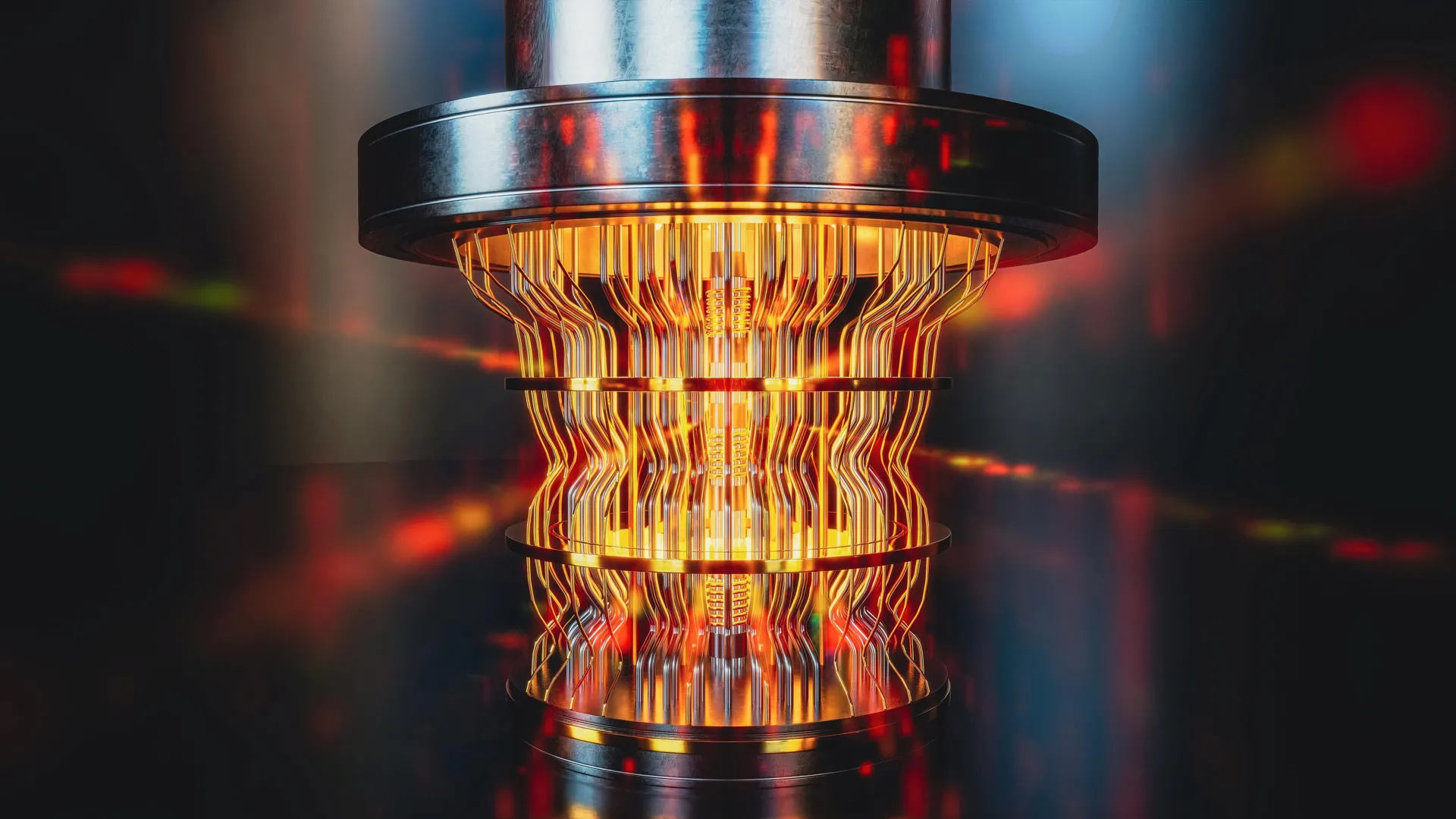
For decades, the promise of quantum computing has been tethered to a daunting reality: current quantum machines are fragile, error-prone, and notoriously difficult to scale. Much like early classical computers that required massive rooms to perform simple calculations, modern quantum processors are often constrained by the physical limitations of their hardware. However, a groundbreaking collaboration between researchers at the University of Chicago Pritzker School of Molecular Engineering (UChicago PME), Harvard University, Stony Brook University, and Quantinuum has unveiled a new paradigm. By harnessing the peculiar physics of "non-Abelian anyons," the team has demonstrated a universal gate set, potentially clearing the path toward truly fault-tolerant, general-purpose quantum computers.
The Quest for Computational Universality
A practical, high-performance quantum computer must possess the same inherent flexibility as a conventional laptop. Just as a personal computer can run an infinite array of software—from word processors to complex simulations—a quantum computer must be able to execute any quantum algorithm. Until now, achieving this level of versatility while maintaining quantum stability has been a formidable challenge.
The research, recently published in the journal Nature, represents a milestone in quantum architecture. By utilizing emergent quasiparticles known as non-Abelian anyons, the scientists have shown that they can perform a complete set of operations—a "universal gate set"—that allows for the execution of any conceivable quantum computation.
"We demonstrated a so-called universal gate set—meaning that if you store information in these emergent versions of quarks, and you move them around, you can do any quantum computation you might want to do," explained Ruben Verresen, an assistant professor of molecular engineering at UChicago PME and a co-author of the study.
Chronology of a Breakthrough
The journey to this discovery did not happen overnight. It is the culmination of years of theoretical modeling and rapid advancements in trapped-ion quantum hardware.
- 2003: The Theoretical Foundation: Theoretical physicist Carlos Mochon, working under the guidance of John Preskill at Caltech, proposed the concept that braiding and fusion of specific anyons could theoretically support universal quantum computation. For two decades, this remained a compelling, yet untested, mathematical framework.
- 2024: The D4 Milestone: A research team including Verresen utilized a Quantinuum trapped-ion computer to demonstrate non-Abelian order for the first time on hardware. They created anyons associated with a symmetry group known as D4—representing the rotations and reflections that leave a square unchanged. While this proved that these "exotic particles" could be created, the team quickly realized that the D4 system lacked the computational power to perform universal operations.
- 2025: The S3 Breakthrough: Building on the limitations of their previous work, the team pivoted to a different symmetry group: S3, which corresponds to the rotations and mirror-image flips of an equilateral triangle. By employing 54 entangled qubits on Quantinuum’s H2 processor, the researchers successfully demonstrated that the S3 system possessed the necessary properties for universal quantum computation.
Understanding Non-Abelian Anyons: The "Alternative Universe"
To understand why this is a leap forward, one must look at how information is stored. Conventional qubits operate on the binary logic of 0 and 1. Non-Abelian anyons, however, are not fundamental particles found in nature; they are "emergent."
Scientists create these anyons within quantum circuits by entangling vast arrays of conventional qubits. This collective state behaves as if it were a new particle governed by its own internal rules. "The way I think about these codes is they’re creating little universes—alternative universes, but ones that reflect some of the properties of our own," Verresen noted.
The "non-Abelian" nature of these particles refers to the significance of order. When one anyon is moved around another—a process called "braiding"—the internal state of the system changes. Crucially, the sequence of these braids matters. Because the information is stored globally across many entangled qubits rather than in a single, vulnerable location, it is naturally protected from the local environmental disturbances that usually cause quantum decoherence.
Overcoming the "Magic State" Hurdle
One of the most significant barriers to building a large-scale quantum computer is the cost of error correction. Quantum information is notoriously fragile, so engineers typically spread it across multiple physical qubits. However, this method of protection often prevents the machine from performing all the operations required for universal computation.
To bridge this gap, engineers have traditionally relied on "magic states." Generating these states requires a process known as distillation, which is computationally expensive and resource-intensive, often consuming the majority of a quantum processor’s available qubits.
The new study offers a way to bypass this bottleneck. By using the braiding and fusion operations of non-Abelian anyons, the researchers demonstrated that they could produce a magic state directly, without the need for traditional, costly distillation.
Henrik Dreyer, managing director and scientific lead at Quantinuum’s Munich office and a co-author, emphasized the significance of this shift: "Non-Abelian codes are a dark horse in the race to quantum error correction. In this work, we show the first universal gate set in a non-Abelian code, which demonstrates that fault-tolerant computations can in principle be done without resorting to magic state distillation or cultivation, which are the most expensive operations in standard quantum error correction codes."
The Power of Fusion
The breakthrough was only possible by moving beyond simple braiding. While braiding was sufficient to create the anyons, the researchers discovered that it was not enough to perform every required operation. They introduced a second operation: fusion.
During fusion, two anyons are brought together, and their resulting state is measured. By combining braiding and fusion, the team created "topological qutrits," which allow for the storage of three levels of quantum information. This combination provides three vital computational tools: one entangling gate (via braiding) and two distinct measurements (via fusion). Together, these tools provide a complete toolkit for any quantum calculation.
Official Perspectives and Implications
The scientific community has reacted with cautious optimism, viewing this as a validation of long-standing theoretical predictions. Graduate students Anasuya Lyons and Chiu Fan Bowen Lo of Harvard University, who helped lead the experimental work, noted the personal impact of the project: "It is gratifying to see ideas we have spent our PhD work thinking about realized in the lab, and it has been made possible by remarkable advances in quantum hardware over the past few years."
Future Implications
The implications of this study are twofold:
- Computational Efficiency: If successfully scaled, this method could lead to quantum computers that are significantly more efficient, requiring fewer qubits to achieve the same level of fault tolerance compared to current standards.
- Fundamental Physics: Beyond computing, the ability to create and manipulate these topological states provides a new laboratory for studying the fundamental laws of the universe, allowing researchers to probe the nature of quantum matter in ways previously thought impossible.
The Road Ahead
While the results are a monumental "proof of principle," the researchers remain grounded about the challenges ahead. The current experiment did not include active, ongoing error correction; instead, it focused on validating the building blocks of the approach.
The next phase of the research will involve integrating these operations into an active error-correction loop. Ruben Verresen is already collaborating with colleagues at UChicago PME to develop new techniques for stabilizing non-Abelian quantum memories, which would serve as the backbone for a truly fault-tolerant machine.
As the industry continues to chase the "Holy Grail" of a scalable quantum computer, the use of non-Abelian anyons has shifted from a theoretical curiosity to a primary candidate for future architecture. If the team can successfully merge their topological gate set with active error correction, the world may be one step closer to the era of practical, high-utility quantum computing.
 Reynand Wu
 Ammar Sabilarrohman
 rifanmuazin
