
 By Jia Lissa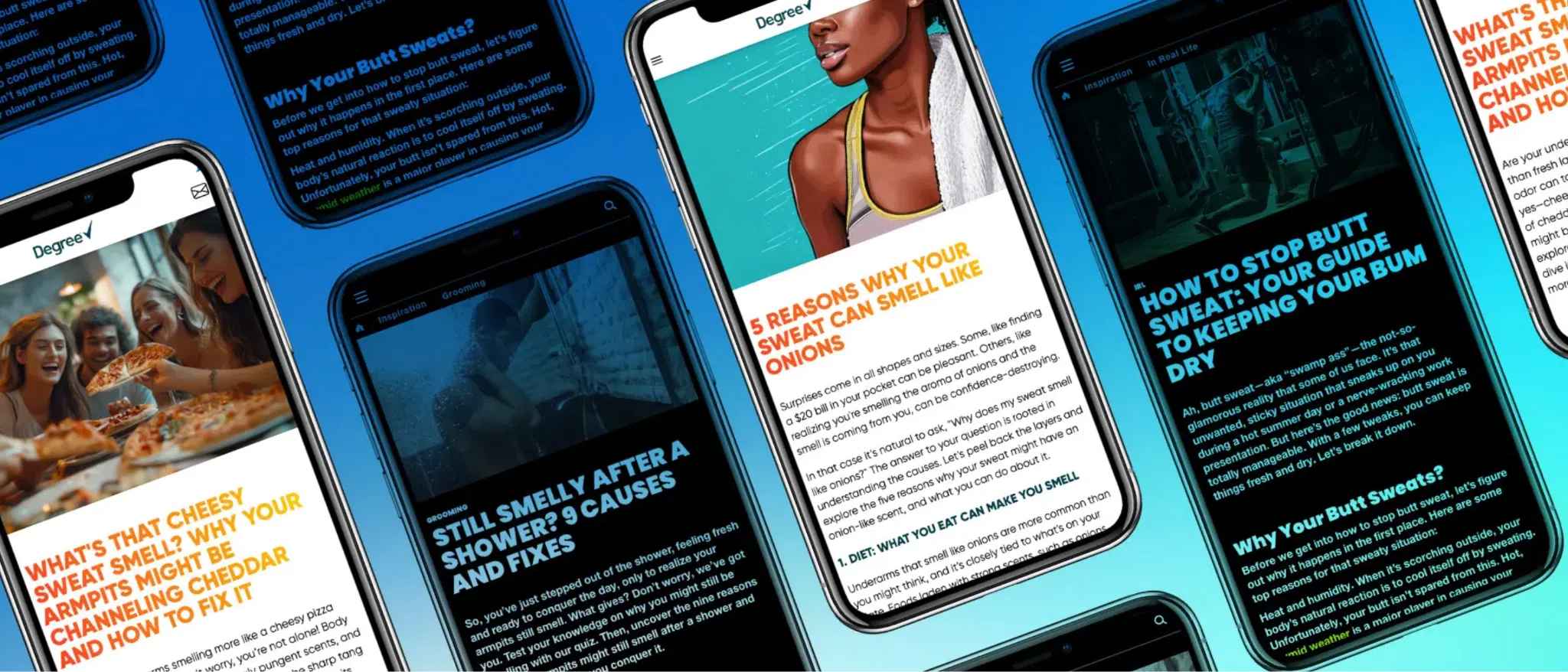
By Erin Rodrigue | Content Strategist & Industry Analyst
Artificial intelligence has dominated marketing discourse for years, shifting from a futuristic science-fiction concept to an indispensable utility. Yet, amidst the endless cycle of industry hype and over-promises, a critical question remains for everyday marketing teams: What does AI actually look like when deployed in the wild?

Far from replacing human creatives or functioning as a magical "growth button," AI is being quietly and strategically embedded into the daily workflows of the world’s leading brands. From multinational consumer goods giants to premier sports stadiums, organizations are utilizing artificial intelligence to streamline content creation, hyper-personalize messaging at scale, decode massive volumes of social listening data, optimize customer care, and dynamically adjust live campaigns.
Examining these real-world case studies reveals a pragmatic playbook for what marketing professionals can borrow, adapt, and implement in their own campaigns.

Main Facts: The State of AI in Marketing Today
Recent industry benchmarks, including data from HubSpot’s State of Marketing report, indicate that roughly 80% of marketers now utilize AI tools for content creation. For most teams, drafting copy serves as the primary entry point: providing a prompt, receiving a baseline draft, and applying human editorial oversight.
However, modern AI applications stretch far beyond simple text generation. Marketing organizations divide their artificial intelligence integration into five core pillars:
- Content Creation & Scaling: Overcoming the blank-page syndrome and producing multi-format assets efficiently while maintaining strict brand voice guidelines.
- Personalization at Scale: Moving past basic audience demographics to dynamically alter creative assets based on real-time user intent and contextual stressors.
- Social Listening & Sentiment Analysis: Processing millions of scattered online conversations to unearth actionable business insights and emotional tones.
- Automated Customer Care: Deploying conversational agents to handle high-volume, routine inquiries while accelerating response times for human support staff.
- Campaign Performance & Dynamic Optimization: Analyzing sprawling performance metrics in real-time to adjust bidding, placement, and targeting while campaigns remain active.
Chronology and Case Studies: Real Brands, Real Results
To understand how these pillars translate into tangible business growth, we can examine how six major brands successfully deployed AI across different operational domains.
1. Unilever (AXE and Degree): Scaling Educational Content
- The Challenge: Creating one piece of engaging marketing copy is manageable; developing 162 unique, highly specialized pieces of content without overwhelming a lean team is a different challenge entirely.
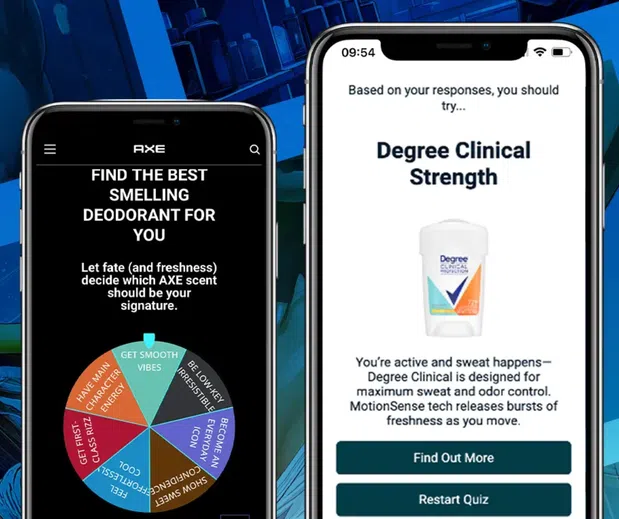
- The AI Solution: For deodorant brands AXE and Degree, Unilever constructed a proprietary AI model trained meticulously on each brand’s unique voice. The tool generated 162 pages of educational, SEO-optimized content answering specific consumer queries—such as "Why does sweat smell like onions?"—spanning articles, interactive quizzes, videos, and refreshed FAQs.
- The Outcome: Degree captured a commanding 37% share of voice in US AI Search Overviews for the deodorant category, while accelerating its overall content production velocity by 3x.
2. Headspace: Multi-Asset Personalization
- The Challenge: Holiday stress manifests differently for everyone—a college student faces final exams, while a working professional battles an overbooked schedule. Standardizing one ad creative fails to resonate across diverse groups.
- The AI Solution: Headspace leveraged AI to transform various personal stressors into hundreds of tailored ad variations. Using Meta’s Advantage+, the brand produced 460 distinct creative assets across 20 distinct use cases in under two weeks, allowing the algorithm to automatically pair each asset variant with the demographic segment most likely to relate.
- The Outcome: The campaign slashed production time by 67% and drove a 13% increase in mobile app sign-ups.
3. Wembley Stadium: High-Volume Customer Care
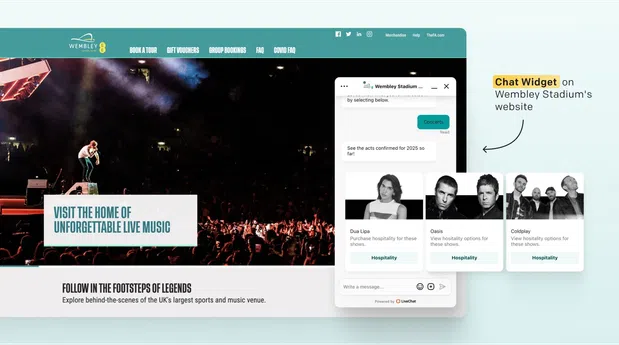
- The Challenge: As a premier entertainment venue, Wembley Stadium frequently fields up to 8,000 customer inquiries a day—a volume capable of completely overwhelming traditional human support teams.
- The AI Solution: Wembley integrated an event-trained AI chatbot directly onto its website to provide instantaneous answers to frequent questions, while simultaneously qualifying prospective buyers interested in premium memberships before routing warm leads to human sales reps.
- The Outcome: The chatbot successfully manages roughly 12,000 automated chats per month, drastically reducing queue times and easing the burden on support staff.
4. Kraft: Precision Influencer Marketing
- The Challenge: When Kraft launched its new plant-based product lines, it targeted two distinct consumer groups: committed plant-based eaters and mainstream consumers seeking familiar comfort food. Lumping these audiences together under a single influencer strategy risked alienating both.
- The AI Solution: Kraft utilized AI-driven audience segmentation to cleanly separate these consumer groups, subsequently identifying and vetting micro- and macro-creators whose established follower bases aligned precisely with each targeted mindset.
- The Outcome: The targeted campaign deployed 15 creators across 26 pieces of content, ultimately generating over 2.4 million organic views and driving measurable purchase intent.
5. Reebok: Decoding CrossFit Conversations
- The Challenge: Reebok wanted to understand how consumers genuinely spoke about the brand within the global CrossFit community, particularly in comparison to fierce market competitors.
- The AI Solution: Partnering with digital agency Novicell, Reebok deployed Talkwalker’s Lumen AI tool to track conversations across diverse social networks and digital channels, analyzing more than 14,000 distinct conversations originating from nearly 5,000 unique users.
- The Outcome: The AI listening layer surfaced more than 25 concrete opportunities for operational improvement, revealing hidden positioning adjustments and unexploited business expansion opportunities.
6. Popeyes UK: Real-Time Campaign Optimization
- The Challenge: Popeyes UK did not require assistance generating creative ad assets; instead, the fast-food brand needed a smarter way to place those ads in front of high-converting users and dynamically manage ad spend bidding.
- The AI Solution: The brand implemented an AI-powered optimization engine that continuously monitored ad performance in real-time. Rather than running a static setup from start to finish, the AI autonomously reallocated budget and adjusted bids based on live conversion data.
- The Outcome: The optimized campaign delivered 22 million impressions, 45,000 hard conversions, and an extraordinary 678% increase in Return on Ad Spend (ROAS).
Supporting Data: The Human-AI Collaboration
Despite widespread anxieties surrounding automation, academic research underscores that AI functions best as an augmentative force rather than an outright replacement for human intelligence.
Researchers at Harvard Business School analyzed a full year of online customer service chat logs from a meal delivery enterprise. Their findings revealed that AI integration helped human customer service agents resolve support chats roughly 20% faster, successfully bridging the gap between operational efficiency and human empathy.
Furthermore, industry data reinforces that marketers who maintain active editorial control—treating AI as an assistant that handles repetitive labor while humans dictate strategy—consistently achieve higher campaign ROI than those who allow automated systems to run entirely unsupervised.
Official Responses and Expert Perspectives: Avoiding the Pitfalls
While efficiency gains are undeniable, industry experts caution against the homogenization of brand identities. We spoke with Maria LaMagna Morales, Founder of Press Publish Studio, to unpack the hidden risks of over-relying on artificial intelligence in modern marketing.
1. Losing the "Weirdness" That Drives Engagement
AI models are inherently predictable, trained mathematically to output the most statistically reasonable next word or sentence. However, in social media marketing—particularly across fast-paced platforms like TikTok and Instagram Reels—breaking through user scroll fatigue often requires elements of surprise, randomness, or creative eccentricity.

"AI isn’t designed to suggest that strangeness, or surprise and delight," notes Morales. "You risk too much polish, and not enough ‘Wait, what was that?’"
2. Polishing Away Authentic Brand Voices
Repeatedly prompting an AI model to make copy "more professional" or "more concise" gradually strips away the colloquialisms, tangents, and idiosyncratic language that give writing true character. Morales advises marketers to embrace natural human speech patterns:
"In conversation, we naturally use slang, swear, go on tangents, and throw in extra words… It’s better to make something sound human than to make it sound streamlined."
3. Re-evaluating Generative Imagery
While early excitement surrounded generative AI imagery, consumer fatigue is setting in. Audiences increasingly crave authentic photography, tangible textures, and genuine human faces that reflect everyday realities rather than overly sanitized digital renders.

Implications for Modern Marketers: The Hootsuite Ecosystem
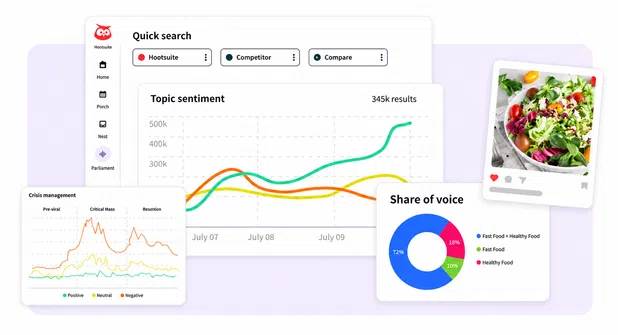
To bridge the gap between abstract data and everyday execution, platforms like Hootsuite have embedded AI directly into the operational software where marketers plan content, monitor sentiment, and evaluate performance.
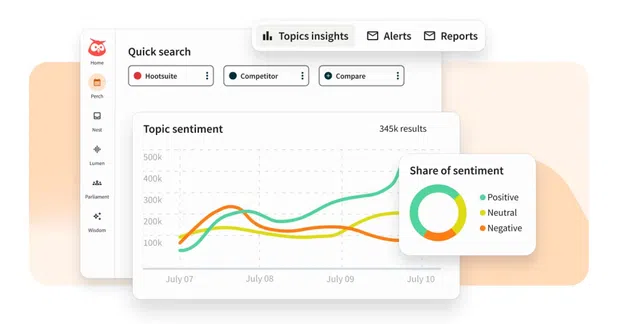
- Wisdom (Conversational AI Agent): Allows marketers to query social data using plain language—such as "What’s shaping perception of us this week?"—and receive immediate, data-backed strategic recommendations for subsequent campaigns.
- Perch (Content & Publishing Hub): Combines collaborative scheduling with AI drafting assistance, allowing teams to generate, edit, and approve multi-channel posts without sacrificing their distinct brand voice.
- Lumen (Social Listening Layer): Scans over 150 million online sources to surface emerging trends, sentiment shifts, and potential PR crises before they escalate.
Frequently Asked Questions (FAQ)
What is AI in marketing?
AI in marketing refers to the application of artificial intelligence technologies—such as machine learning, natural language processing, and predictive analytics—to automate repetitive tasks, personalize user experiences, draft creative assets, and analyze consumer behavior data.
Is AI replacing marketing professionals?
No. Current industry implementations demonstrate that AI handles repeatable operational tasks while human marketers retain responsibility for core strategy, emotional resonance, and creative judgment calls.
How does AI assist with content creation?
AI primarily solves the blank-page problem by generating working drafts based on custom user prompts regarding tone, audience, and objectives. Humans then edit and refine these drafts to ensure brand alignment.
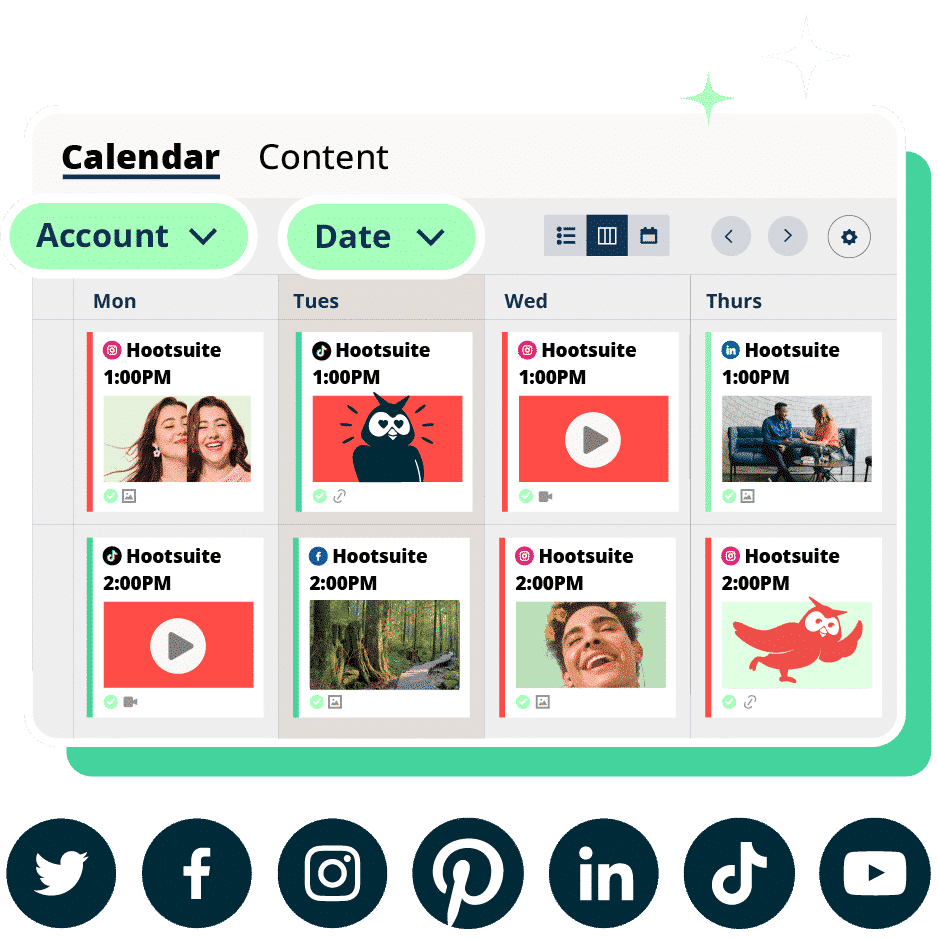
Bring artificial intelligence directly into the marketing workflows you already manage. Leverage Hootsuite to turn social listening data into actionable insights with Wisdom, create on-schedule content with Perch, and stay ahead of emerging trends with Lumen. Start your free trial today.
 Evan Lee Salim
  Pevita Pearce
  Laily UPN