
 By Nana Wu
As the boundaries between traditional industries and high-performance computing continue to blur, cloud infrastructure providers are tasked with meeting users exactly where they operate. Whether that means delivering crystal-clear synthesized voice interfaces to agronomists driving between Brazilian farming operations, or automating the remediation of zero-day code vulnerabilities before exploits can spread, Amazon Web Services (AWS) has rolled out a sweeping suite of updates.
This week’s developments reflect a broader industry shift: reducing friction in hybrid and multi-cloud architectures, democratizing hardware choice without sacrificing performance, and compressing the timeline between threat discovery and system-wide defense.
Main Facts
The latest slate of AWS updates spans multiple verticals, touching security, container networking, generative AI, database migration, and specialized silicon. Key announcements include:
- AWS Continuum General Availability: A comprehensive vulnerability management service that correlates repository and cloud data, reproduces exploits in isolated sandboxes, and automatically generates pull requests for remediation.
- Amazon ECS Gateway: A new architectural pattern that streamlines service exposure by cleanly separating network configuration (managed by platform teams) from application deployment (managed by dev teams), supporting up to 25 services per Application Load Balancer (ALB).
- Amazon Polly Generative Engine Upgrade: Expansion of the generative voice catalog to 57 voices across 11 languages, introducing 14 new voices—including two in Brazilian Portuguese (Leo and Carolina)—making voice interfaces more natural for field workers.
- TorchNeuron Public Beta: Native PyTorch support for AWS Trainium chips, enabling developers to target Trainium2 and Trainium3 hardware via a simple
.to('neuron')configuration change. - Amazon SageMaker AI Training Sessions: General availability of post-training loop controls, allowing developers to implement custom loss functions and reward signals while SageMaker manages underlying GPU provisioning and distributed execution.
- Structured Outputs for Claude on Amazon Bedrock: Native schema-compliant JSON generation from Anthropic Claude models, eliminating custom parsing and retry logic.
- ElastiCache Serverless Zero-Downtime Migration: Seamless online migration for self-managed Valkey or Redis OSS workloads directly into ElastiCache Serverless without incurring client errors.
Chronology
The week’s technical releases unfolded against a backdrop of tightening security timelines and expanding enterprise capabilities:
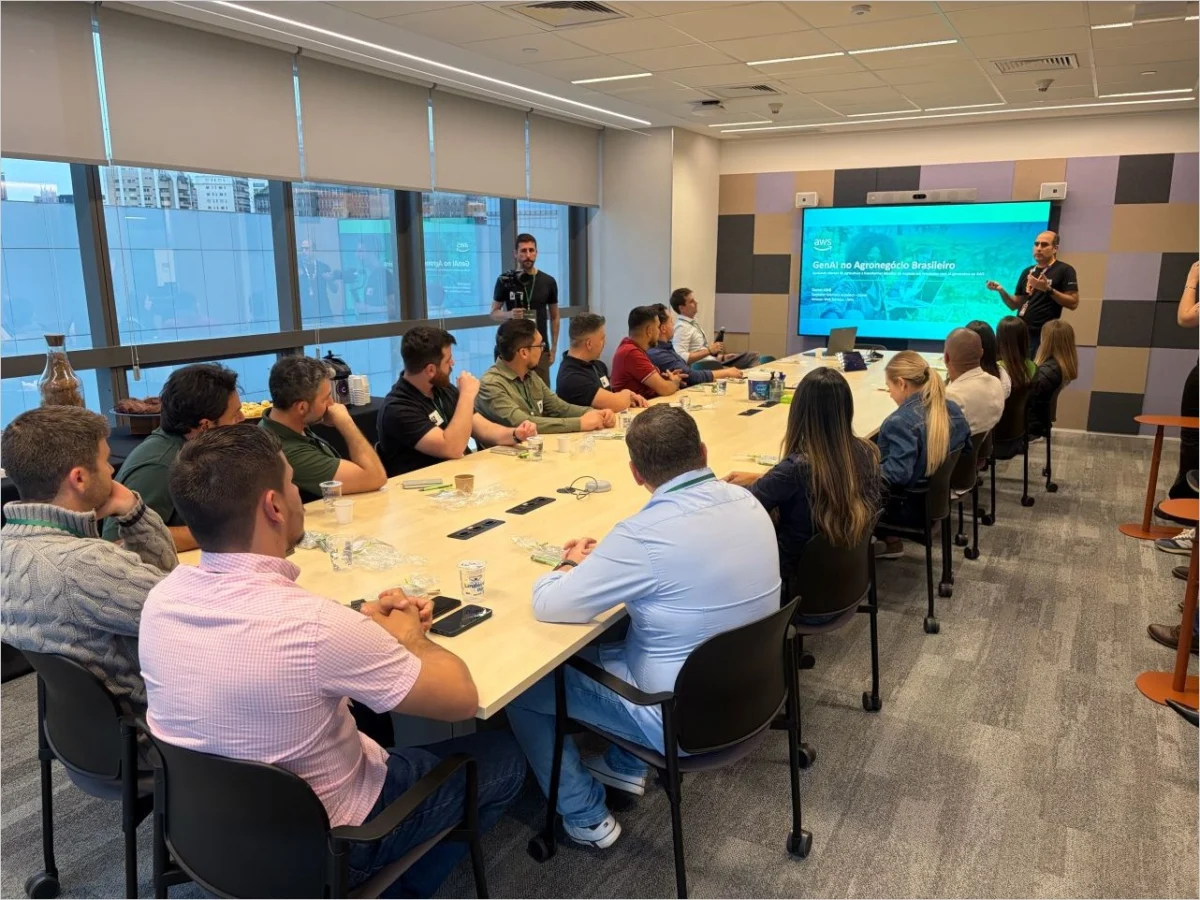
- Mid-October (Sẽo Paulo, Brazil): AWS hosted technology leaders from Brazilian agribusiness, highlighting the critical role of generative AI and voice-first interfaces in operational workflows.
- October 17: Amazon Threat Intelligence telemetry detected a
PHP2Shellexploitation attempt in MadPot honeypots—four days before the associated CVEs were publicly disclosed. - October 21 (02:00 UTC): Proof-of-concept exploits for CVE-2026-109618 and CVE-2026-109619 began circulating approximately 12 hours prior to the official embargo lift.
- October 21 (14:00 UTC): Public disclosure of the vulnerabilities, accompanied by immediate AWS WAF mitigation strategies and the general availability launch of AWS Continuum.
- October 31: AWS Community Day Brasil Norte in Belém concludes the 2026 Brazilian community event season.
- November 30 – December 4: AWS re:Invent opens in Las Vegas, featuring more than 2,200 sessions with reserved seating currently live.
Supporting Data
The quantitative metrics behind this week’s releases underscore significant efficiency gains for enterprise architects, data engineers, and security teams:
- Voice Catalog Expansion: Polly’s generative engine now supports 57 generative voices across 11 languages and 25 locales, welcoming Hindi, Finnish, and Brazilian Portuguese into the fold.
- ECS Gateway Efficiency: A single ALB can now handle up to 25 distinct services, while a single gateway can associate with up to 10,000 clusters (capped at five gateways per cluster).
- Massive Database Migration: U.S. Bank successfully migrated 119 terabytes of data across four Oracle Exadata databases to Amazon RDS for Oracle, utilizing AWS DataSync, Oracle XTTS, and Amazon EFS. Initial baseline copies completed in approximately 7 days, with individual cutovers averaging four hours.
- Coding Agent Economics: Tokenomics benchmarking revealed that dynamic routing models could reduce coding assistant costs by 44.7 percent, albeit with a minor 4.8 percent reduction in mean quality.
Official Responses and Strategic Vision
AWS leadership continues to emphasize that hardware choice should not shackle software development. In recent AWS Insights commentary, the company stressed that the pace of innovation requires architectures capable of pivoting instantly between hardware platforms without requiring ground-up rewrites.
This philosophy is embodied in initiatives like TorchNeuron, which ensures that machine learning teams utilizing PyTorch can leverage custom AWS Trainium silicon simply by appending .to('neuron') to their code. Eager execution and torch.compile remain fully intact, proving that specialized, cost-effective hardware accelerators can be adopted without locking engineering teams into proprietary software ecosystems.
On the security front, the rapid discovery of the PHP2Shell exploit prior to public disclosure has forced a reevaluation of traditional patch management cycles. Amazon Threat Intelligence data confirms that threat actors operationalize vulnerabilities almost instantaneously upon disclosure—or earlier. Consequently, modern security paradigms must abandon assumptions of multi-day patch windows, shifting instead toward automated containment and context-aware vulnerability validation, as championed by AWS Continuum.
Implications
Transforming Field Operations Through Voice-First AI
During a recent presentation at the AWS office in São Paulo, technology leaders from Brazilian agribusiness zeroed in on a fundamental operational reality: when an agronomist is driving between remote farms with both hands on a steering wheel, graphical user interfaces are useless. The interface must be voice. By introducing natural-sounding Brazilian Portuguese voices (Leo and Carolina) to the Amazon Polly Generative engine, AWS provides a localized, drop-in upgrade that drastically improves the accessibility of field-based enterprise applications.
Redefining Vulnerability Management with AWS Continuum
The traditional model of vulnerability scanning—dropping a massive, unprioritized list of CVEs onto an engineering team’s desk—is officially obsolete. AWS Continuum changes this dynamic by building a comprehensive context graph linking code repositories directly to cloud environments. By reproducing exploitable findings inside isolated sandboxes and generating ready-to-merge pull requests ranked by proximity to business-critical systems, Continuum bridges the gap between identification and remediation. While current remediations require human sign-off via pull request review, the framework sets the stage for autonomous, confidence-gated security fixes in the future.

Streamlining Microservices with Amazon ECS Gateway
Managing ingress traffic in large containerized environments has historically required complex coordination between network operations and application developers. Amazon ECS Gateway resolves this friction by introducing a clean separation of concerns. Platform teams establish baseline security groups, subnets, and TLS settings once, while application teams simply attach a gateway connector to their service definition. By allowing up to 25 services to share a single Application Load Balancer and provisioning ALBs dynamically on demand, AWS has lowered the operational overhead of running microservices at scale.
Eliminating Migration Friction
For large financial institutions and enterprise legacy environments, database migrations have long been high-stress, high-downtime projects. U.S. Bank’s successful migration of 119 TB from Oracle Exadata to Amazon RDS for Oracle demonstrates that config-driven pipelines utilizing AWS DataSync and Oracle XTTS can achieve zero data loss with minimal cutover windows. Similarly, the introduction of zero-downtime online migrations from self-managed Valkey or Redis OSS directly into Amazon ElastiCache Serverless removes a major hurdle for teams looking to modernize their caching layers without risking client-facing errors.
As the tech industry looks ahead to AWS re:Invent in Las Vegas, the overarching theme of these updates is clear: cloud infrastructure is evolving to be more autonomous, more context-aware, and seamlessly integrated into the physical and operational realities of global enterprises.
 Reynand Wu
 Jia Lissa
 Ali Ikhwan
