
 By Basiran
SEATTLE — Amazon Web Services (AWS), a subsidiary of Amazon.com, has announced a significant expansion of its Amazon Elastic Block Store (Amazon EBS) Volume Clones capability. Building upon the localized cloning features introduced last year, the cloud computing giant is rolling out cross-account volume copying. This new capability allows organizations to create direct point-in-time copies of EBS volumes across distinct AWS accounts while simultaneously applying custom encryption through AWS Key Management Service (AWS KMS) in the target environment.
The announcement addresses a long-standing architectural friction point for enterprise DevOps, compliance, and security teams: securely and efficiently provisioning production-grade data into isolated development, testing, and staging environments residing in separate AWS accounts.
Main Facts
The newly released feature bridges the gap between isolation and accessibility in multi-account AWS architectures. Key highlights of the announcement include:
- Cross-Account Capabilities: Users can now securely copy Amazon EBS volume clones from a source AWS account to a designated target AWS account.
- Target-Side Re-encryption: During the copy process, organizations can opt to re-encrypt the volume using a unique AWS Key Management Service (AWS KMS) key native to the target account, satisfying strict multi-tenant security and compliance frameworks.
- Integration with AWS RAM: The process relies on AWS Resource Access Manager (RAM) to govern sharing permissions safely across AWS accounts or within an established AWS Organization.
- Streamlined Workflows: Developers and system administrators can execute these operations via the Amazon EC2 and EBS consoles, or programmatically using the AWS Model Context Protocol (MCP) Server and associated developer plugins for AI coding assistants.
- Immediate Availability: The feature is live today across all AWS Regions that currently support standard Amazon EBS Volume Clones.
Chronology of Innovation: From Local Clones to Cross-Account Architecture
To fully understand the weight of this release, it is helpful to examine the evolutionary trajectory of Amazon EBS data management features.
The Foundation: Local Volume Clones
Last year, AWS introduced Amazon EBS Volume Clones, a feature designed to create instant, point-in-time block storage copies within the same Availability Zone (AZ). Prior to this capability, developers relied heavily on Amazon EBS snapshots to duplicate data. While snapshots remain vital for long-term backup and archival strategies, they require data to be read from S3 and written to new volumes, a process that can introduce latency and operational overhead when dealing with massive, terabyte-scale datasets.
Volume clones altered this paradigm by utilizing a metadata-driven, redirect-on-write architecture. This allowed teams to spin up fully functional block storage volumes instantaneously, regardless of size, without waiting for physical data migration across underlying storage tiers. However, these initial clones were constrained to the boundaries of a single AWS account and Availability Zone, limiting their utility in modern, highly segregated multi-account environments.

The Next Evolution: Multi-Account Expansion
As enterprise cloud strategies matured, organizations increasingly adopted multi-account architectures to enforce least-privilege access, separate cost centers, and isolate production workloads from experimental sandboxes. However, sharing data across these boundaries often involved complex choreography—requiring production snapshots to be shared, copied, converted into AMIs or new volumes, and re-encrypted manually in target accounts.
Recognizing this friction, AWS engineering teams developed the cross-account copy extension for EBS Volume Clones. By pairing the speed of instant volume cloning with the governance features of AWS RAM and the security of AWS KMS, AWS has effectively closed the loop between production data generation and secondary-environment consumption.
Supporting Data, Architecture, and Operational Mechanics
The execution of a cross-account EBS clone relies on a precise, multi-step workflow designed to maintain rigorous security and auditability.
Step-by-Step Implementation
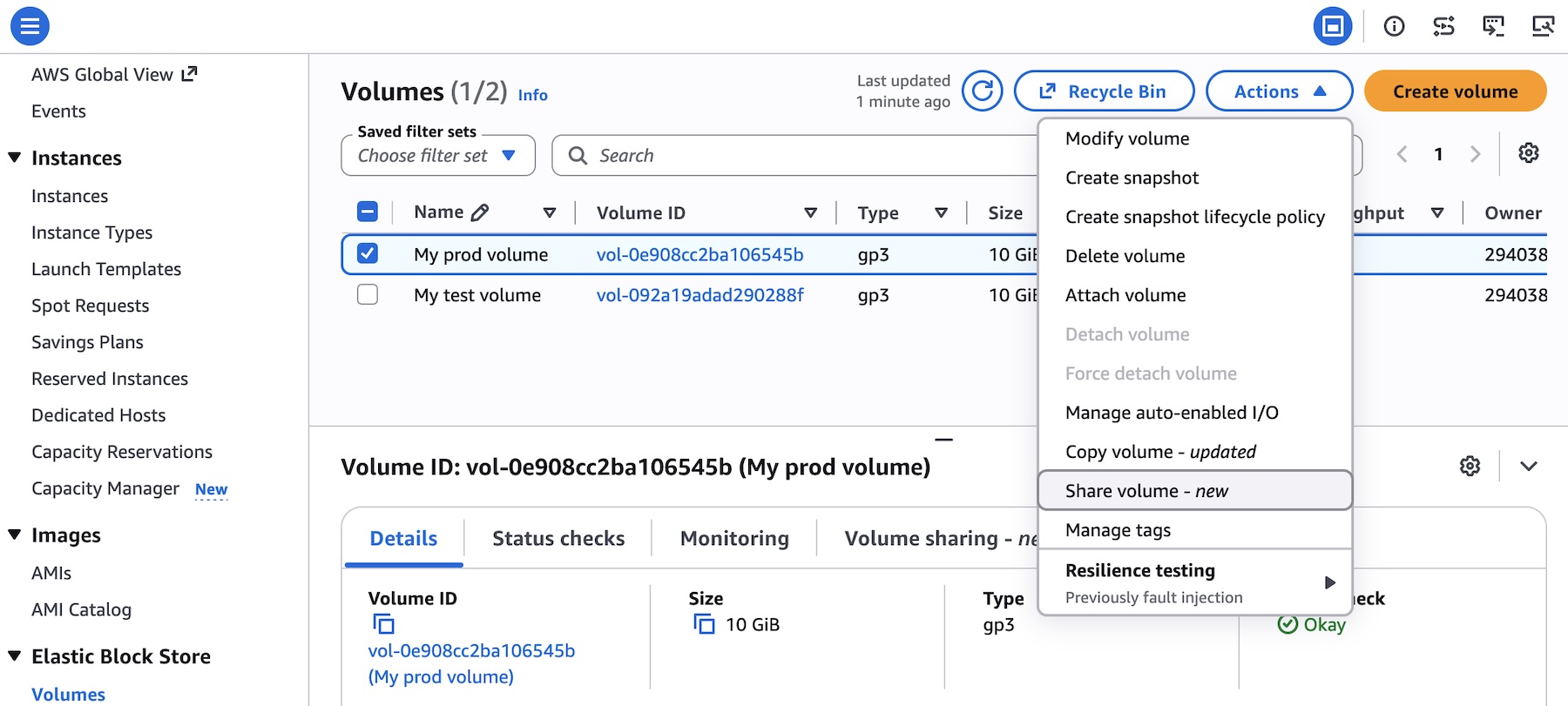
- Initiation via Console: The process begins in the Amazon EBS console. The owner of the source volume selects the storage asset and chooses the Share volume option.
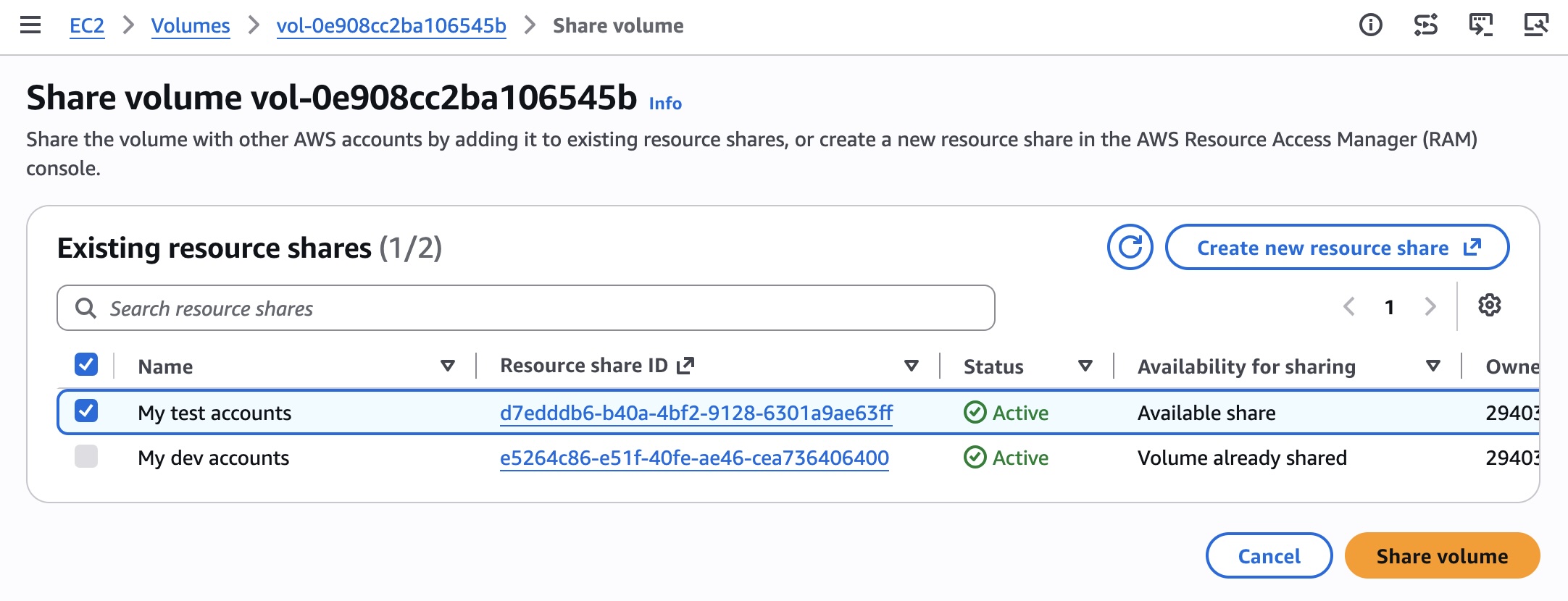
- Resource Sharing via AWS RAM: The volume is explicitly added to an existing resource share or a newly created resource share within the AWS RAM console. This ensures that sharing policies adhere to organizational guardrails.
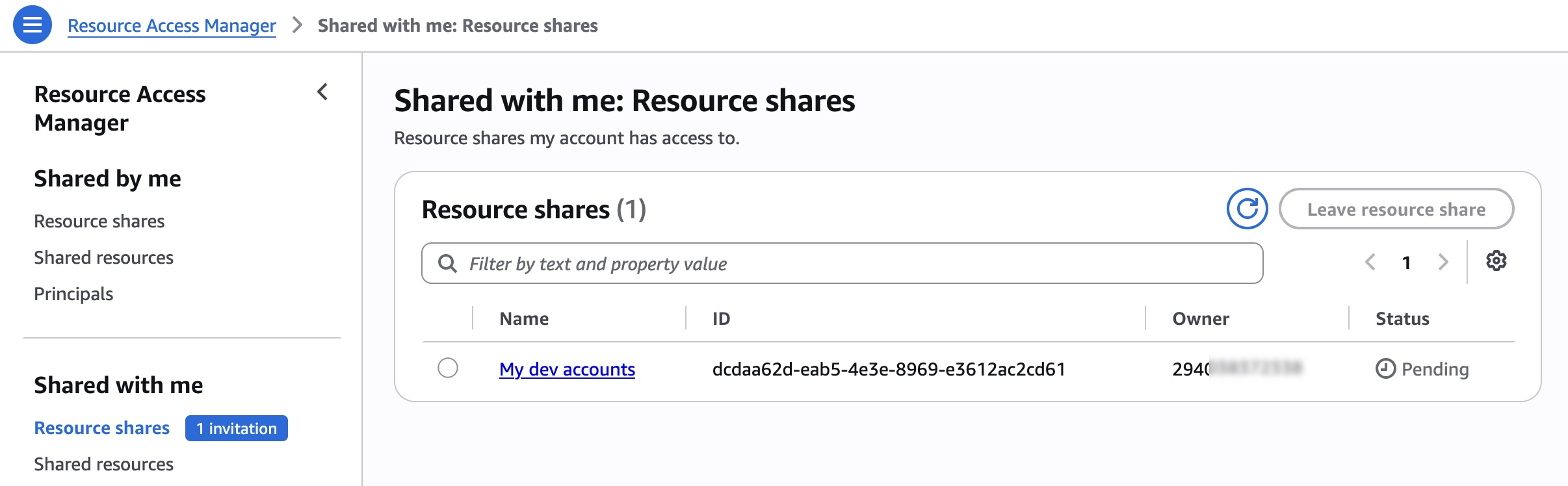
- Acceptance in the Target Account: Once shared, the target AWS account receives a visibility notification. The administrator or authorized user within the target account must formally accept the resource share via the AWS RAM console.
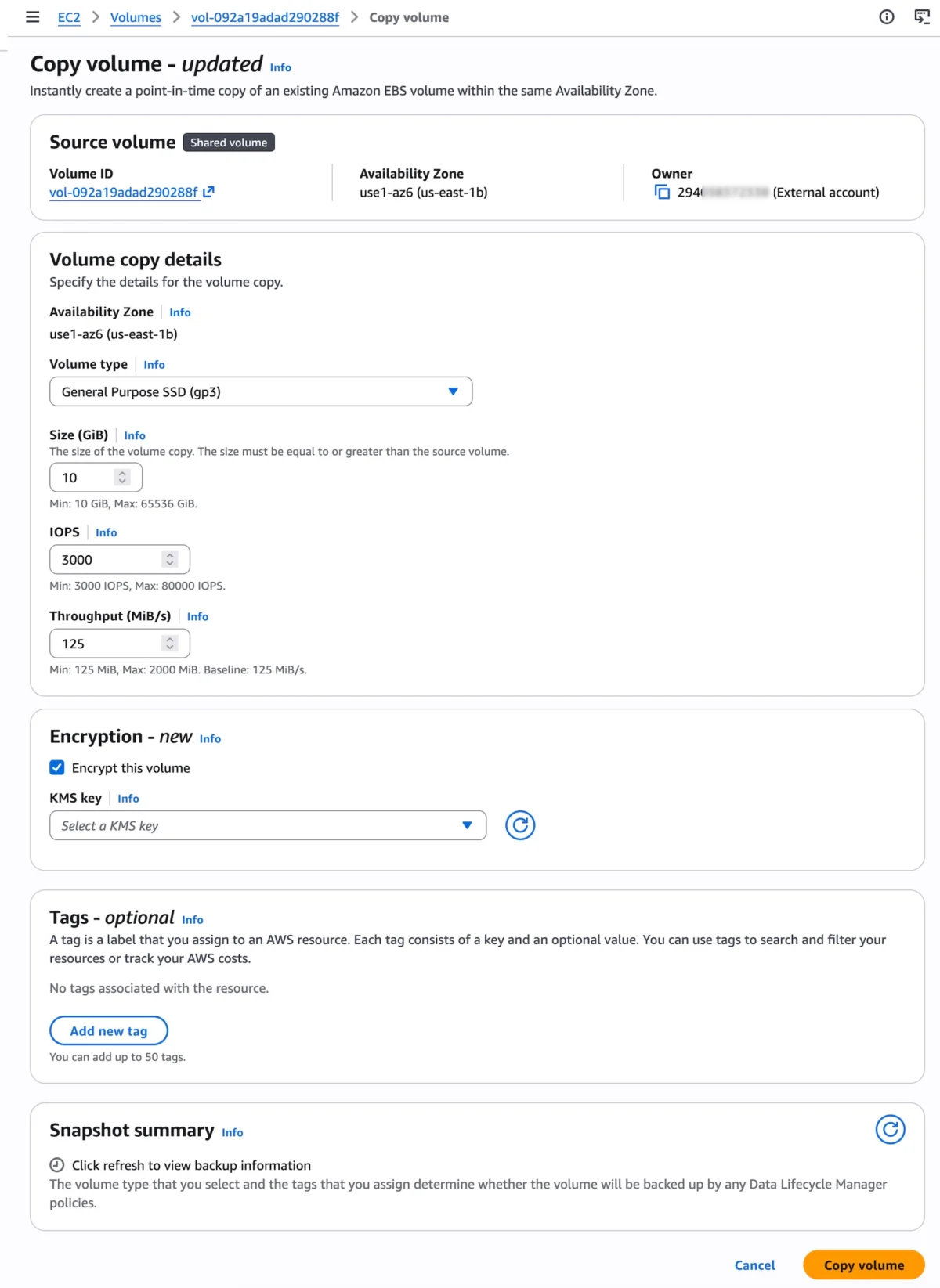
- Cloning and Re-encryption: Upon acceptance, the shared volume appears within the target account’s EBS volume management interface. The user selects Copy volume, at which point they can designate a target AWS KMS key to re-encrypt the data payload.
Programmatic Integration and AI-Assisted Workflows
In a nod to modern software engineering trends, AWS has ensured that cross-account volume copying is not restricted to graphical management consoles. Teams looking to automate their infrastructure-as-code (IaC) pipelines or integrate data refreshing into CI/CD workflows can execute these actions programmatically via AWS APIs and Command Line Interface (CLI) scripts.
Furthermore, AWS has highlighted compatibility with the AWS MCP (Model Context Protocol) Server and associated plugins. Developers utilizing AI-powered coding assistants and agent toolkits can now query documentation, structure API calls, and orchestrate cross-account volume sharing routines directly from their integrated development environments (IDEs).
Official Responses and Strategic Intent
AWS leadership emphasizes that this release directly addresses customer feedback regarding data agility and operational efficiency.
"With this new feature, you can use your latest application data to develop, test, and experiment in a secondary environment, while protecting and isolating the information in the production environment," noted Channy Yun, Principal Developer Advocate at AWS, in the official release documentation. "For example, you can create copies of a production environment to refresh test and development environments set up in separate accounts with the desired EBS encryption."
Cloud architects and enterprise security officers have long wrestled with the paradox of data freshness versus data governance. Production data is inherently valuable for staging environments because it exposes edge cases, performance bottlenecks, and database anomalies that synthetic test data often misses. However, exposing production data to development accounts—or enduring the administrative drag of sanitizing, snapshotting, and transferring large datasets manually—has consistently slowed down deployment velocities.
By shifting the burden of secure, rapid duplication to the infrastructure layer, AWS aims to eliminate these bottlenecks. The incorporation of native AWS KMS re-encryption ensures that compliance mandates (such as HIPAA, PCI-DSS, and SOC 2) are met, as target accounts never inherit the decryption keys of the production environment, maintaining strict cryptographic segregation.

Implications for Enterprise IT, DevOps, and Security
The introduction of cross-account Amazon EBS Volume Clones carries wide-ranging implications across multiple facets of enterprise technology management.
1. Accelerated CI/CD and Testing Velocity
In modern software development, the speed at which a team can test code against realistic datasets dictates overall time-to-market. By leveraging instant volume clones across accounts, QA and staging teams can refresh their databases within seconds rather than hours. This enables continuous integration pipelines to run integration tests against up-to-date production schema snapshots without risking the integrity of live customer data.
2. Enhanced Posture for Security and Compliance
Multi-account architectures are a foundational best practice of the AWS Well-Architected Framework. However, sharing data across these accounts has historically introduced compliance gray areas—such as overly permissive IAM roles or static snapshot sharing. By channeling cross-account sharing through AWS RAM and enforcing mandatory AWS KMS re-encryption at the target boundary, AWS provides a auditable, least-privilege framework that satisfies corporate security auditors.
3. Cost Optimization and Storage Efficiency
Traditional methods of duplicating data across accounts often resulted in storage bloat, as teams retained multiple independent copies of heavy snapshots and volumes across different regions and accounts. While EBS clones utilize underlying storage blocks efficiently, the ability to spin them up instantly and tear them down post-testing helps organizations optimize their cloud spend, preventing orphaned resources from lingering in production accounts.
4. Future Roadmap and Availability
As of today, cross-account Amazon EBS Volume Clones are generally available across all AWS Regions that currently support standard EBS Volume Clones. Organizations looking to verify Regional availability can consult the official AWS Capabilities by Region dashboard. AWS has encouraged users to submit feedback, operational insights, and feature requests via AWS re:Post for Amazon EBS or through dedicated enterprise support channels as the feature rolls out globally.
 Reynand Wu
 Jia Lissa
 Nana Wu
