
 By Nana Muazin
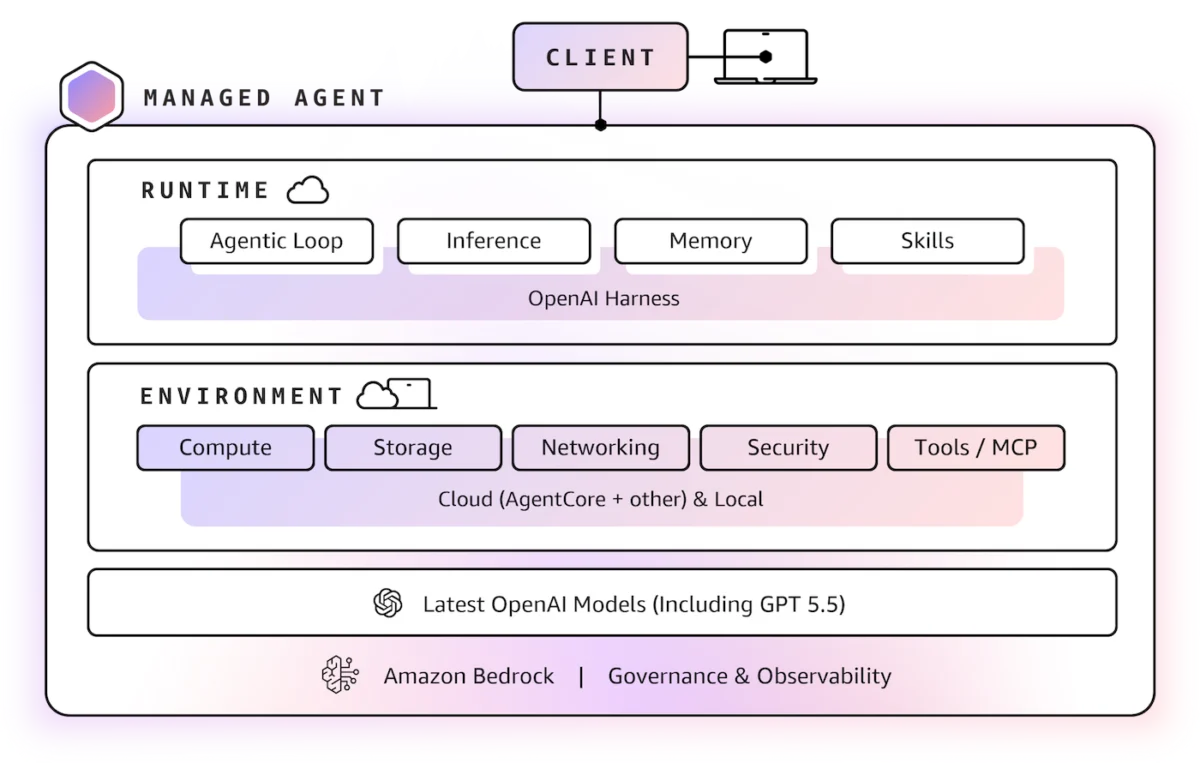
SEATTLE — Amazon Web Services (AWS) has officially announced the public preview of Amazon Bedrock Managed Agents powered by OpenAI, marking a significant milestone in hybrid cloud artificial intelligence architectures. Built upon a customized, AWS-native version of OpenAI’s Agents API, the new offering allows enterprise developers to deploy autonomous, OpenAI-optimized agents directly within their secure AWS environments.
The announcement, highlighted in AWS’s weekly developer roundup, bridges the gap between frontier AI model architectures and enterprise-grade cloud governance. Alongside this integration, AWS is continuing to expand its broader model repository with new frontier choices, while simultaneously releasing its latest round of product lifecycle updates, sunsetting schedules, and community event announcements.
Main Facts
The core of the recent AWS announcement centers on tightly integrating OpenAI’s model capabilities with AWS’s deep security, identity, and governance ecosystem.
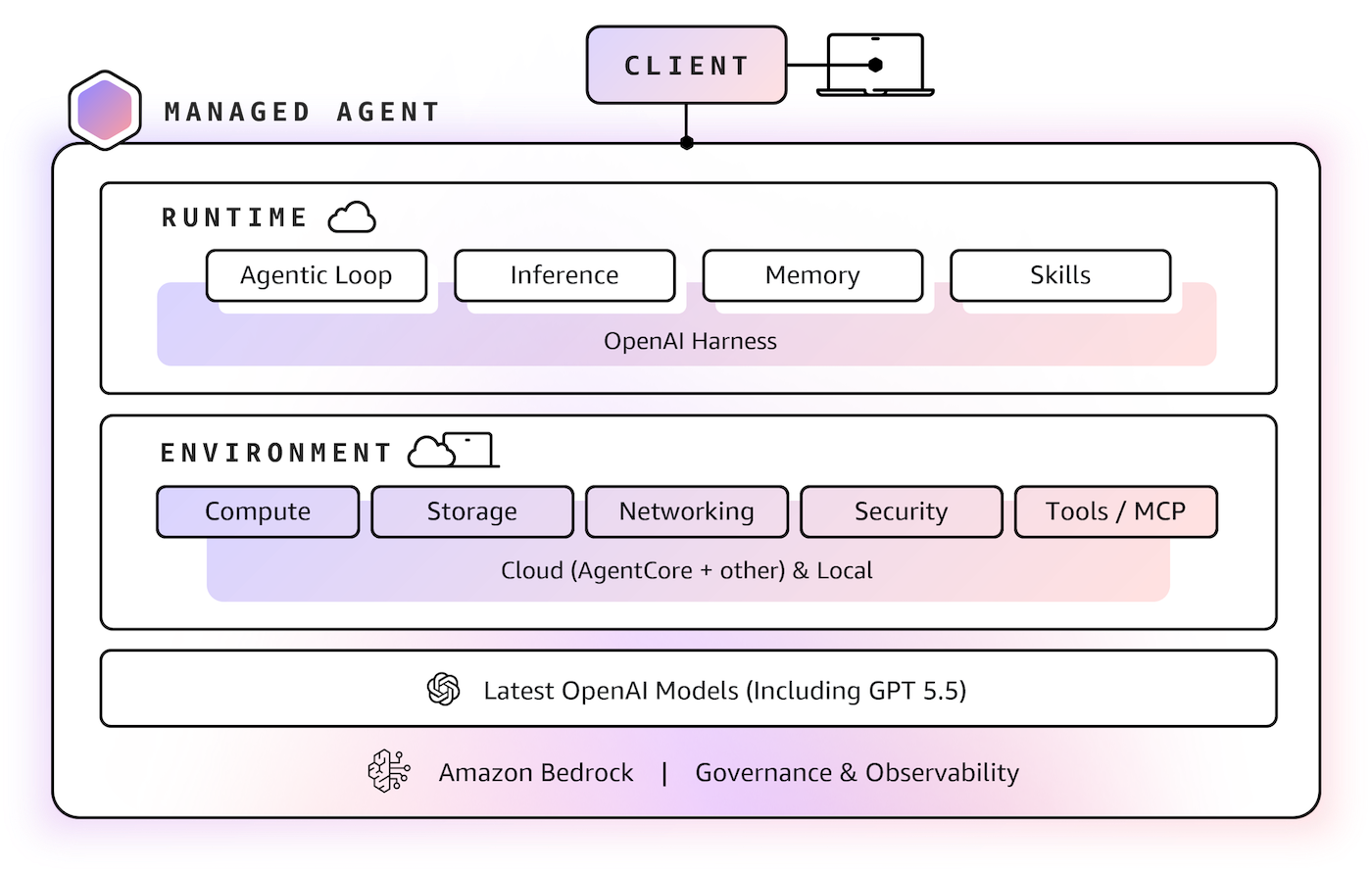
- OpenAI Integration on Bedrock: The new Amazon Bedrock Managed Agents feature runs on a customized adaptation of OpenAI’s Agents API. It is engineered specifically to be AWS-native, allowing teams to leverage existing AWS identity management, permission frameworks, and compliance guardrails.
- Flexible Execution Environments: Developers are given two primary choices for hosting and running their agents:
- Self-Hosted Compute: Ideal for development machines, existing containers, or customized on-premises/cloud compute environments.
- Amazon Bedrock AgentCore Runtime: A fully managed runtime environment that handles session management and configurable storage directly within the user’s AWS account.
- Frontier Model Expansion: AWS is rolling out additional frontier models across the Amazon Bedrock platform to provide developers with greater variety in performance, cost, and capability.
- Service Lifecycle Updates: AWS updated its Product Lifecycle Changes on September 29, 2026, outlining new maintenance schedules, sunset phases, and end-of-support timelines to help organizations plan infrastructure migrations.
Chronology of Events and Announcements
The deployment of these features follows a strategic timeline designed to give enterprise developers advanced access to cutting-edge AI capabilities while ensuring a smooth transition for legacy services:
- Late September 2026: AWS finalizes its latest batch of product lifecycle updates (dated September 29, 2026), moving select older services into Maintenance and Sunset phases.
- Early October 2026: AWS officially launches the public preview of Amazon Bedrock Managed Agents powered by OpenAI. Accompanying documentation, architecture diagrams, and runtime environment specifications go live on the official AWS documentation portal.
- October 29, 2026 (Upcoming Deadline): Services designated to enter the "Maintenance" tier will officially become inaccessible to new customers, necessitating final migration procedures for affected user bases.
- Ongoing Q4 2026: Developers begin testing agent execution environments using either self-hosted setups or the Bedrock AgentCore Runtime. Anticipation builds for upcoming developer gatherings, including AWS re:Invent and regional AWS Community Days.
Supporting Data and Technical Architecture
To understand the scope of Amazon Bedrock Managed Agents, enterprise architects must look closely at how the service bridges external AI logic with internal cloud infrastructure.
Execution Environments and Governance
The dual-runtime approach addresses a primary concern for enterprise cloud architects: data sovereignty and security compliance.
- Self-Hosted Compute: Enables organizations with strict air-gapped or legacy hybrid requirements to manage the compute footprint locally or within custom VPCs while utilizing the Bedrock orchestration framework.
- Bedrock AgentCore Runtime: Offloads infrastructure overhead. Sessions are managed elastically, and state storage is configured securely inside the customer’s designated AWS account boundaries.
Lifecycle and Maintenance Frameworks
AWS regularly deprecates services to streamline its vast cloud portfolio. The September 29, 2026 updates established strict criteria for services entering:
- Maintenance: Existing customers maintain access, but onboarding for new customers is cut off (with a strict enforcement date of October 29, 2026).
- Sunset: Gradual phase-out where active migration assistance and alternative service mapping are provided via the AWS Product Lifecycle Changes documentation.
- End of Support: Complete cessation of updates, patches, and technical backing for specific legacy features or versions.
Official Responses and Developer Community Reception
Response from the cloud developer community has been largely enthusiastic, particularly regarding the flexibility of running OpenAI-driven workflows natively inside AWS.

In the official announcement roundup, AWS advocates emphasized that organizations no longer need to choose between leveraging state-of-the-art agent APIs and adhering to strict cloud compliance mandates. By baking native Identity and Access Management (IAM), CloudTrail auditing, and enterprise encryption into the Bedrock Managed Agents framework, AWS is addressing the security friction that typically accompanies multi-platform AI deployments.
Furthermore, community leaders have pointed out that the expansion of Bedrock’s frontier model catalog underscores AWS’s commitment to a "model-choice" philosophy. Rather than locking builders into a single proprietary ecosystem, Amazon continues to position Bedrock as a universal orchestration layer for generative artificial intelligence.
Implications for Enterprise Architecture and Operations
The integration of OpenAI-powered agents into Amazon Bedrock carries profound implications for enterprise software development, security postures, and operational budgeting.
1. Streamlined Multi-Model Strategy
Enterprises previously struggled to unify disparate AI tools under a single governance umbrella. With Bedrock Managed Agents, organizations utilizing OpenAI’s sophisticated reasoning and agentic workflows can now manage those models using the exact same security policies, VPC configurations, and monitoring tools they use for core AWS workloads like Amazon DynamoDB, Lambda, and S3.
2. Enhanced Operational Readiness and Migration Pressures
While the new AI tools offer exciting capabilities for automation, the simultaneous rollout of AWS service lifecycle changes reminds IT departments of the continuous need for infrastructure hygiene. Organizations must audit their current architectures against the latest maintenance and sunset lists. Failing to migrate off services reaching End of Support or Maintenance can introduce security vulnerabilities and compliance risks.
3. Looking Toward AWS re:Invent and Beyond
As AWS heads into its major conference season—highlighted by AWS re:Invent and various global AWS Community Days—the release of these managed agent tools sets the stage for a heavy focus on autonomous workflows, enterprise-grade generative AI, and simplified developer experiences. Builders are encouraged to join the AWS Builder Center to share early architectural patterns and access hands-on tutorials regarding the new Bedrock-OpenAI integration.
For real-time updates, developers should monitor the official "What’s New with AWS" page and review ongoing migration advisories via AWS Support.
 Reynand Wu
 Jia Lissa
 Nana Wu
