
 By Neng Nana
By Global Enterprise Technology Desk
Published: October 24, 2023
Main Facts
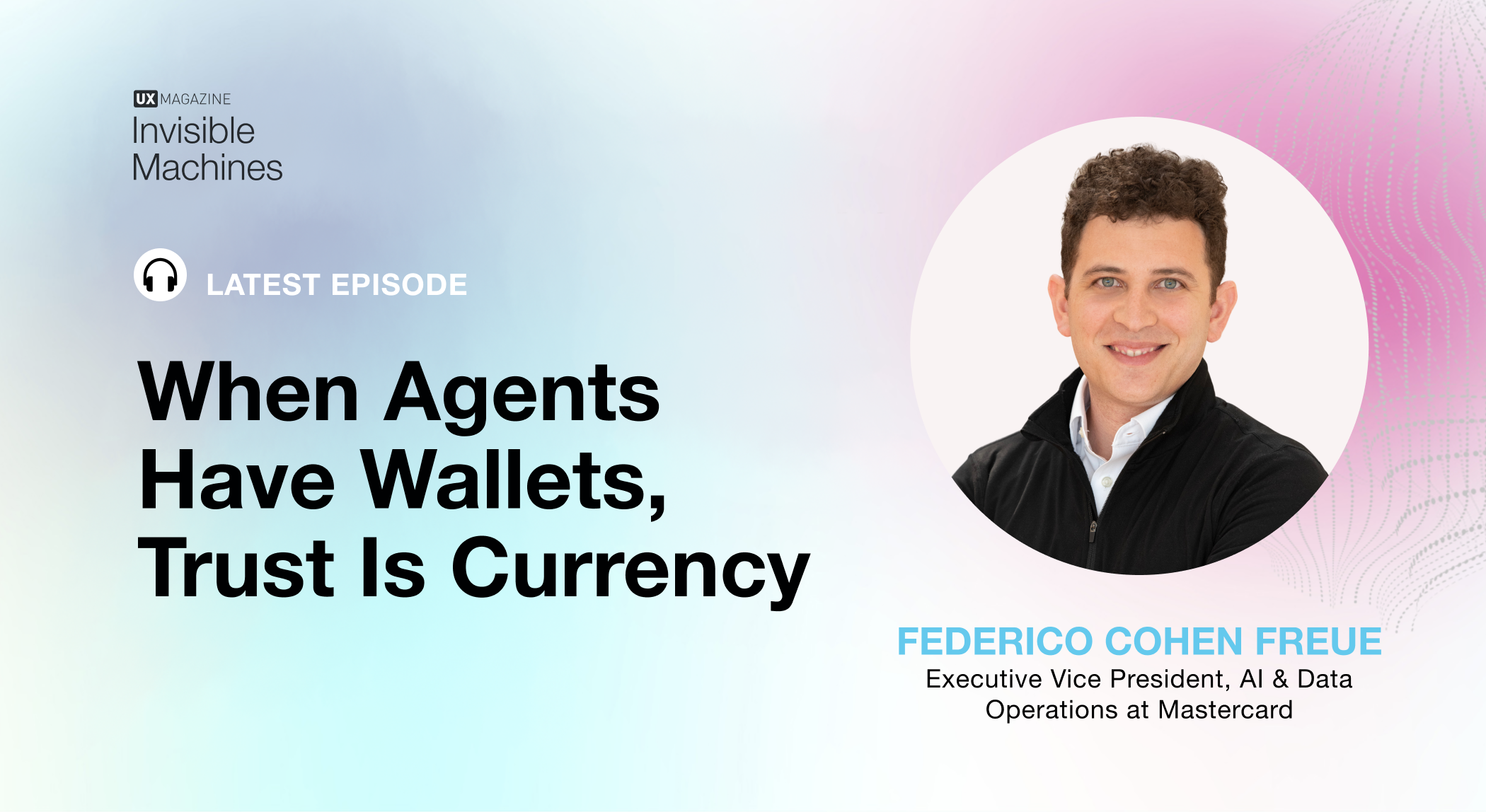
In the fast-evolving landscape of enterprise artificial intelligence, organizations often confuse the desire for innovation with actual operational readiness. According to Federico Cohen Freue—affectionately known as "Fed"—who spearheads the central AI and data team at Mastercard, enterprise AI adoption has transitioned from a superficial infatuation with conversational chatbots to a complex, high-stakes demand for autonomous AI agents.
Mastercard’s central AI unit currently processes approximately 1,000 internal AI requests annually. While these inquiries were once dominated by simple chatbot proposals, over 50% of incoming submissions now center on AI agents. However, Freue and industry analysts emphasize a stark operational reality: wanting an agent and being structurally prepared to deploy one are two entirely different phenomena.
To navigate this seismic shift, Mastercard relies on a disciplined strategic framework, prioritizing foundational knowledge architecture over rushed feature deployment. Key facets of this enterprise transformation include:
- The Agentic Pivot: A massive migration from question-and-answer interfaces to workflow-embedded, autonomous agents executing tasks on behalf of human users.
- The Simplicity Framework: A one-sentence prioritization filter ensuring every AI initiative makes commerce more secure, smarter, more personal, or strengthens Mastercard as an enterprise.
- Agentic Payments Infrastructure: Shifting focus away from flashy downstream applications toward robust foundational protocols—such as agent identity verification, delegated authority frameworks, and merchant acceptance standards.
- Knowledge as Infrastructure: A paradigm shift from reactive knowledge bases (chatbots waiting for queries) to proactive learning systems acting as "GPS for expertise."
Chronology: The Evolution of Mastercard’s AI Integration
To understand how Mastercard approaches enterprise-scale artificial intelligence today, one must trace the maturation of both the technology and the organization’s internal demand pipeline.
Phase 1: The Chatbot Era (2020–2022)
In the early days of the generative AI boom following the popularization of large language models (LLMs), Mastercard’s incoming stream of AI proposals mirrored those of the broader corporate world. More than half of the thousand annual requests submitted to Fed’s team were variations of the same prompt: “Can we build a chatbot for this?”
During this phase, the corporate imagination was constrained by the interface. Organizations viewed AI primarily as an automated helpdesk or an internal search engine. While these projects helped build basic data fluency, they rarely touched the core transactional engines of global commerce.
Phase 2: The Agentic Awakening (2023–Present)
As underlying models gained the capacity to execute multi-step reasoning, call external APIs, and interact directly with software environments, internal demand shifted radically. Today, chatbots represent a minority of requests. The overwhelming majority ask for autonomous agents capable of operating inside complex enterprise workflows.
Freue views this shift as a positive psychological milestone. Users are no longer just imagining static query-and-response loops; they are conceptualizing software entities that can take autonomous action on their behalf. Yet, this evolution has brought unprecedented engineering and risk-management challenges.
Phase 3: The Infrastructure of Trust (The Road Ahead)
As consumer demand for agent-driven commerce accelerates—spanning LLM-mediated product discovery, multi-vendor trip booking, and automated supply chain negotiations—Mastercard is aggressively building the underlying rails. Rather than racing to build consumer-facing agent apps, the company is prioritizing the foundational rules, digital identity frameworks, and security layers required to make agentic transactions legally and financially viable at scale.
Supporting Data & Metrics
Navigating a thousand incoming AI proposals per year across a multinational financial services corporation requires rigorous metrics, clear prioritization matrices, and a zero-tolerance approach to technical debt disguised as innovation.
| Metric / Dimension | Traditional Enterprise Approach | Mastercard’s AI Strategy |
|---|---|---|
| Annual AI Inquiries | ~1,000 unvetted requests per year | ~1,000 requests filtered through a strict 4-pillar strategic lens |
| Primary Request Focus | Chatbots & customer-facing text generators | Workflow-embedded autonomous agents |
| Prioritization Metric | Trendy use-cases & executive whims | Four-part mandate: Secure, Smarter, Personal, Stronger |
| Knowledge Management | Siloed document repositories & static wikis | Dynamic "learning twins" & unified domain maps |
| Transactional Focus | Downstream UI/UX features | Identity verification, delegated authority, and trust protocols |
The "Ball Bearing" Problem
A central cautionary tale guiding Mastercard’s development philosophy is the Ball Bearing Analogy. Imagine two steel ball bearings that appear completely identical to the naked eye. One has been precision-machined with exact metallurgical specifications and strict tolerances; the other has not. Visually, they are indistinguishable. However, if you place the substandard ball bearing inside a high-stress airplane engine, catastrophic failure is inevitable.
AI agent demos operate under the exact same illusion. Even a sophisticated technical observer often cannot distinguish between a demo that represents a robust, production-ready architecture and one that is a beautifully polished, fragile illusion waiting to break under real-world pressure.
Because the visual experience of a broken demo and a working one can look identical, Mastercard heavily invests in internal training and fluency before authorizing deployment. By ensuring employees understand the underlying engineering conditions required to make AI work, the organization drastically reduces the frequency of costly production failures.
Official Responses and Strategic Frameworks
Addressing the complexities of enterprise transformation requires more than technical guardrails; it demands a shared linguistic and strategic framework that can be understood by executives and engineers alike.
The Four-Pillar Prioritization Lens
With a thousand competing ideas entering the pipeline, Mastercard avoids paralysis by applying a remarkably concise prioritization framework. Every proposed AI initiative must successfully answer a foundational question aligned with four strategic pillars:
- Does it make commerce more secure?
- Does it make commerce smarter?
- Does it make commerce more personal?
- Does it strengthen Mastercard as an enterprise?
According to Freue, the power of this framework lies in its simplicity. It does not act as a legal compliance checklist or a static guardrail document; rather, it functions as a strategic lens. When cross-functional teams share this common language, prioritization transforms from a contentious corporate negotiation into an objective, streamlined conversation. It immediately weeds out vanity projects that fail to move the needle on core business values.
Trust as the Ultimate Currency in Agentic Payments
As autonomous agents begin executing financial transactions on behalf of human users, traditional paradigms of consumer trust are fundamentally disrupted. Consumers no longer just browse storefronts; they delegate purchasing authority to algorithms.
Mastercard’s leadership stresses that the intermediary layer—far from becoming obsolete in an automated world—becomes the single most critical node in the economic ecosystem.
"Trust is the currency of innovation," Freue notes.
As transactions grow increasingly complex—involving multi-party negotiations, dynamic pricing algorithms, and autonomous handoffs between buyer and seller agents—the need for a trusted network architecture compounds exponentially. Mastercard’s immediate focus is therefore not on building consumer-facing shopping agents, but on establishing:
- Agent Identity Verification: Cryptographically proving which human or enterprise an autonomous agent represents.
- Delegated Authority Frameworks: Establishing explicit boundaries on what an agent is legally and financially permitted to spend or authorize.
- Merchant Acceptance Standards: Universal rules ensuring that transactions executed by machines meet global safety and compliance benchmarks.
Implications for the Enterprise Landscape
The philosophical thread uniting Mastercard’s AI strategy is sequence. While the broader tech industry frequently falls into the trap of starting with action—deploying models, building agents, and automating workflows before understanding the underlying data—Mastercard insists on an inverted sequence: Understand first, verify second, and act last.
Reengineering Organizational Knowledge
A major blind spot in enterprise AI initiatives is the assumption that poor performance stems from inferior model architecture. In reality, most AI failures are fundamentally knowledge problems. If an enterprise does not possess a clean, structured, and canonically correct map of its own institutional knowledge, deploying an autonomous agent into its workflows simply automates chaos at scale.
To solve this, Mastercard and forward-thinking engineering partners are pioneering proactive knowledge systems. Moving away from reactive document repositories—where seventeen versions of the same idea live across seventeen different folders—organizations are building unified domain maps.
From these maps emerge learning twins: digital models that understand what a specific employee knows, identify gaps in their expertise, and dynamically chart the most efficient educational path forward. This "GPS for expertise" treats organizational knowledge as living infrastructure rather than static onboarding documentation.
Cultural Readiness vs. Technological Readiness
Ultimately, Federico Cohen Freue’s insights reveal that enterprise transformation is rarely bottlenecked by the technology itself. Modern foundation models are remarkably powerful, flexible, and capable.
The true bottleneck is culture. Asking employees to treat learning as a continuous, dynamic process rather than a one-time HR requirement—or asking organizations to secure agent transactions before chasing trendy frontend demos—requires a profound psychological shift.
For organizations hoping to successfully navigate the agentic era, the lesson from Mastercard is clear: Before you ask what artificial intelligence can do for your business, you must rigorously ask what your organization actually knows. Because in the age of autonomous agents, the intelligence of the machine can never exceed the integrity of the knowledge upon which it is built.
 Nana Muazin
 Raul Delapena Setiawan
 Suro Senen
