
 By Layla Zulfa
In an era where digital presence is synonymous with business viability, the pressure on marketing teams to prove the tangible value of their social media efforts has never been greater. With nearly 5.75 billion users globally, social media has transformed from a branding playground into a critical revenue engine. Yet, a persistent gap remains: despite the massive scale of social commerce—projected to hit $908.5 billion in 2026—68% of marketers still struggle to articulate the return on investment (ROI) of their social strategies to executive stakeholders.
Measuring social ROI is no longer just about tracking "likes" or "shares." It is about bridging the divide between creative content and the bottom line. This article provides a comprehensive roadmap for tracking revenue, valuing non-monetary impact, and leveraging modern tools to defend your social budget.

The Fundamentals of Social Media ROI
Social media ROI is the measure of the value a business receives from its social media activities relative to the time, money, and effort invested. The traditional formula for this calculation is:
((Value Generated – Cost of Investment) / Cost of Investment) x 100

While the formula appears straightforward, the complexity lies in defining "value." In the modern marketing landscape, value is bifurcated into two distinct categories:
- Monetary Value: Direct revenue generated from social commerce, lead generation, and paid ad conversions.
- Non-Monetary Value: Brand sentiment, share of voice, community engagement, and long-term customer lifetime value (CLV).
To capture the full picture, sophisticated teams are now assigning estimated dollar values to these non-monetary outcomes, allowing them to fold "soft" metrics into their primary ROI formula.

Chronology of the Modern Social Funnel
Understanding ROI requires acknowledging that social media rarely functions as a "one-and-done" sales channel. The modern customer journey is non-linear.
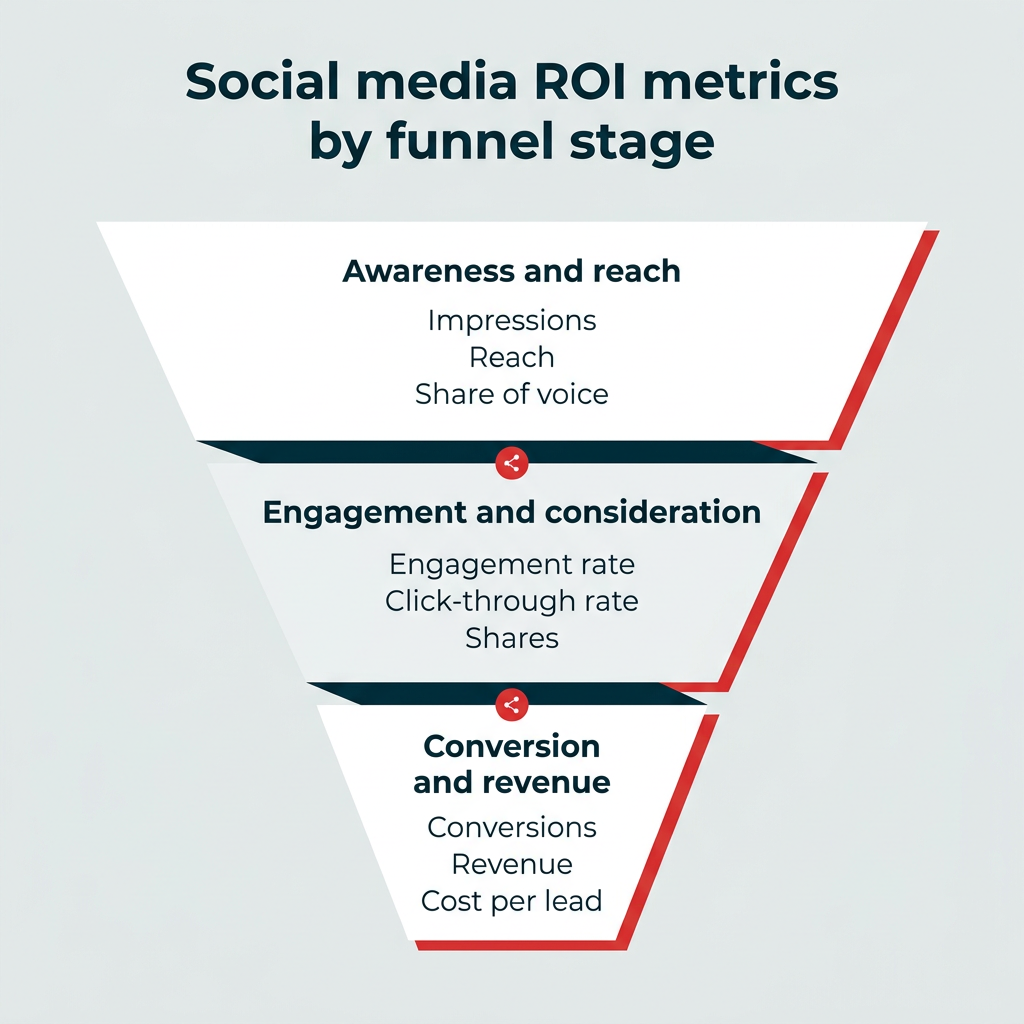
- Awareness Phase: A user discovers a brand through an organic TikTok video or an influencer partnership.
- Consideration Phase: The user engages with educational content or community discussions on LinkedIn or Instagram.
- Conversion Phase: The user eventually clicks a retargeting ad or a shoppable link, culminating in a purchase.
The challenge for many organizations is that they often rely on "last-click" attribution, which gives all the credit to the final ad clicked, ignoring the weeks or months of "warm-up" content that facilitated the purchase. This is why multi-touch attribution models are essential for proving the true worth of social media.
Supporting Data: The Case for Social Investment
The data supporting the move toward social-first strategies is overwhelming. Statista projections indicate that social commerce will grow by 10.7% year-over-year, with total purchases via social platforms expected to eclipse the $1 trillion mark by 2028.
Furthermore, 46% of marketers confirm that social media integration is directly responsible for improved sales performance. Beyond immediate revenue, social media acts as a top-of-funnel powerhouse, driving traffic and lead generation that feed the entire organization’s sales pipeline. For enterprise teams, proving this contribution is the primary safeguard against budget cuts during fiscal restructuring.
Overcoming Measurement Roadblocks
Marketers face four primary obstacles when calculating ROI:
1. Multi-Touch Attribution
Because a customer might interact with a brand across Instagram, email, and search, social often gets overlooked in single-touch models. Adopting assisted conversion models allows teams to track the "assist" value of social content.
2. The Lagging Conversion Cycle
B2B and high-ticket B2C sales often have long lead times. A LinkedIn post today might not result in a contract for three months. If your reporting only looks at 30-day windows, you are likely undercounting the impact of your social efforts.
3. Quantifying "Soft" Value
How do you put a price on brand sentiment? By using proxies such as Customer Lifetime Value (CLV). If your data shows that customers who engage with your social content have a 20% higher CLV, you can assign a portion of that increased value to your social media efforts.

4. Data Silos
Each platform—Facebook, TikTok, X, LinkedIn—has its own analytics dashboard. Manually aggregating this data is error-prone and inefficient. According to the 2025 Nielsen Marketing Report, data fragmentation is the number one barrier to accurate ROI reporting.
The Five-Step Execution Plan
To calculate your ROI with precision, follow this structured approach:
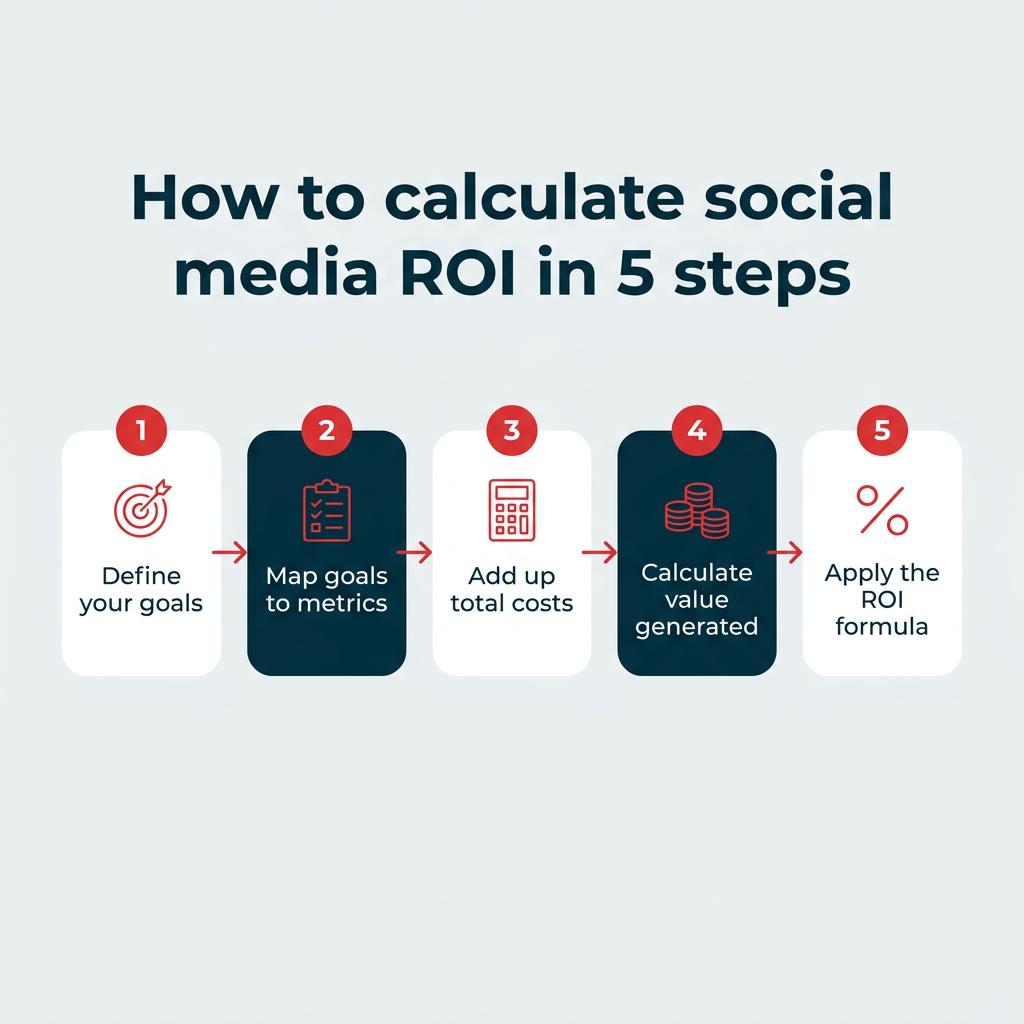
- Define Clear Objectives: Are you driving sales, generating leads, or increasing brand awareness? Your ROI calculation is only as good as your goals.
- Map Metrics to Goals: If the goal is awareness, track impressions and share of voice. If the goal is conversion, track ROAS (Return on Ad Spend) and cost-per-acquisition.
- Aggregate All Costs: Do not forget to include the "hidden" costs: agency fees, software subscriptions, creative production time, and ad spend.
- Calculate Total Value: Combine direct revenue with the estimated value of your non-monetary outcomes.
- Run the Formula: Apply the ROI formula and express your result as a percentage. Anything above zero indicates a profitable investment.
Implications for Future Strategy: Testing and Optimization
Once you have your baseline ROI, the next phase is optimization. This is where experimentation becomes a strategic imperative.
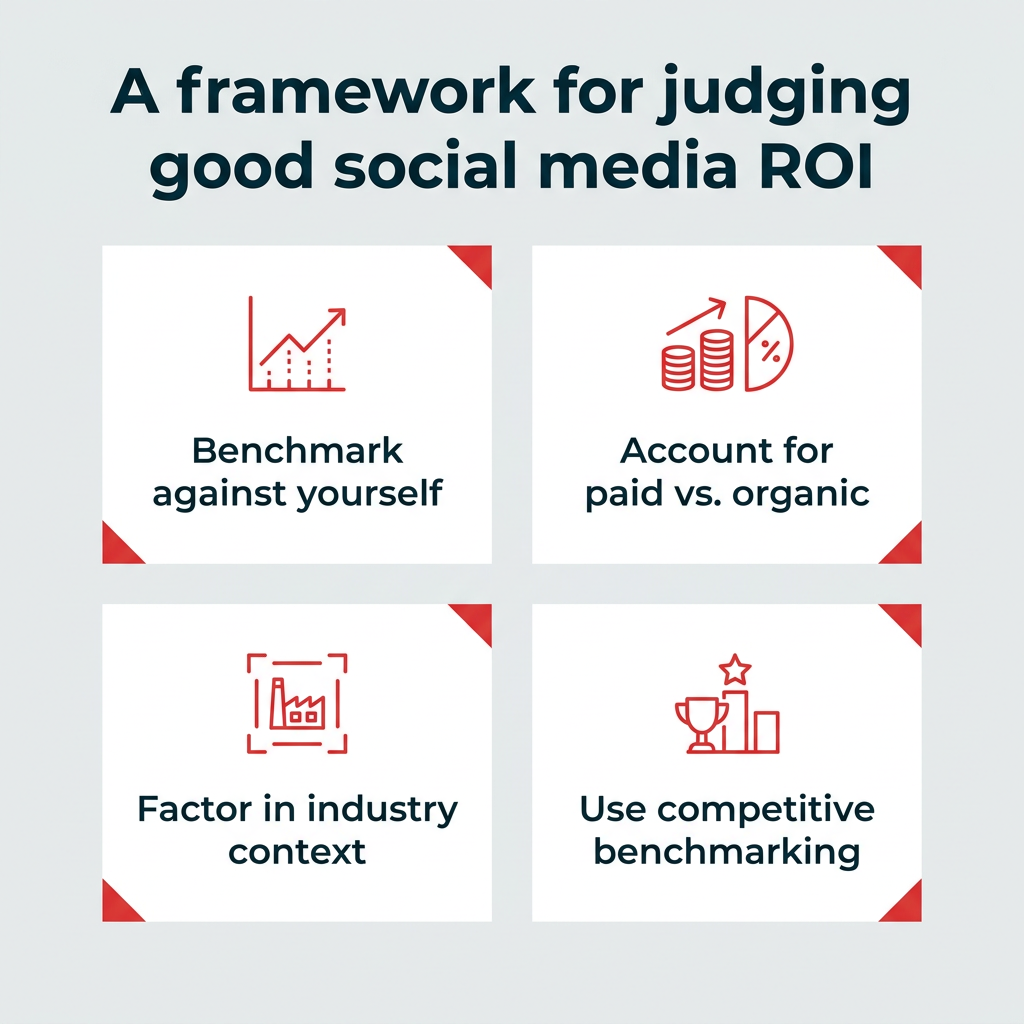
A/B Testing: Never assume a content format is superior. Run rigorous A/B tests on video vs. static, or carousels vs. Reels. For instance, many brands have found that while video has high reach, carousels often drive higher engagement and conversion rates for specific product segments.

Competitor Benchmarking: Use tools to monitor your competitors’ top-performing posts and trending hashtags. If a competitor is seeing high engagement on a specific topic, it is an indicator of market interest that you can pivot your own content to address.
Leveraging Social Commerce: By moving the transaction into the app—using shoppable posts and in-app checkout—you eliminate friction and gain closed-loop measurement. This makes attribution significantly cleaner than traditional web-based sales.

Unifying Your Data with Modern Tooling
To move beyond manual, disjointed reporting, enterprise-grade organizations are increasingly turning to unified platforms like Hootsuite.
A centralized platform allows for:
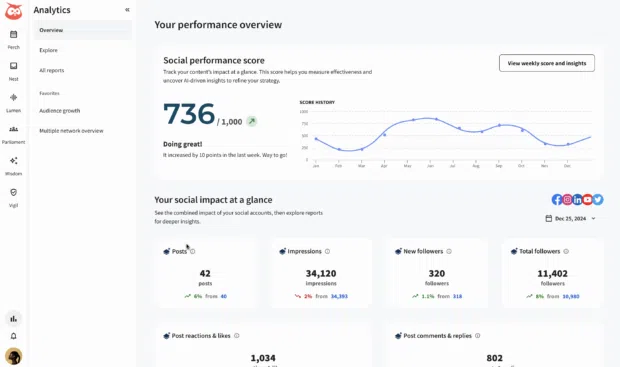
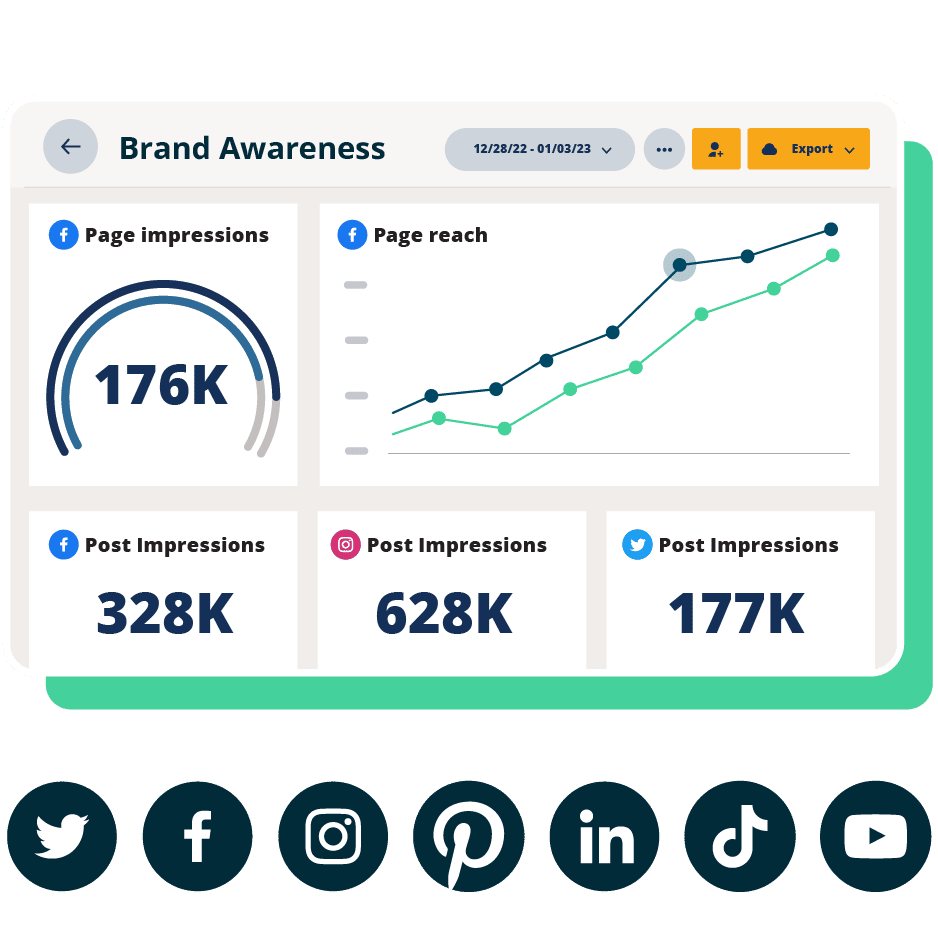
- Cross-Channel Visibility: Viewing performance across all social networks in a single dashboard.
- CRM Integration: Connecting social activity directly to Salesforce or HubSpot to track the journey from "like" to "lead."
- Professional Reporting: Generating executive-ready, visual reports that translate complex metrics into business outcomes like cost savings and revenue growth.
By integrating Google Analytics or Adobe Analytics, marketers can track the entire path of a user—from the initial social interaction to the final purchase on the website. This level of visibility is what distinguishes "social media activity" from "social media strategy."
Communicating Results to Leadership
When presenting your findings to stakeholders, avoid burying them in vanity metrics like "likes." Instead, frame your report around the language of leadership:

- Connect to Revenue: "Our social media campaign contributed to $X in pipeline revenue."
- Highlight Efficiency: "We reduced our cost-per-lead by Y% through refined audience targeting."
- Focus on Trends: "Year-over-year growth in community sentiment has reduced our overall customer acquisition cost."
As Eileen Kwok, a veteran social strategist, notes: "You don’t know what your ROI is until you’ve laid out the goals you are tracking toward." By aligning your social strategy with the overarching business objectives of your organization, you transform your social media team from a cost center into a proven engine for growth.
The future of social media ROI is not about chasing the perfect number; it is about building a repeatable, data-backed system that consistently demonstrates the value of your brand’s voice in an increasingly crowded digital marketplace.
 Reynand Wu
  Muslim
  Nila Kartika Wati