
 By Siti Muinah
Main Facts
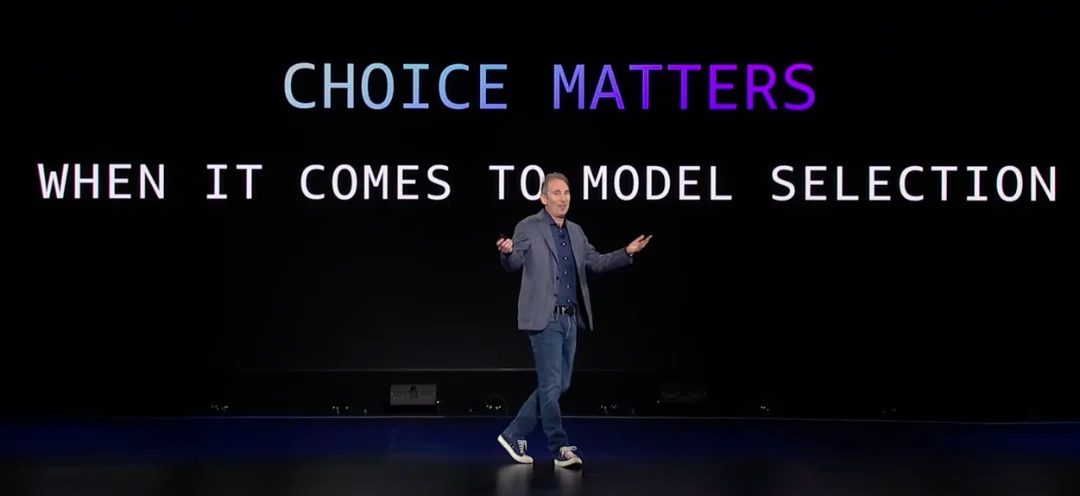
The landscape of enterprise artificial intelligence is undergoing a profound structural shift. Moving away from the era of a one-size-fits-all approach dominated by massive, catch-all foundational models, the industry has firmly entered a phase defined by surgical precision, optimization, and cost-efficiency. This paradigm was underscored by major updates to Amazon Bedrock, Amazon Web Services’ (AWS) fully managed service for deploying high-performing foundation models.
Last week, AWS announced the integration of several groundbreaking frontier models into the Amazon Bedrock ecosystem. Chief among these are GPT-6 Sol and GPT-6 Luna from OpenAI, alongside Claude Opus 5.5—the flagship trailblazer of Anthropic’s new Claude 5.5 model family.
These additions directly address the evolving questions asked by enterprise architects: Rather than simply evaluating a model on raw intellectual capability, organizations are now asking, "Which model fits this specific step in the workflow, at this exact cost, and with this precise latency profile?"
- GPT-6 Sol: Engineered specifically for the demanding, recurring workflows of software development, systems integration, and complex operations, offering deeper reasoning capabilities for intensive tasks at a substantially lower price point than its GPT-5.6 predecessors.
- GPT-6 Luna: Optimized for high-volume, focused, and repeatable tasks, making enterprise-scale automation economically viable without sacrificing output quality.
- Claude Opus 5.5: Designed to maximize efficiency, achieving significantly more complex outputs utilizing fewer tokens than its predecessor (Opus 5), while being finely tuned for autonomous agentic coding and long-running execution loops.
Together, these models offer enterprise developers a granular intelligence-versus-efficiency curve, allowing businesses to match workloads dynamically to the most cost-effective and performant resource available.
Chronology
To understand how the artificial intelligence ecosystem reached this current milestone of granular model optimization on cloud infrastructure, it is valuable to trace the timeline of rapid advancements that culminated in last week’s AWS announcements.
- Early Generative AI Era (2022–2023): The market was captivated by raw capability. The primary question was benchmark-driven ("How smart is the model?"), leading to a scramble for the largest available parameters, regardless of compute overhead, cost, or operational latency.
- The Rise of Managed Infrastructure (2024): As enterprise adoption matured, platforms like Amazon Bedrock emerged as critical middleware. They provided secure, scalable access to multiple foundational models from providers like OpenAI, Anthropic, AI21 Labs, and Cohere, decoupling application logic from underlying model volatility.
- The Efficiency Turn (2025): Driven by the massive scale of inference workloads and the proliferation of reasoning-focused models (such as DeepSeek-R1 and early iterations of specialized reasoning agents), the industry shifted its focus toward cost-per-token, throughput optimization, and specialized architecture.
- Late 2025 / Early 2026 (The Current Epoch): Enterprise demands shifted from generalized chatbots to multi-step agentic workflows. Organizations began deploying autonomous agents capable of writing code, debugging, executing long-running tasks, and orchestrating business processes.
- Last Week: AWS fundamentally expanded its Bedrock roster by launching GPT-6 Sol, GPT-6 Luna, and Claude Opus 5.5. This rollout marked a formal transition into an era where developers treat intelligence as a modular commodity—scaling models up or down per task within a single integrated pipeline.
Supporting Data and Technical Architecture
The introduction of GPT-6 Sol, GPT-6 Luna, and Claude Opus 5.5 onto Amazon Bedrock is supported by significant architectural shifts in how generative models handle compute, memory, and token economics.
Economic and Token Efficiency
Historically, deploying frontier intelligence meant accepting prohibitive latency and steep inference costs. The new generation of models on AWS breaks this trend:
- Pricing Reductions: Both GPT-6 Sol and GPT-6 Luna launch at a substantially reduced cost basis compared to the preceding GPT-5.6 architectures. This deflationary trend in inference costs is critical for enterprises scaling autonomous agentic workflows that require thousands of chained prompt-and-response loops.
- Token Optimization: Anthropic’s Claude Opus 5.5 introduces advanced prompt parsing and context-window management, achieving higher task completion metrics with fewer processed tokens than Opus 5. For enterprises processing millions of lines of codebase or massive document repositories, token reduction directly correlates to direct operational savings.
Workload Specialization Metrics
Amazon Bedrock’s multi-model architecture relies on routing specific operational demands to the model best suited for the task:
| Model | Primary Target Use Case | Latency Profile | Cost Tier | Key Advantage |
|---|---|---|---|---|
| GPT-6 Sol | Complex Development, DevOps, Systems Architecture | Moderate-to-High | Mid-High | Deep reasoning for intricate, non-repetitive technical challenges |
| GPT-6 Luna | High-Volume Automation, Repeatable Business Processes | Ultra-Low | Low | Cost-effective scaling for mass-production transactional tasks |
| Claude Opus 5.5 | Agentic Coding, Long-Running Execution Loops | Optimized | Competitive | High output-per-token ratio; native agentic framework compliance |
Furthermore, the simultaneous evolution of observability tooling within the AWS ecosystem has caught up to this agentic world. Tracing multi-agent behaviors, debugging asynchronous loops, and monitoring token consumption across disparate models (OpenAI and Anthropic operating side-by-side within Bedrock) have become streamlined through unified AWS management dashboards.
Official Perspectives and Industry Response
The rollout of these advanced models on Amazon Bedrock reflects a unified strategy across cloud providers and AI creators: prioritizing enterprise readiness, predictability, and economic viability.
Daniel Abib, summarizing the developments in the AWS ecosystem, highlighted the core philosophy driving the recent announcements:
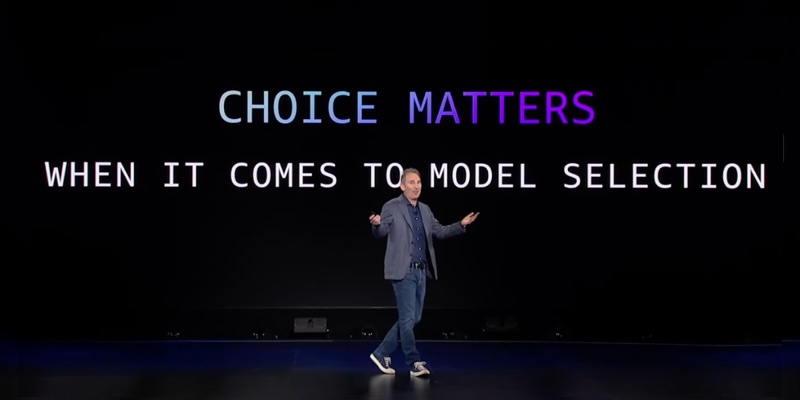
"If there’s one theme that defined last week, it’s choice. The frontier models keep arriving, and the interesting question is no longer just ‘how smart is it?’ but ‘which model fits this step, at this cost, at this latency?’ What I like about all three [models] is that they push toward the same idea: match the model to the job instead of reaching for the biggest one every time."
Enterprise architects and technology partners utilizing Amazon Bedrock have echoed this sentiment. By hosting models from competing frontier labs (OpenAI and Anthropic) side-by-side on a unified, secure cloud infrastructure, AWS removes the friction of vendor lock-in and disparate API management.
Industry analysts point out that enterprise AI buyers are increasingly fatigued by the marketing hype of raw benchmark scores. Instead, procurement decisions are now guided by Total Cost of Ownership (TCO), compliance guarantees (such as AWS’s enterprise-grade security and data privacy frameworks), and integration ease. By introducing models tailored to specific operational bands—such as Sol for heavy reasoning and Luna for high-volume automation—OpenAI and AWS are directly catering to this maturity in enterprise demand.

Implications for the Enterprise and Developer Ecosystem
The arrival of GPT-6 Sol, GPT-6 Luna, and Claude Opus 5.5 on Amazon Bedrock carries wide-ranging implications for software development, business operations, and cloud architecture strategies.
1. The Death of the "Monolithic Model" Strategy
For years, organizations experimented with generative AI by routing every user request—from simple text summarization to complex code generation—to the single most powerful model available. This practice was computationally wasteful and financially unsustainable. The availability of tiered models on a single platform forces a shift toward composite architectures, where workflows dynamically route tasks based on complexity: simple queries go to fast, low-cost engines like Luna, while deep system architecture design is escalated to Sol or Claude Opus 5.5.
2. Acceleration of Autonomous Agentic Workflows
Coding and operations are no longer passive; they are increasingly agentic. With Claude Opus 5.5 and GPT-6 Sol optimized for long-running, autonomous execution loops, developers can build systems that don’t just write a single snippet of code, but plan, execute, test, and debug multi-file software projects independently. This changes the role of the human developer from a manual coder to an architectural supervisor and reviewer.
3. Democratization of High-End AI Capabilities
Because GPT-6 Luna and the broader pricing adjustments make high-volume execution significantly cheaper, mid-market enterprises and startups can now afford to embed sophisticated AI automation into their core products. This levels the playing field, allowing smaller engineering teams to operate with the leverage of much larger technology firms.
4. Community, Collaboration, and Continuous Learning
As these tools proliferate, staying ahead of the architectural curve requires continuous engagement. AWS continues to foster this community growth through platforms like the AWS Builder Center, where developers can share multi-model patterns, discuss agentic observability solutions, and participate in upcoming virtual and in-person events designed to demystify modern cloud architecture.
Conclusion
The integration of OpenAI’s GPT-6 Sol and Luna, alongside Anthropic’s Claude Opus 5.5 on Amazon Bedrock, marks a defining maturity milestone for the generative AI industry. By prioritizing architectural choice, cost efficiency, and task-specific optimization, AWS and its partners are equipping builders with the precise instruments needed to transition AI from an experimental novelty into the core, reliable engine of global enterprise operations.
 Reynand Wu
 Jia Lissa
 Nana Wu
