
 By Nila Kartika Wati
Technology has undergone a profound metamorphosis. It has evolved from an external tool that humans operate into an immersive, living environment in which we operate. As artificial intelligence reshapes the digital and physical landscapes, consumer interactions have transitioned from static, transactional exchanges to dynamic, conversational dialogues. Responses no longer merely retrieve existing information; they dynamically generate new contexts, personalized content, and nuanced real-time experiences.
In this new paradigm, communication between humans and enterprises is heavily mediated by intelligent algorithms. This monumental shift presents both an existential challenge and a historic opportunity for brand architects and modern marketers. Enter the PRISM model, a sophisticated new framework designed to help brands navigate the uncharted waters of the agentic economy, secure human loyalty, and maintain machine legibility.
1. Main Facts: The Shift to the Agentic Economy
At the heart of this transformation is a fundamental reevaluation of brand loyalty. Arjan Kapteijns, former CEO of Saatchi & Saatchi Netherlands, recently re-engineered Kevin Roberts’ classic marketing concept of a "Lovemark" for an AI-infused world. In this emerging reality, earning affection and respect is no longer directed exclusively at human-led entities; it must also capture the algorithmic favor of digital agents. Kapteijns defines these as Agentic Lovemarks.
- From Tools to Environments: AI is no longer a peripheral software application; it is the infrastructure through which consumers discover, evaluate, and interact with brands.
- The Legible-Lovable Law: Championed by former Philips and ASML brand leader Thomas Marzano in his manifesto Brand Constitutions, brands must now balance two seemingly disparate needs: they must be legible to AI systems to secure machine recommendations, and lovable to humans to win their ultimate decision-making approval.
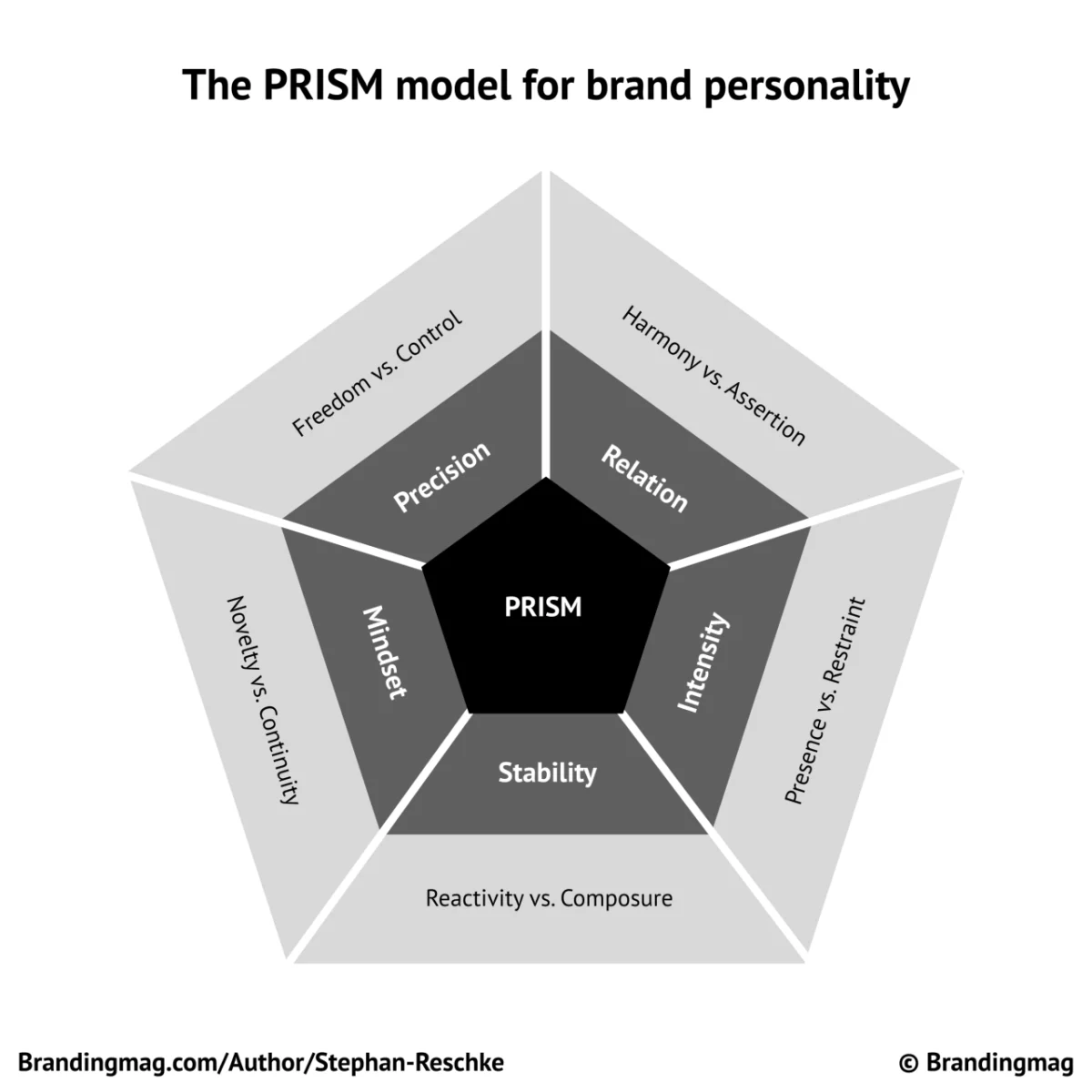
- The PRISM Solution: Traditional brand archetypes—such as the 12-model framework introduced 25 years ago in The Hero and the Outlaw—are too broad and interpretive for autonomous AI agents. The PRISM model adapts the human psychology "Big Five" (OCEAN) framework into a granular, highly structured system for brand personalities.
- Language as the Primary Interface: As voice-first and conversational interfaces eclipse visual-first platforms, Large Language Models (LLMs) read data and context rather than traditional ad campaigns, making precise brand language and system prompts mission-critical.
2. Chronology: The Evolution from Emotional Persuasion to Algorithmic Personalities
To understand why the PRISM model is necessary today, one must trace the evolutionary milestones of brand-consumer relationships over the past century:
- Early 20th Century (The Psychological Turn): Marketing experts began integrating human psychology into advertising, realizing that emotional persuasion was vastly superior to pure rational feature listing.
- The Late 20th Century (The Era of Archetypes): Margaret Mark and Carol Pearson published The Hero and the Outlaw in the late 1990s, codifying 12 universal brand archetypes. This framework gave marketers a rational guide to managing irrational consumer behavior, defining how brands looked, spoke, and behaved.
- The 2010s (The Digital & Social Expansion): Brands expanded across digital channels, maintaining centralized control over creative assets, brand guidelines, and static campaigns deployed across social media and web properties.
- The Mid-2020s (The Agentic Awakening): With the rapid scaling of generative AI and autonomous digital assistants, brand control shifted away from human marketers. AI agents began acting as intermediaries, negotiating purchases, answering customer service inquiries, and synthesizing brand data on the fly.
- Present Day (The PRISM & Brand Constitution Era): Thought leaders like Arjan Kapteijns and Thomas Marzano introduce technical frameworks—namely Agentic Lovemarks and Brand Constitutions—requiring a quantitative, nuanced personality model that AI can read and execute: the PRISM model.
3. Supporting Data & Structural Mechanics: How PRISM Works
Traditional archetype systems are built on exclusive, broad categories. If an AI agent were given only a traditional archetype to generate customer interactions, the results would vary wildly, functioning much like an algorithm generating a completely random logo for every user query.
To solve this inconsistency, the PRISM model adapts the scientifically validated OCEAN model (Openness, Conscientiousness, Extraversion, Agreeableness, Neuroticism)—often referred to as the "Big Five" traits of human psychology—and tailors it specifically for commercial enterprises.
The Five Core Domains of PRISM
The PRISM framework classifies a brand’s digital personality across five fundamental dimensions of mindset, communication, and behavior:

- Openness: Measures the brand’s appetite for innovation, curiosity, avant-garde thinking, and creative disruption versus traditionalism and stability.
- Conscientiousness: Evaluates the brand’s operational discipline, reliability, precision, structural thoroughness, and commitment to quality assurance.
- Extraversion: Quantifies how outgoing, energetic, expressive, and socially dominant the brand is in its communicative posture.
- Agreeableness: Assesses the brand’s empathy, warmth, collaborative nature, altruism, and customer-centric diplomacy.
- Neuroticism (Emotional Stability): In the context of brand safety, this gauges how steady, calm, resilient, and predictable a brand remains under pressure, market volatility, or crisis scenarios.
Granular Sub-Characteristics
Each of the five core domains comprises six defining characteristics, which are evaluated along precise sliding scales. This multi-dimensional mapping allows brands to bypass vague qualitative descriptions and build high-fidelity behavioral profiles.
When translated into actionable system prompts for Large Language Models (LLMs), these parameters inform the AI’s:
- Verbal tone and grammatical structure
- Vocabulary selection and semantic nuance
- Acoustic voice synthesis profiles
- Real-time response behavior and conflict-resolution styles
4. Official Perspectives and Expert Commentary
Industry leaders have been vocal about the urgent need to transition from legacy branding paradigms to technical, agent-ready frameworks.
-
Arjan Kapteijns on Agentic Lovemarks:
"The base remains the need to create emotional connection; it’s just that that connection is now orchestrated by machines… Earning love and respect is no longer exclusively directed at humans, but also at their digital agents."
Kapteijns emphasizes that modern marketers must rethink how brand value is cultivated when an algorithm sits directly between the enterprise and the end consumer. -
Thomas Marzano on the Legible-Lovable Law:
In his definitive manifesto, Brand Constitutions, the former brand leader for Philips and ASML argues that operationalizing a brand is no longer optional:"In an agentic economy, brands need to be both legible to AI in order to be recognized and recommended by the machine and loveable by humans in order to be relevant in their decision making."
Marzano notes that this requires a structural, almost technical reinforcement of brand equity, ensuring that the AI can accurately read, understand, and render the enterprise’s core identity.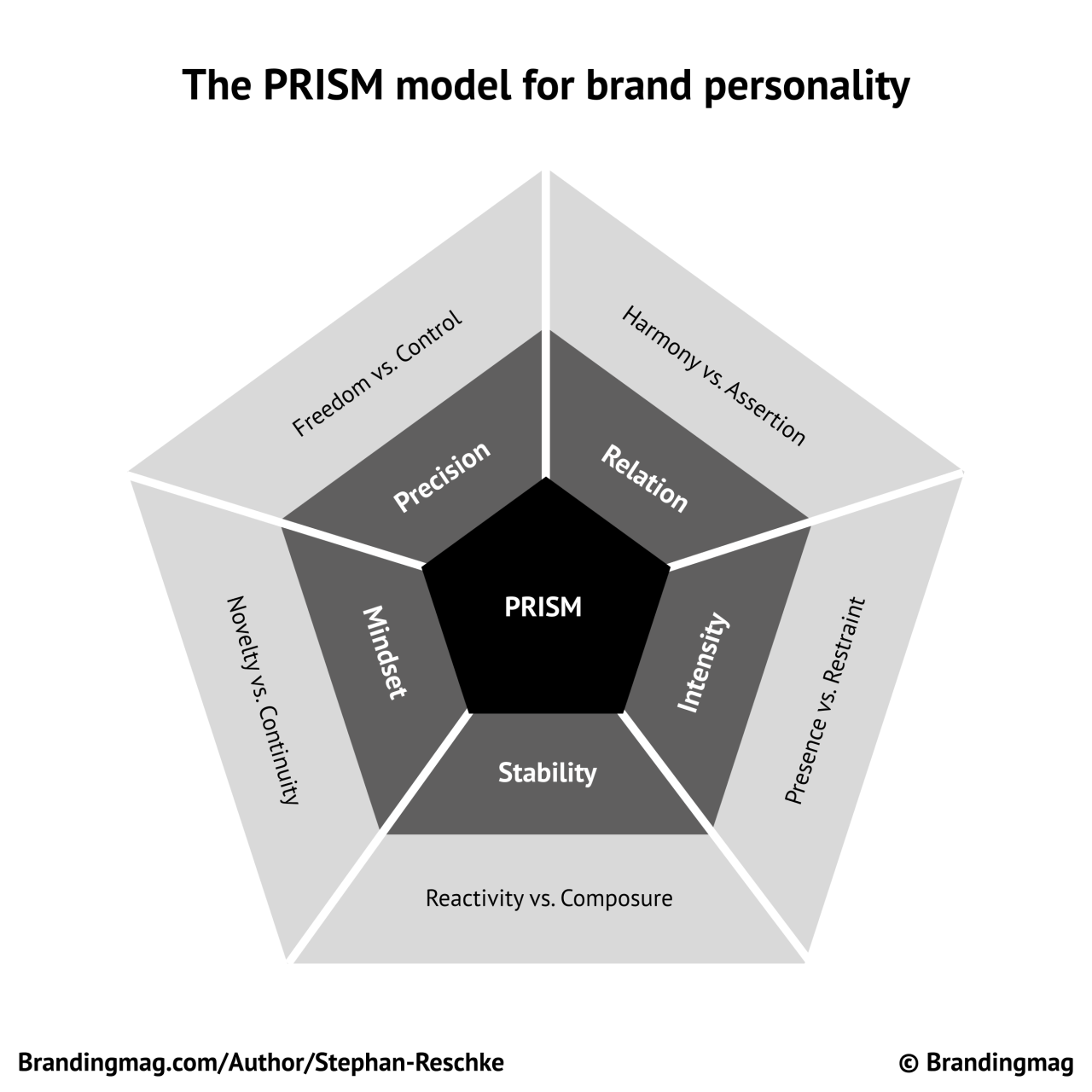
5. Implications for the Future of Marketing and Brand Architecture
The widespread adoption of the PRISM model and agentic branding principles carries profound implications for global enterprises, creative agencies, and technical developers alike:
From Static Campaigns to Dynamic Brand Language
Because LLMs do not "read" traditional advertising campaigns, marketing budgets must pivot from producing static visual assets toward codifying robust brand language infrastructure. Vocabulary rules, systemic syntax guidelines, and behavioral algorithms will replace the traditional PDF brand guidelines of the past.
The Rise of the "Digital Soul"
Brands will increasingly embed their PRISM profiles directly into web infrastructure and API endpoints. This creates a technical "digital soul"—a standardized package of machine-readable data that allows any third-party AI agent or voice assistant to accurately represent the brand’s personality without diluting its core values.
Overcoming Industry Anxiety Through Experimentation
The transition into the agentic economy frequently induces anxiety among traditional marketers accustomed to strict creative control. However, industry pioneers stress that uncertainty is best conquered through active exploration, prototyping, and cross-disciplinary exchange.
As automated interactions rapidly become the primary touchpoint of modern commerce, the conversation has already begun. Organizations that fail to make their brands both machine-legible and human-lovable risk algorithmic obscurity in a market dominated by digital agents.
 Dwi Wanna
 Sagoh
 Lina Irawan
