
 By Ammar Sabilarrohman
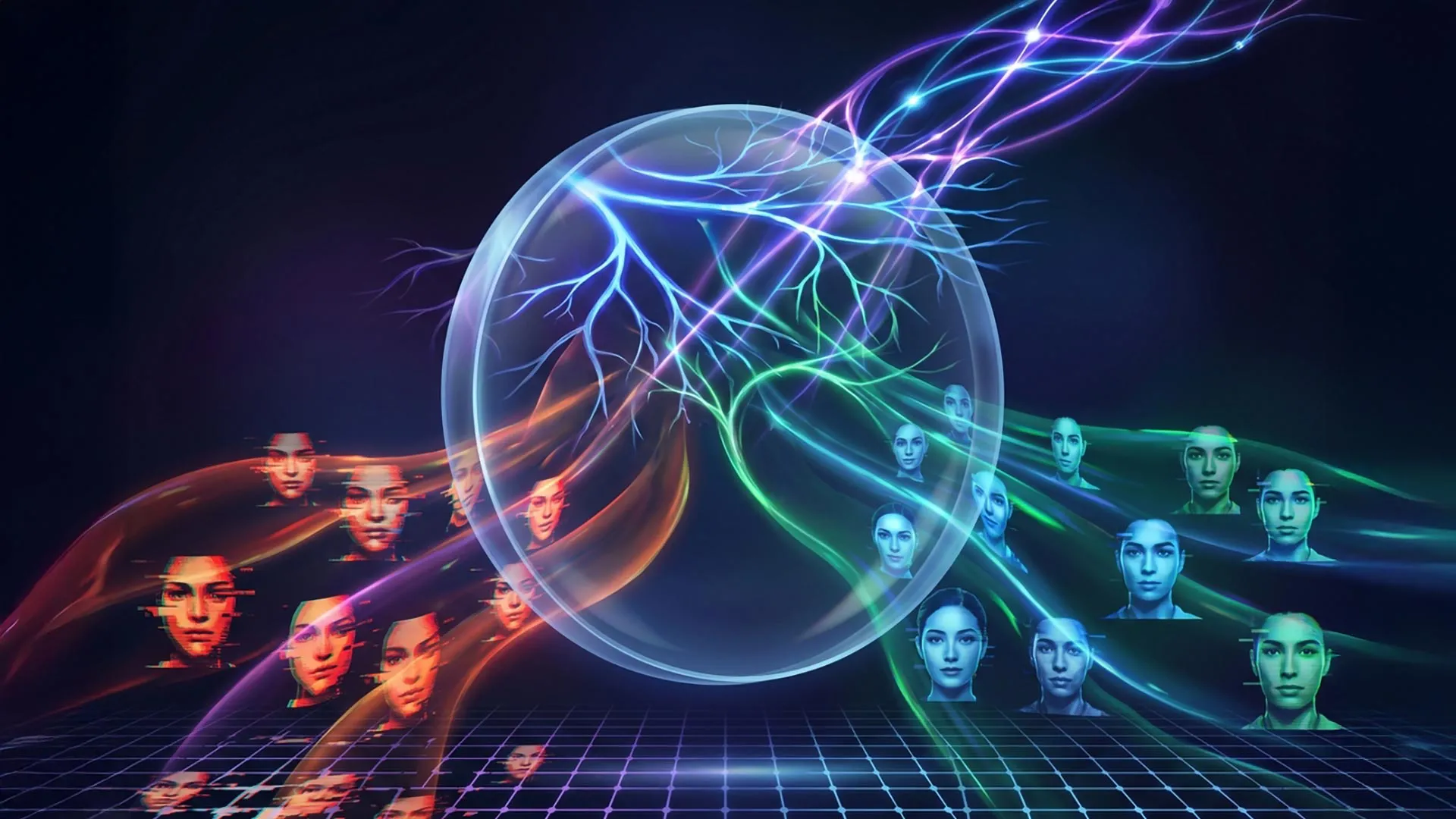
In an era where synthetic media is becoming indistinguishable from reality, the digital arms race between deepfake creators and detection algorithms has reached a fever pitch. As generative AI models grow more sophisticated, the computational burden of vetting every video for authenticity is threatening to overwhelm our existing digital infrastructure. Now, a team of researchers at the University of California, Los Angeles (UCLA) has introduced a paradigm-shifting solution: an optical-neural processor that utilizes the physics of light to identify manipulated content with unprecedented speed and energy efficiency.
Published in the journal eLight under the title "Scalable, Energy-Efficient Optical-Neural Architecture for Multiplexed Deepfake Video Detection," the research offers a glimpse into a future where the first line of defense against digital misinformation is powered by photons rather than traditional silicon-based transistors.
The Core Innovation: Computation Through Diffraction
The fundamental bottleneck in current deepfake detection is its reliance on sequential digital processing. Conventional AI models must ingest video data, convert it into binary, and run it through massive neural networks—a process that consumes staggering amounts of electricity and time. When faced with the sheer volume of content uploaded to social media daily, this sequential approach creates a massive backlog, leaving harmful content online for longer periods.
The UCLA team, led by Professor Aydogan Ozcan, has circumvented this by introducing a hybrid digital-optical system. In this architecture, a lightweight digital encoder first extracts essential spatial, spectral, and temporal features from a video. These features are then converted into a phase pattern and projected onto a programmable spatial light modulator.
The magic occurs when the resulting optical wavefront travels through a free-space, passive optical decoder. Instead of moving data through energy-intensive logic gates, the system performs the necessary mathematical operations via the physical diffraction of light. Because light can pass through these diffractive layers simultaneously, the system can process multiple video streams at once. In their initial experiments, the researchers successfully evaluated 15 videos in a single optical pass, a feat that would typically require 15 separate, power-hungry computational cycles on a traditional GPU.
Chronology of Development: From Concept to Breakthrough
The journey toward this optical-neural processor began with a growing recognition of the vulnerability of existing AI models.
Early Conceptualization (2022-2023): As generative AI tools like DALL-E and Midjourney began producing increasingly convincing synthetic imagery, the UCLA team identified a critical weakness in defensive AI: the "computational wall." They theorized that by offloading the "heavy lifting" of feature recognition to physical optics, they could create a system that was both faster and harder to manipulate.
Designing the Architecture (Mid-2023): The researchers focused on the development of the passive diffractive layers. These are essentially static, manufactured surfaces that act as a physical neural network. By fine-tuning the physical geometry of these surfaces, the team taught the "hardware" to recognize the subtle, often invisible artifacts left behind by AI video generators.
Experimental Validation (Early 2024): The team tested the processor against standard datasets, such as Celeb-DF, to establish a baseline. By early 2024, they had successfully pushed the system to handle 15 concurrent video streams, achieving remarkable accuracy.
Expanding the Scope (Late 2024): To ensure the system was future-proof, the researchers introduced the Google VEO-3 model—a cutting-edge generative AI known for producing high-fidelity synthetic video that defeats many standard detectors. The successful classification of VEO-3 content marked a milestone in the technology’s readiness for real-world deployment.
Supporting Data: Performance Metrics
The effectiveness of the UCLA processor is best illustrated by its performance metrics, which hold steady even when the workload is pushed to its physical limits.
Accuracy and Sensitivity
In tests using 15 videos, the processor achieved an average detection accuracy of 97.79%. Perhaps more importantly for security applications, it achieved a sensitivity of 99.86%. Sensitivity in this context is paramount; it represents the system’s ability to correctly flag a deepfake. With a false-negative rate of only 0.14%, the system effectively ensures that nearly all manipulated content is captured in the initial sweep.
Scaling and Resilience
Even when the team increased the capacity to 18 videos in a single pass, the accuracy remained impressively high at 96.13%. The researchers also discovered that by adding two optimized passive diffractive layers, they could improve detection accuracy by approximately 6.8% without increasing energy consumption. This is a critical finding: because these layers are passive, they require zero electricity to perform their calculations, effectively providing "free" computational power.
Testing Against Advanced Models
When tasked with identifying videos generated by Google’s VEO-3—which lacks the common, easily detectable artifacts of older models—the optical processor demonstrated a robust 94.80% accuracy and 97.61% sensitivity. This indicates that the system is not merely "pattern matching" for known flaws, but is learning deeper, more structural characteristics of synthetic media.
Official Perspectives: The Team Behind the Tech
The research was spearheaded by Parnian Ghapandar Kashani and Dr. Shiqi Chen, working under the guidance of Professor Aydogan Ozcan. Their research is rooted in the departments of Electrical and Computer Engineering and Bioengineering at UCLA, as well as the California NanoSystems Institute.
In their findings, the authors emphasize that the goal of this technology is not to replace digital AI entirely, but to provide a "high-throughput, attack-resilient first layer of defense." Professor Ozcan has frequently noted that the modern internet is simply too large for a singular, centralized, all-digital detection system to handle efficiently. By using optical processing, companies can triage content at the edge, reserving expensive, power-intensive digital scrutiny only for content that the optical system flags as "suspicious."
Implications for the Future of Media
The implications of this breakthrough are far-reaching, touching upon national security, content moderation, and the very nature of digital trust.
Security and Anti-Adversarial Defense
One of the most significant advantages of this system is its inherent resistance to "white-box" and "black-box" adversarial attacks. In a digital system, an attacker can theoretically reverse-engineer the code of a detection model to create a "poisoned" video that bypasses it. Because the UCLA system’s "logic" is physically embedded in the diffraction of light through static layers, it is nearly impossible for an attacker to discern the internal parameters of the model. The hardware itself is the algorithm.
Energy Efficiency in the Age of AI
As AI consumes an ever-growing share of the global power grid, the search for energy-efficient computing is critical. By performing complex neural network operations through light propagation, the UCLA team has demonstrated a path toward "zero-power" inference. If scaled to industrial levels, this could significantly reduce the carbon footprint of content moderation platforms.
A New Standard for Content Moderation
The system is poised to act as a gatekeeper. By processing massive volumes of data at the speed of light, it could be integrated into the infrastructure of social media giants, ISPs, or government intelligence agencies to filter out deepfakes in real-time. Content that passes the optical "sniff test" can move through the network, while flagged videos are diverted to secondary, deeper analysis layers.
The Path Forward
The UCLA team’s work is a testament to the power of interdisciplinary research, merging optical physics with artificial intelligence. While the technology is currently in the experimental stage, the ability to manufacture these passive, static optical structures suggests a pathway to mass production.
As we look toward an future where the lines between human-made and machine-made content continue to blur, this UCLA-developed optical processor offers a glimmer of hope. It reminds us that sometimes, the most effective solution to a complex, modern problem is not more code, but a smarter way to use the physical laws of the universe. By harnessing the speed and inherent security of light, we may finally have the tools necessary to preserve the integrity of our digital world.
 Reynand Wu
 rifanmuazin
