
 By Sagoh

In the fast-paced ecosystem of digital marketing, the days of ad-hoc posting and reactive social media management are officially over. Modern brands face an increasingly fragmented digital landscape where algorithms shift overnight, consumer expectations are at an all-time high, and content fatigue is a very real threat.
According to recent industry data, social media content planning has transformed from a simple organizational nice-to-have into an absolute business-critical discipline. To cut through the noise, enterprise organizations and agile startups alike are adopting sophisticated, multi-layered planning processes. By combining structured workflows, data-driven insights, and artificial intelligence, marketing teams are eliminating the daily scramble, protecting staff from burnout, and directly tying social media outputs to tangible business growth.

Main Facts: The Anatomy of Modern Content Planning
Social media content planning is the strategic framework of deciding what to publish, when to publish it, and how every single piece aligns with broader marketing objectives. Far beyond simple calendar management, it involves mapping topics, formats, and campaigns weeks or months in advance to maintain brand consistency and relevance.
The primary objectives of a robust content plan are multi-fold:

- Efficiency Through Batching: Creating content in batches prevents the exhausting cycle of building posts one-by-one, maximizing resource allocation.
- Repurposing Powerhouse: A single core idea can be effortlessly adapted into a carousel, short-form video, text post, or newsletter, extending its lifecycle without multiplying workloads.
- Proactive Campaigning: Advance planning ensures seamless coordination for high-stakes product launches, seasonal events, and company milestones while leaving strategic breathing room for agile, real-time responses to trending topics.
Crucially, a comprehensive content plan bridges the gap between daily operations and high-level corporate goals. While individual posts may seem minor on their own, a unified collection of content working toward shared key performance indicators (KPIs) dictates whether a brand’s overall digital strategy succeeds or stalls.
Chronology: The 10-Step Evolution of an Effective Content Plan
Building a predictable, scalable content engine requires moving through a structured, chronological sequence. Industry experts recommend a 10-step methodology to take a strategy from ideation to execution.

Step 1: Set Your Goals and KPIs
Begin by establishing what your content is meant to achieve. Limit your focus to two or three primary goals per quarter—such as driving brand awareness, generating leads, or increasing community engagement—and couple them with clear, measurable KPIs (e.g., aiming for a 20% increase in monthly impressions).
Step 2: Know Your Audience
Ground your strategy in reality by thoroughly researching your target demographic. Utilize native analytics and social listening tools to decode the exact language, unprompted topics, and pain points your audience cares about most.

Step 3: Define Your Content Themes
Establish core content pillars that ladder up directly to your marketing goals. Whether your pillars focus on education, behind-the-scenes insights, product spotlights, or industry news, they act as strict guardrails for what makes the cut.
Step 4: Choose Your Platforms
Rather than spreading your team thin across every available network, prioritize the channels where your target audience actually spends their time. Document a target publishing cadence for each chosen platform to guide downstream workloads.

Step 5: Brainstorm Campaign and Post Ideas
Build a continuous idea pipeline using regular brainstorming sessions, dedicated messaging channels, and historical performance data to understand what has resonated with your followers previously.
Step 6: Decide on Your Content Mix
Strike a strategic balance between original content and curated industry insights. While a classic 40/60 original-to-curated ratio works for many teams, ensuring format variety—mixing short-form video, carousels, and text posts—protects your strategy against algorithm shifts.
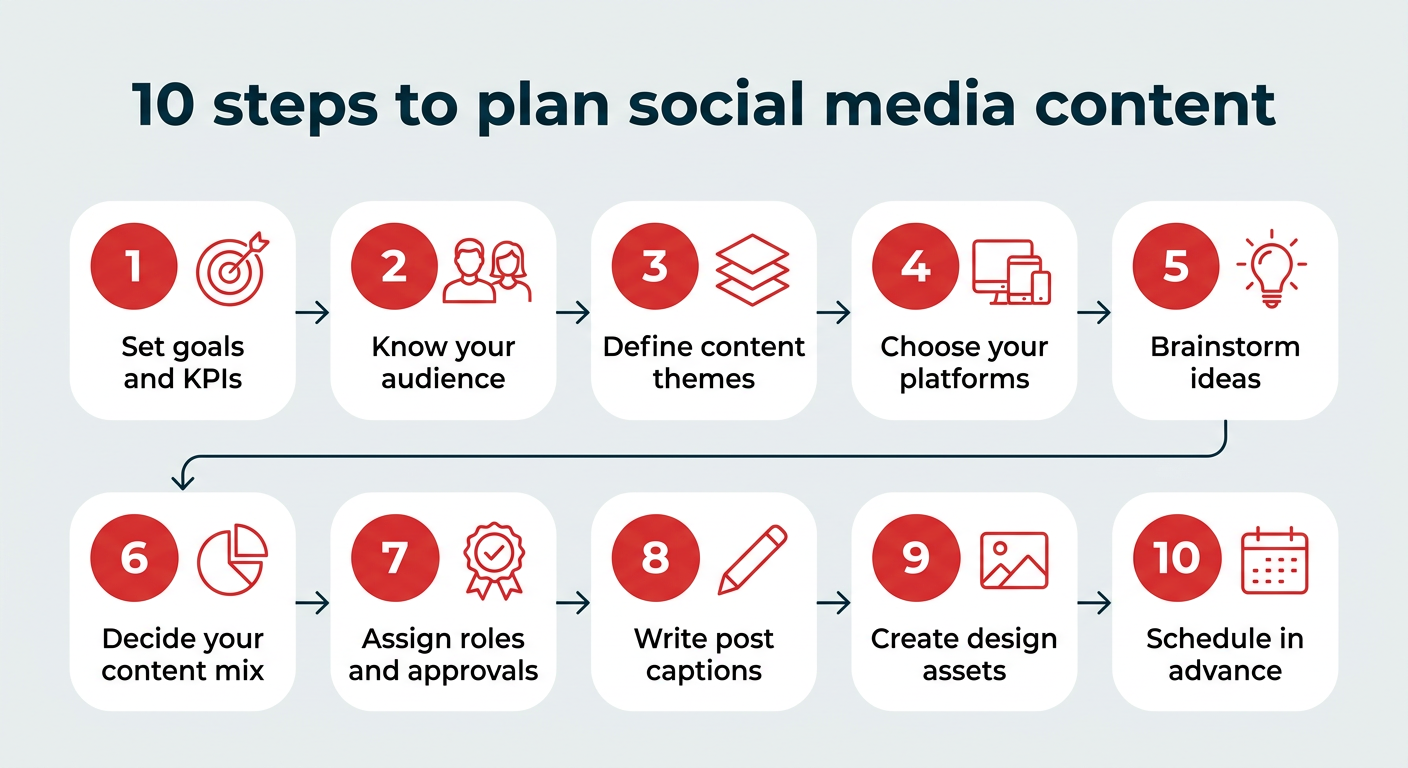
Step 7: Assign Responsibilities and Set Approvals
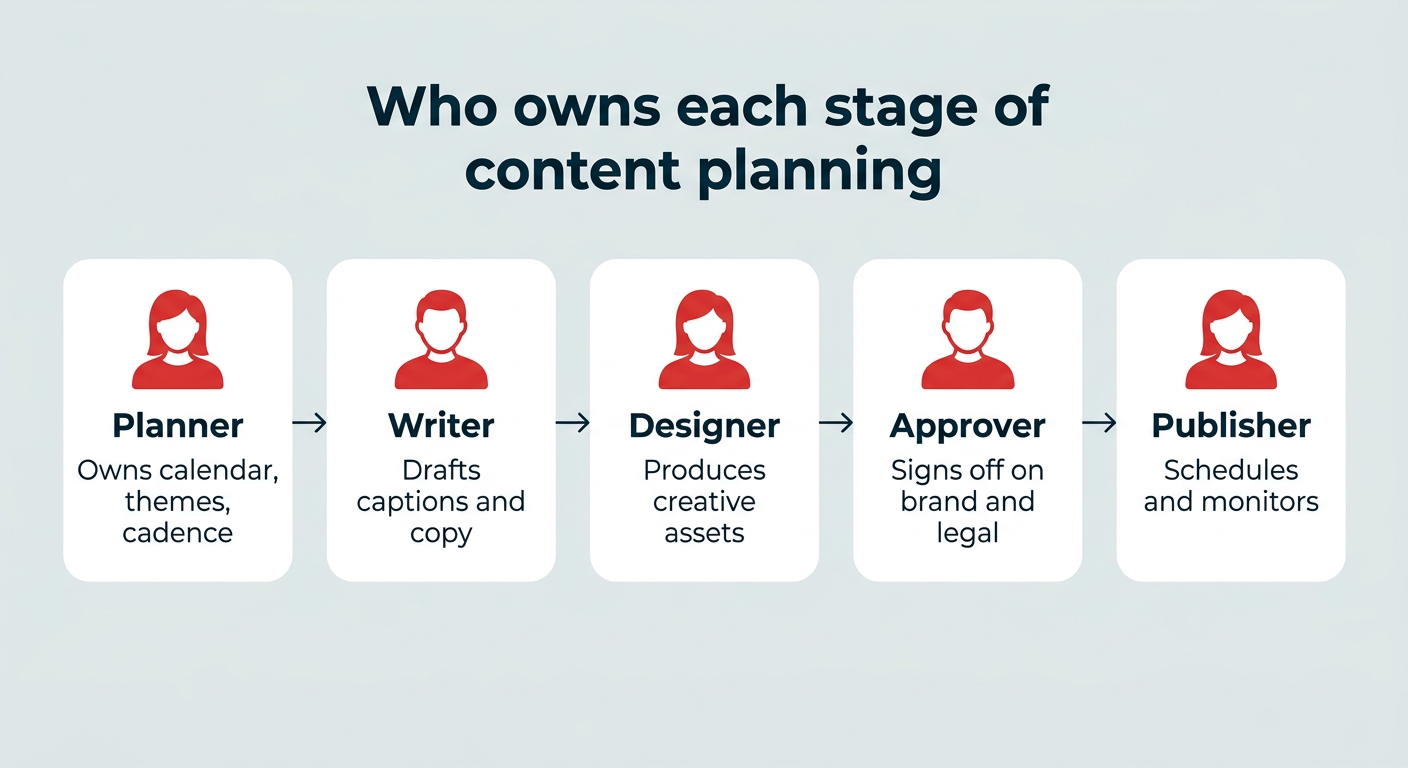
Eliminate operational friction by assigning clear ownership for every stage of the workflow: planners, writers, designers, approvers, and publishers. For regulated industries like finance and healthcare, embedding compliance reviews directly into the timeline is vital to mitigate legal risk.
Step 8: Write Post Captions
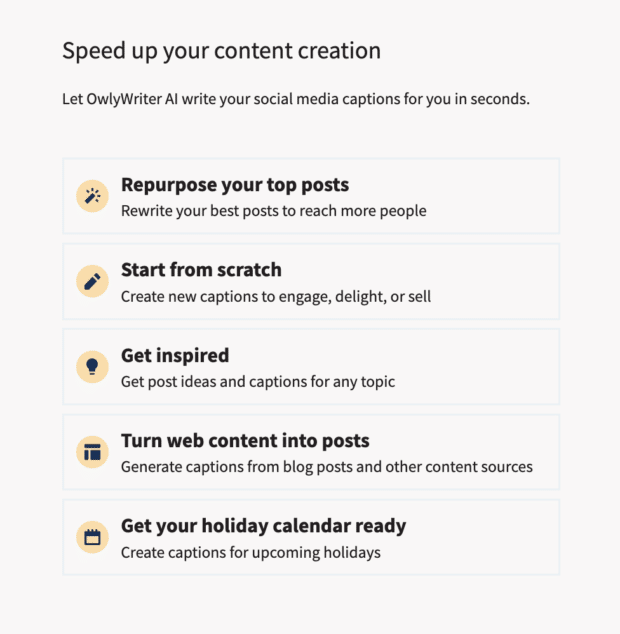
Draft your copy before moving into design production. Writing captions early ensures that the text and visual assets complement each other cleanly, with plenty of room to incorporate AI-assisted writing tools for rapid idea generation.

Step 9: Create (or Source) Design Assets
Produce eye-catching graphics, videos, and photography that match your copy. Maintaining clear deadlines for design assets prevents the common bottlenecks that stall otherwise promising marketing campaigns.
Step 10: Schedule Content in Advance
Leverage advanced social media management platforms to batch-schedule your posts in advance. Utilizing predictive features like "Best Time to Publish" analytics ensures your content goes live when your specific audience is most active.

Supporting Data: The ROI of Strategic Planning
Data consistently shows that structured planning yields superior marketing returns. However, achieving those returns requires navigating modern technological shifts carefully.
Recent studies highlight a fascinating dichotomy in the digital marketing landscape:
- The AI Adoption Gap: According to Gartner surveys, while roughly 77% of modern marketers actively explore Generative AI tools, only 44% realize significant, measurable benefits. This gap underscores the reality that AI is an accelerator, not a replacement for human strategic judgment.
- Consumer Perception: Another Gartner study revealed that 49% of U.S. consumers feel Generative AI has lowered overall content quality. This statistic emphasizes why human editing, rigorous brand governance, and strict compliance reviews must remain foundational steps in any content workflow.
- The Multi-Platform Advantage: Teams that utilize unified content calendars and automated scheduling tools report saving dozens of hours per month, drastically reducing employee burnout and minimizing costly cross-platform scheduling conflicts.
Official Industry Insights and Expert Responses
As platforms evolve, industry leaders emphasize that technology must serve human creativity rather than overshadowing it. Experts point out that the best content planning tools do not merely offer standalone scheduling calendars; they connect listening, planning, execution, and analytics into a single cohesive ecosystem.
"The planning judgment must stay with your team," note leading enterprise strategists. While tools powered by artificial intelligence and contextual intelligence engines can rapidly draft captions, analyze sentiment, and surface trending topics, the ultimate responsibility for brand integrity rests squarely on human shoulders.
Furthermore, enterprise organizations stress the importance of governance. As marketing departments scale across global regions, maintaining unified permissions, streamlined approval workflows, and centralized asset libraries ensures that localized teams can adapt content quickly without ever compromising brand safety or regulatory compliance.
Implications: What This Means for Marketers Moving Forward
The widespread adoption of advanced, data-backed social media content planning carries profound implications for the future of digital marketing.

- Rise of the Unified Operating System: Standalone schedulers are rapidly becoming obsolete. Marketing teams are migrating toward comprehensive social operating systems that integrate social listening, predictive analytics, AI-driven drafting, and multi-tier approval workflows into one dashboard.
- Quality Over Quantity: Because consumers are increasingly fatigued by low-effort, AI-generated noise, successful brands are pivoting toward hyper-targeted, high-value original content supported by strict quality controls.
- Agility Meets Structure: A well-planned calendar no longer means a rigid, unyielding schedule. By batching core content in advance, modern teams free up vital bandwidth to capitalize on real-time trends, breaking news, and cultural moments as they happen.
Ultimately, shifting from a reactive scramble to a proactive, data-informed content planning process transforms social media from an unpredictable daily chore into a predictable, high-performing engine for business growth.
 Ammar Sabilarrohman
 Jia Lissa
 Muslim
