
 By Basiran
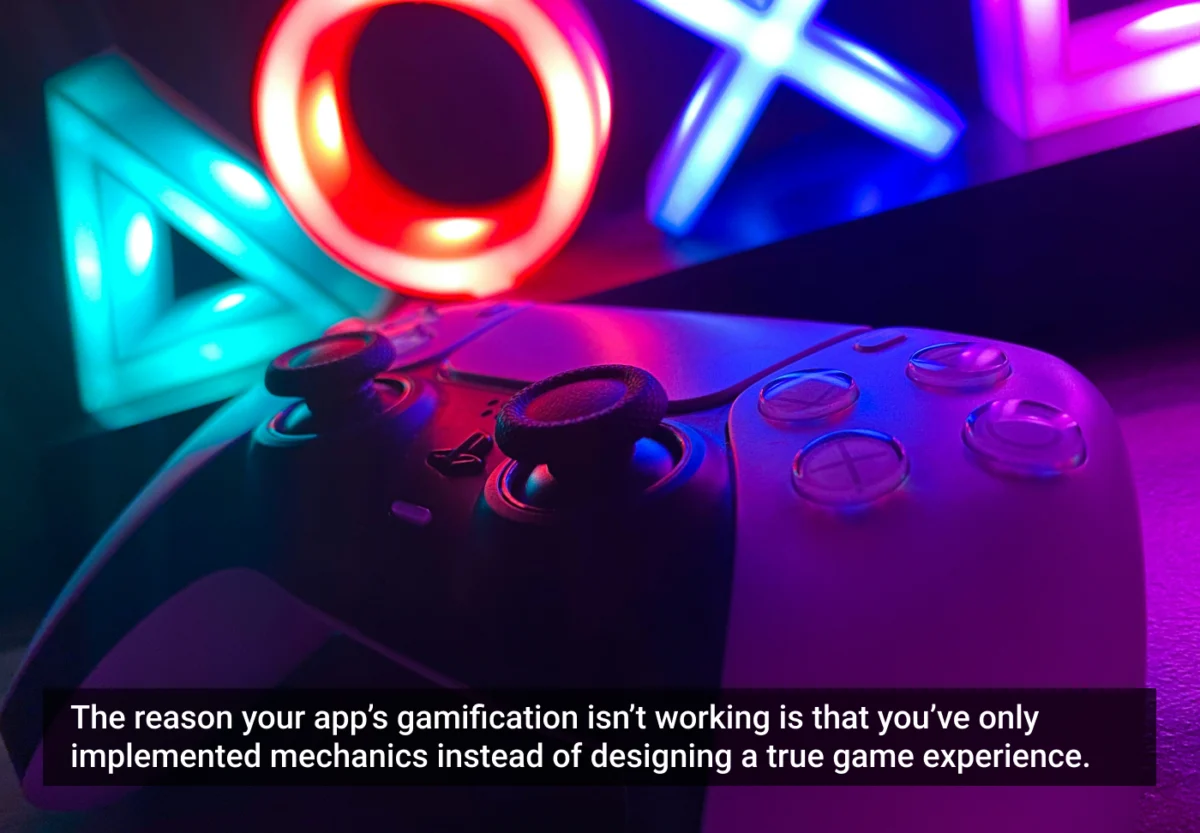
SAN FRANCISCO — In the hyper-competitive landscape of digital products, a quiet consensus has emerged among user experience (UX) architects and product leads: traditional gamification is broken. For over a decade, software companies have attempted to boost user retention by grafting superficial incentive structures—points, badges, leaderboards, and daily streaks—onto otherwise mundane digital tools.
Yet, as user fatigue sets in and engagement metrics plateau, product teams are realizing that treating gamification as a mere wrapper of cosmetic tricks is no longer sustainable. Enter Gamification 2.0: a paradigm shift that abandons the indiscriminate copying of gaming tropes in favor of deep structural alignment with core game design principles, player psychology, and intrinsic motivation.
Main Facts: The Anatomy of Gamification 2.0
At its core, Gamification 2.0 rejects the "cargo cult" methodology of software design—the practice of blindly imitating successful apps like Duolingo or Strava without understanding the foundational mechanics that drive them. Instead, it posits that effective gamification must be treated as an extension of professional game design, requiring rigorous genre selection, deep psychographic profiling, intrinsic loop optimization, and iterative studio-style playtesting.
Industry data consistently shows that platforms relying solely on extrinsic rewards (such as XP bars and digital trophies) suffer from severe churn rates the moment a user completes the artificial progression system. Conversely, products that establish satisfying intrinsic loops paired with thoughtfully matched game genres achieve sustained, long-term retention.
To bridge the chasm between software utility and genuine engagement, developers are now turning to a rigorous, five-step implementation framework to transform their applications from digitized chores into compelling, self-sustaining ecosystems.
Chronology: The Evolution from Superficial Points to Structural Design
To understand where software design is heading, it is necessary to examine how the industry arrived at the current crossroads of engagement engineering.
- Phase 1: The Wild West of Points and Badges (2010–2015): Following the popularization of the term "gamification" by Nick Pelling and its subsequent mainstreaming by pioneers like Jane McGonigal, companies rushed to digitize feedback loops. Every software vertical—from corporate HR portals to enterprise project management tools—slapped leaderboards onto workflows, assuming that external validation would permanently alter user behavior.
- Phase 2: The Fatigue and Disillusionment Era (2016–2020): Users quickly developed immunity to hollow rewards. Digital badges lost their psychological currency. Apps that relied exclusively on streaks and arbitrary levels saw sharp spikes in short-term engagement followed by catastrophic drop-offs once novelty wore off. Critics rightfully pointed out that gamification had largely devolved into a manipulative technique designed to manufacture false urgency.
- Phase 3: The Rise of Gamification 2.0 (2021–Present): Recognizing the limitations of superficial mechanics, forward-thinking product teams began recruiting actual game designers. Platforms like Notion, Duolingo, and Strava demonstrated that matching core app activities to specific video game genres (such as sandboxes, RPGs, and social competitive spaces) yields vastly superior, organic user retention. Today, Gamification 2.0 represents the professionalization of engagement architecture.
Supporting Data: Why Superficial Gamification Fails
Recent UX research and behavioral analytics highlight the stark contrast between apps utilizing deep structural game design and those relying on cosmetic add-ons:
- The Completion Trap: Studies on app retention indicate that when a progression system is treated as the primary driver of engagement, over 65% of users abandon the platform entirely within two weeks of reaching the highest available tier or collecting the final badge.
- The Value of Intrinsic Satisfaction: Platforms that optimize their core user loops—making the foundational action (e.g., writing a note, tracking a workout, or executing code) inherently satisfying before adding external rewards—report a 40% higher 90-day retention rate compared to apps that use gamification as a band-aid for poor UX.
- The Power of Genre Alignment: Apps that intentionally align their interaction models with established gaming archetypes (sandbox, puzzle, strategy, or social) see significantly lower cognitive friction during onboarding, as users instinctively understand the unwritten rules of interaction.
Official Perspectives and Industry Insights
Leading product strategists and veteran game developers emphasize that building engagement requires a fundamental shift in how tech companies approach product development teams.
"You wouldn’t hire someone who has never designed a building to architect your corporate headquarters," notes a prominent UX researcher specializing in digital behavioral loops. "So why do tech startups routinely task developers with zero gaming background to design complex behavioral incentive systems? If you are serious about Gamification 2.0, you need actual game designers involved as core team members—not as external consultants who write a report and walk away."
Furthermore, industry veterans stress that true gamification must be fiercely differentiated. "Civilization does not play like Portal, and Portal does not play like Street Fighter," argues a veteran game producer. "Your app’s gamification should be as unique as your app’s core value proposition. If your feature set looks identical to every other SaaS tool on the market—points, badges, streaks, and leaderboards—you haven’t designed anything. You’ve simply photocopied someone else’s homework."
A Framework for Developers: From Theory to Practice
Translating high-level game design theory into functional software engineering requires strict adherence to a systematic implementation framework.
[Step 1: Choose a Genre]
       │
       ▼
[Step 2: Map User Psychology]
       │
       ▼
[Step 3: Design Intrinsic Loops]
       │
       ▼
[Step 4: Test with Actual Gamers]
       │
       ▼
[Step 5: Iterate Like a Game Studio]
Step 1: Stop Copying Mechanics; Choose a Genre
Your first question during product planning should never be, "What gamification mechanics should we add?" Instead, ask: "What genre of game does our app naturally align with?"
Analyze your core user activities. While your application may feature elements spanning multiple categories, one genre should dominate. Commit to it and design explicitly for it.
- Notion successfully adopted sandbox mechanics, empowering users to build and manipulate their own digital spaces.
- Duolingo integrated RPG mechanics (though imperfectly), turning language acquisition into a quest for progression.
- Strava embraced social and competitive mechanics, framing physical exertion through the lens of community leaderboards and shared milestones.
Step 2: Map Your User Psychology to Genre Psychology
Audience analysis must go beyond surface-level demographics and dive deep into psychographics. Survey your user base not by asking, "Do you like gamification?" but rather, "What video games do you play in your spare time, and what draws you to them?"
- If your users gravitate toward puzzle games, they crave elegant problem-solving and intellectual clarity. Avoid burdening them with repetitive RPG grinding mechanics.
- If your users prefer strategy games, they want to plan meticulously and observe long-term consequences unfold. Avoid fast-paced, twitch-reaction action mechanics.
- If your users enjoy social games, they seek genuine community connection and mutual status. Do not isolate them with solo puzzle frameworks arbitrarily bolted onto a leaderboard.
Step 3: Design Intrinsic Loops First, Extrinsic Rewards Second
Before integrating a single point system, digital badge, or streak tracker, ask a critical question: "Is the core action satisfying entirely on its own?"
Mentally strip away all gamification layers from your application. Imagine a user logging a workout, completing a vocabulary lesson, or finalizing an accounting ledger. Does that fundamental action feel satisfying? Is the interface feedback immediate, tactile, and clear?
If the underlying loop feels like a chore, adding digital trophies will only mask the rot temporarily. Perfect the core interaction first. Once the foundational loop feels inherently rewarding, introduce extrinsic rewards strictly to amplify—never to replace—that intrinsic satisfaction.
Step 4: Test with Actual Gamers
Subject your engagement architecture to a rigorous "sniff test" by showcasing prototypes to individuals who actively play games within your chosen genre.
- If you have built an RPG-style progression system, present it to veterans of Final Fantasy or Baldur’s Gate. Does your progression feel narratively and mechanically meaningful to them, or does it feel like hollow, unearned numbers?
- If you have designed puzzle interactions, test them with enthusiasts of Portal or Baba Is You. Do your puzzles evoke that satisfying "aha!" breakthrough moment, or do they merely function as tedious artificial roadblocks?
Gamers possess finely tuned bullshit detectors. If your implementation fails to pass muster with people who understand game design systems intuitively, it will fail to resonate with mainstream software users.
Step 5: Iterate Like a Game Studio
Video games are never perfected in a single engineering sprint. They undergo years of grueling playtesting. Early vertical slices are frequently unplayable; it is through hundreds of aggressive iterations that they achieve greatness.
Your software features must follow this exact developmental pipeline. Ship a minimal viable version of your engagement loop. Observe how users actually behave within the ecosystem—disregarding how you hope they will behave. Identify friction points, eliminate features that fail to pull their weight, and refine relentlessly.
Implications and Red Flags: Are You Doing It Wrong?
As development teams evaluate their current user engagement strategies, recognizing the warning signs of superficial "cargo cult" gamification is essential for survival in an increasingly sophisticated software market.
1. The Single-Sprint Implementation
Real game design demands months of conceptualization and iteration. If your team specced out an entire gamification ecosystem during a single afternoon planning meeting and shipped it within two weeks, you have built a superficial veneer, not a game loop.
2. The Complete Absence of Game Design Expertise
If no one on your product team has ever shipped a video game or studied professional game mechanics, expecting them to successfully gamify enterprise software is a recipe for failure. Bring in experienced game designers not as passive advisors, but as active builders within your product organization.
3. Relying on Homogenized Tropes
If your product relies on the exact same triad found everywhere else—points, badges, and generic leaderboards—you have not innovated. True game design is heavily differentiated. Your application’s engagement layer must reflect its distinct value proposition.
4. The Cliff of Churn
When users max out your progression systems, collect every available badge, and immediately abandon your application, your software has been optimized for terminal completion rather than continuous, compounding value.
The Ultimate Litmus Test
How do product leaders definitively know whether their gamification architecture is succeeding?
Remove every single extrinsic reward from the equation. Strip away the points, the digital badges, the daily streaks, and the competitive leaderboards until only the bare, functional core of the application remains.
Ask yourself: Is the app still engaging? Do users genuinely want to open it and interact with it?
If the answer is yes, your gamification framework is successfully amplifying an inherently valuable digital product. You can safely layer your extrinsic systems back on top to enrich the experience.
If the answer is no, your software is not gamified—it is merely a tedious chore disguised with digital treats. No amount of badges will ever fix a broken core experience. The path forward requires abandoning superficial tricks and returning to the drawing board to build a product worthy of the user’s time.
 Nana Muazin
 Raul Delapena Setiawan
 Suro Senen
