
 By Ammar Sabilarrohman
In the modern digital economy, social media has transcended its origins as a mere marketing channel to become a $276 billion global powerhouse. For enterprise-level organizations, however, this vast landscape presents a unique paradox: the greater the reach, the more complex the risk. Managing brand consistency, regulatory compliance, and cross-departmental collaboration across dozens of regions and hundreds of accounts is no longer a task for ad-hoc teams. It is a sophisticated operational challenge that requires a unified, high-level enterprise social media strategy.
The Evolution of Enterprise Social: Moving Beyond Visibility
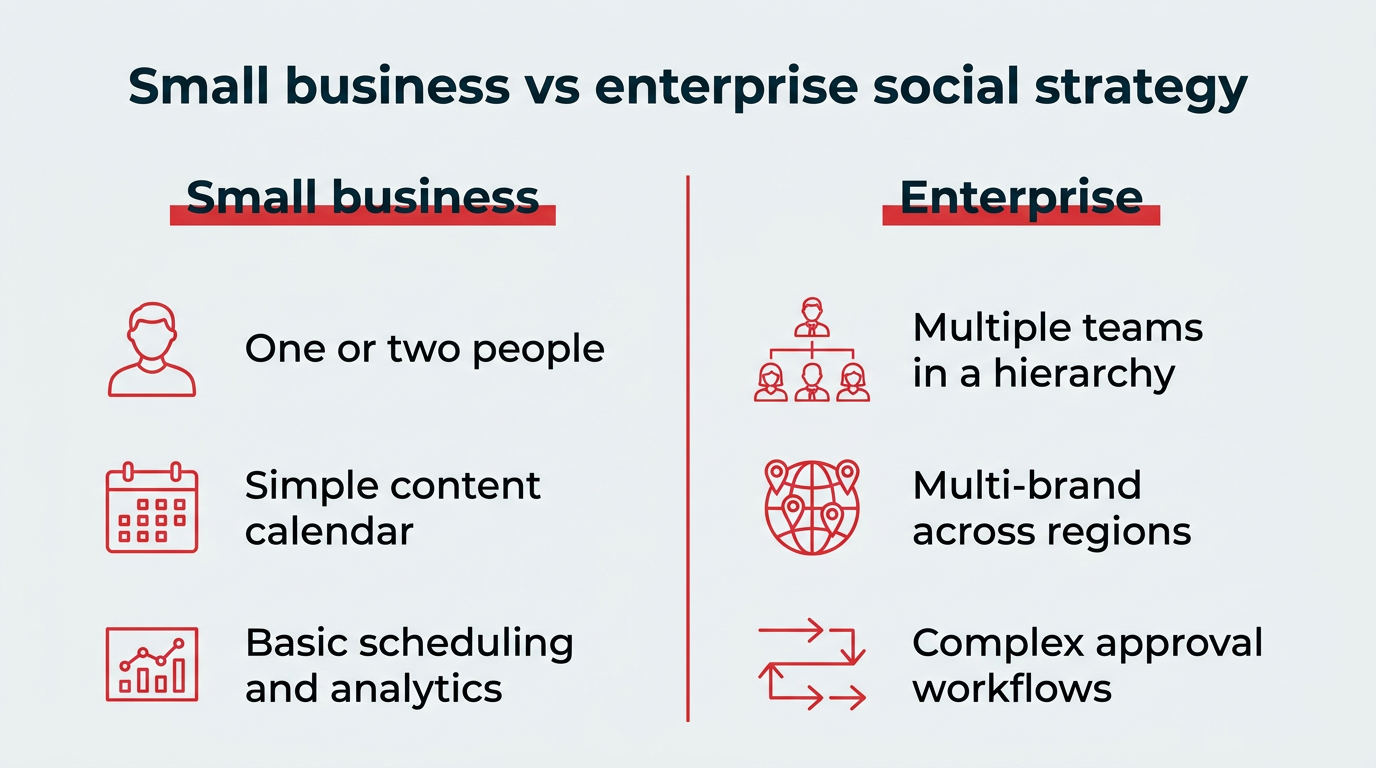
Enterprise social media is the strategic, large-scale application of social platforms to manage brand communication, customer engagement, and business intelligence. Unlike small business social media—which often relies on the agility of a single creator or a lean marketing team—enterprise management requires a rigid, scalable framework.

It is critical to distinguish between Enterprise Social Media and Enterprise Social Networks. The former is external-facing, designed for brand marketing and public sentiment management (LinkedIn, Instagram, TikTok). The latter is an internal collaboration tool (Slack, Viva Engage, Yammer) intended for employee connectivity. Conflating these two can lead to fragmented efforts and failed digital transformations.
The Complexity of Scale
For a multinational corporation like Nike, which maintains hundreds of secondary accounts, the challenge is not just "posting content." It is about ensuring that every regional account, product-specific page, and influencer collaboration ladder up to a singular brand vision. As Intuit Mailchimp’s Staff Marketing Manager, Savannah Wiles, notes: "A strong enterprise social strategy comes down to three things: your audience, your brand, and your goals. Brands on social are essentially cosplaying as people, so there must be structure around where and when you shift your persona."

Chronology of Strategy Development
Successful enterprises do not stumble into a unified presence; they build it through a deliberate, eight-step process designed to foster growth while mitigating risk.
- Comprehensive Social Audit: You cannot govern what you cannot see. The first step involves cataloging every existing account, identifying dormant pages, and auditing the performance of current campaigns.
- Defining Roles and Responsibilities: Establish a "Center of Excellence" (CoE) to set the vision and guardrails, while empowering regional teams to execute locally.
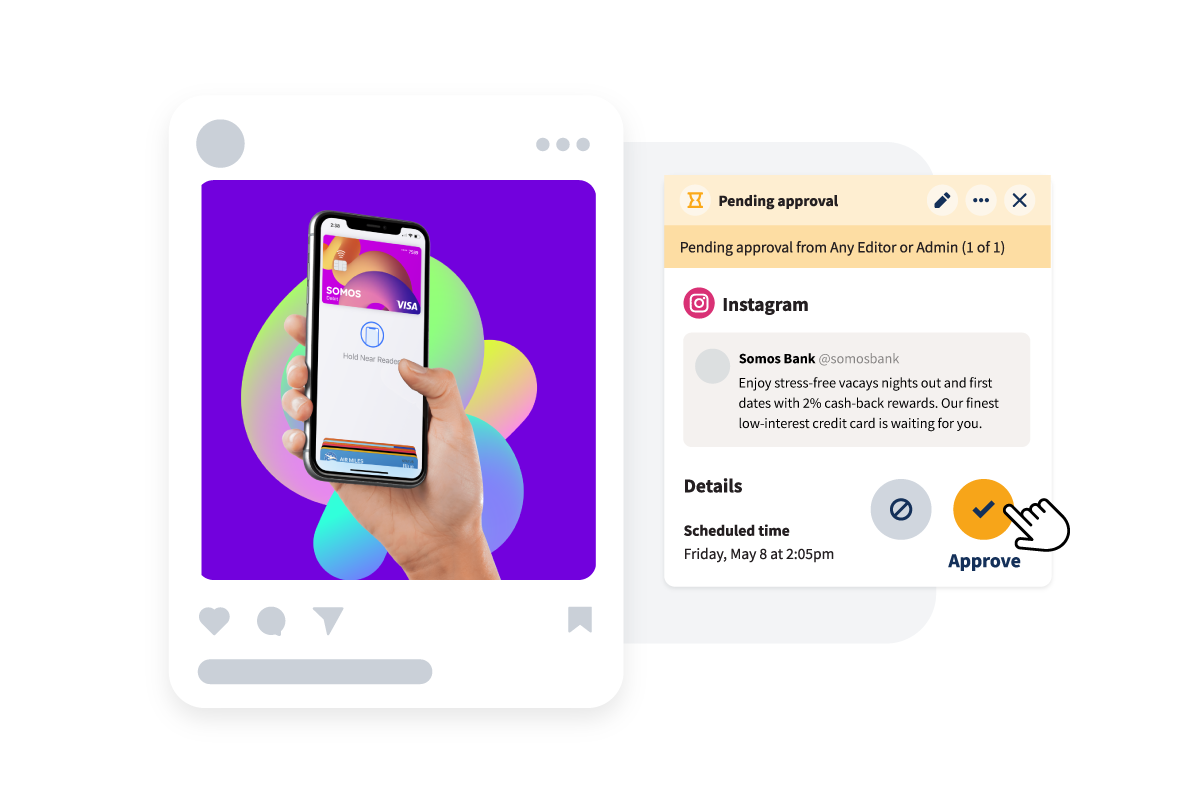
- Workflow Formalization: Implement automated approval processes that ensure content is vetted for both brand quality and legal compliance before going live.
- Codifying Brand Standards: Translate global brand guidelines into specific social media playbooks, including voice, visual identity, and values.
- Platform Governance: Document rules for posting cadence, engagement, and crisis management.
- Technology Integration: Deploy a unified social operating system that integrates with your CRM and business intelligence tools.
- Team Training: Move beyond initial onboarding. Provide ongoing education on platform updates, accessibility, and crisis communication.
- Measurement and Iteration: Establish a recurring cycle of performance review, using data to inform future budget allocation and strategic shifts.
Supporting Data: The ROI of Centralization
As social commerce continues to surge—with the U.S. market alone exceeding $100 billion in 2026—the pressure to prove Return on Investment (ROI) has never been higher. Modern enterprise teams are moving away from "vanity metrics" (likes and follows) toward business-linked outcomes.
Key Performance Indicators (KPIs) now include:
- Share of Voice: Measuring your brand’s conversation volume relative to competitors to signal market position.
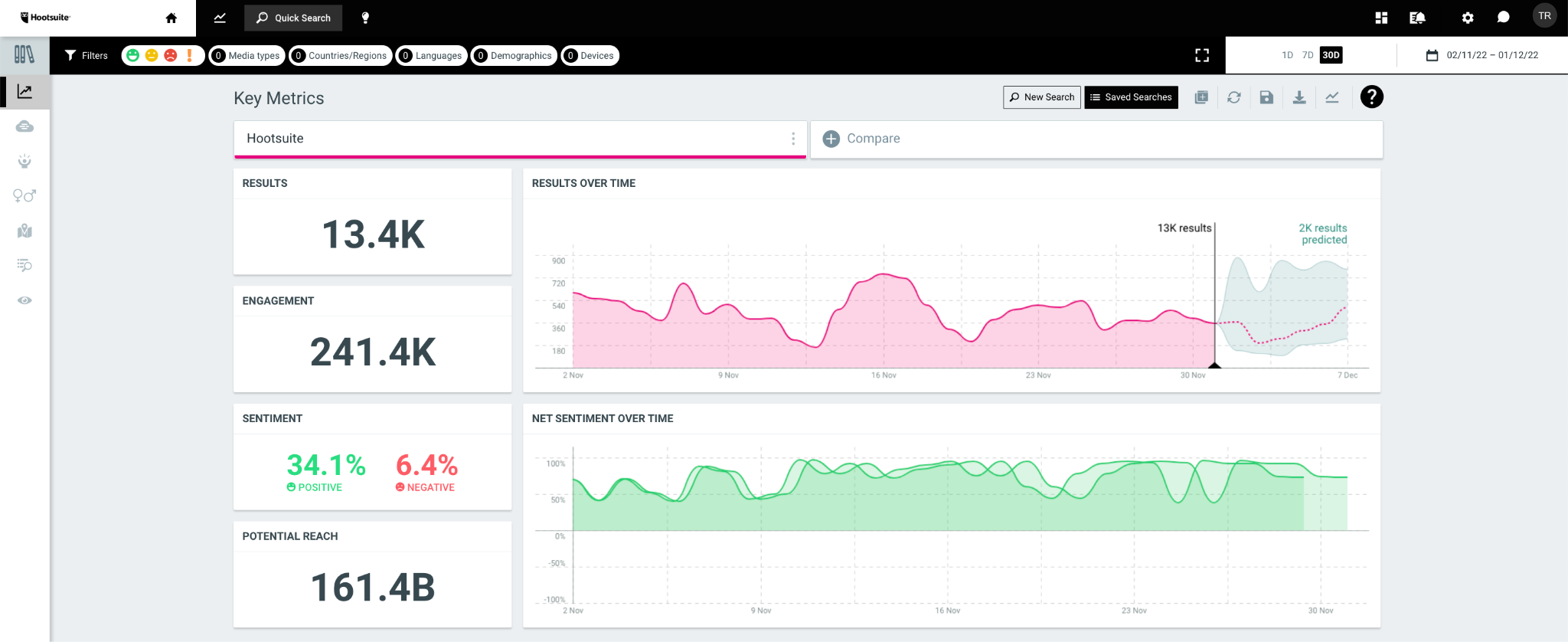
- Sentiment Score: Utilizing AI-driven social listening to flag brand health and emerging risks before they escalate.
- Social-Attributed Leads: Tracking the conversion journey from a social interaction to a qualified lead in the CRM.
- Employee Advocacy Reach: Quantifying the expanded organic reach generated by employee-shared content, which often outperforms brand-level posts in trust and engagement.
Official Perspectives: AI as an Operational Intelligence Layer
In 2026, Artificial Intelligence has moved beyond content generation to become the central nervous system of social media operations. Leading platforms are now using AI to read sentiment in real-time, route high-priority customer queries to the right departments, and ensure compliance in heavily regulated sectors like finance and healthcare.
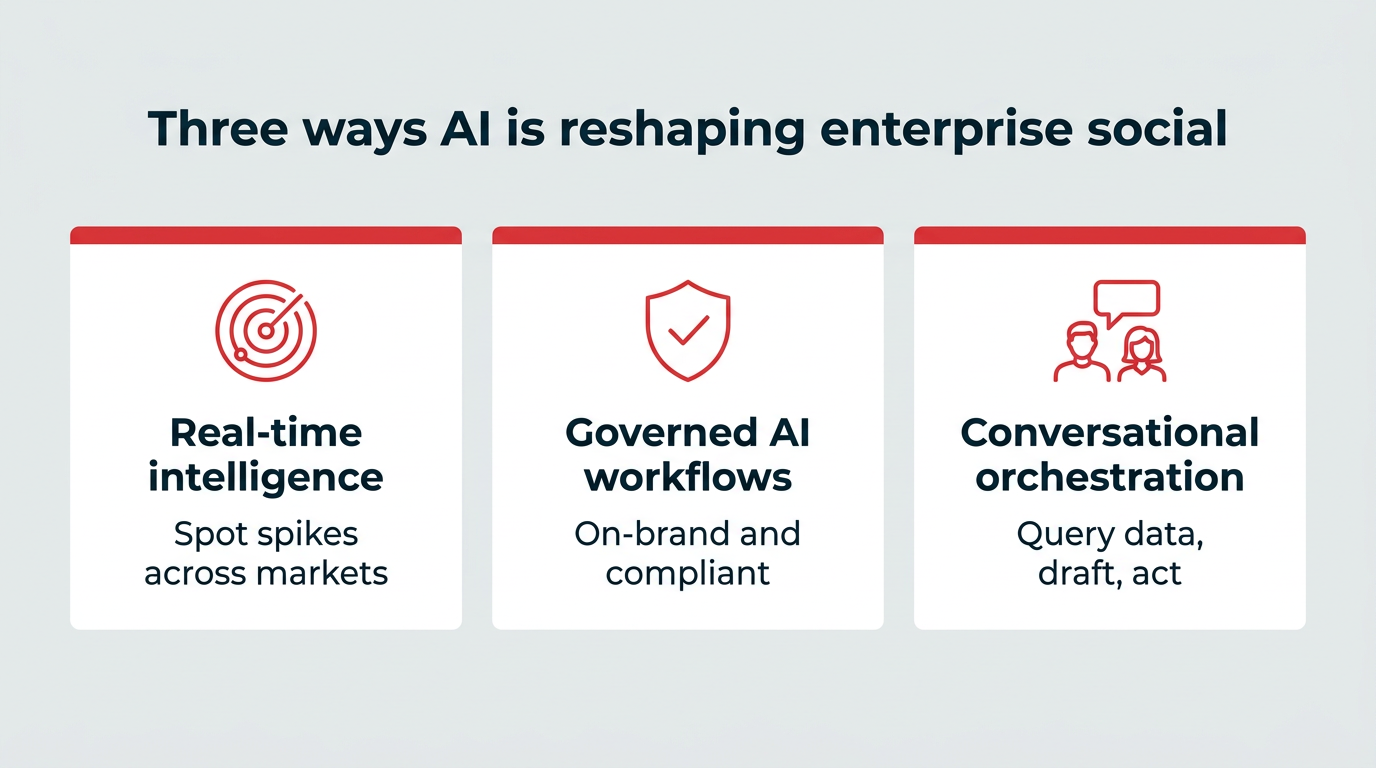
However, "ungoverned" AI is a major liability. The implementation of a governance layer—such as Hootsuite’s Vigil—is now standard practice. This layer keeps AI-assisted work within the guardrails of corporate policy, ensuring every output is traceable, documented, and brand-safe. As Wiles explains, "No matter how big the business, resources will always run tight. My biggest advantage is the ability to be scrappy and look inward to find new content opportunities, partnering with internal influencers and cross-functional teams to keep the feed fresh."
Implications: Building for Resilience and Growth
The implication for the modern enterprise is clear: social media is no longer an optional peripheral activity; it is a core business channel. Failing to unify this channel leads to "coordination decay," where disparate regional teams inadvertently damage the brand through inconsistent messaging or regulatory oversight.
Protecting Brand Trust
In a complex global environment, a single ill-advised post can result in a reputation crisis that spans the globe in hours. A robust strategy acts as a safety net. By utilizing automated compliance tools—like the integration between Hootsuite and Proofpoint—enterprises can ensure that all content is vetted against industry regulations, protecting the company from fines and legal action.
The Global-Local Balance
Global brands often struggle with the "Global vs. Local" tension. The consensus among industry leaders is the "80/20 Rule": maintain 80% consistency in global brand identity and core messaging, and allow 20% flexibility for local regions to adapt to cultural nuances, language, and market-specific trends. This approach allows a corporation to maintain a cohesive brand universe while remaining locally relevant.

Conclusion: The Path Forward
The shift toward an enterprise-wide social media strategy is a shift toward maturity. By centralizing operations, implementing AI governance, and tying social data to broader business outcomes, large organizations can transform social media from a chaotic collection of accounts into a powerful growth engine.
For organizations looking to gain a competitive edge, the objective is to create an ecosystem where data flows freely between social platforms and internal systems. When your social media presence is aligned with your CRM, your customer support data, and your business intelligence, you stop guessing what your customers want—you start responding to it in real-time.
As we look toward the latter half of the decade, the winners will be those who view social media as a professionalized, high-stakes discipline. The infrastructure is available, the AI tools are sophisticated, and the roadmap is clear. The only remaining variable is the commitment to operational excellence.
For organizations ready to streamline their social operations, integrating a centralized platform like the Hootsuite Social OS allows for the seamless management of publishing, approvals, and analytics, turning the complexity of enterprise social into a competitive advantage.
 Reynand Wu
  Muslim
  Nila Kartika Wati