
 By Sagoh
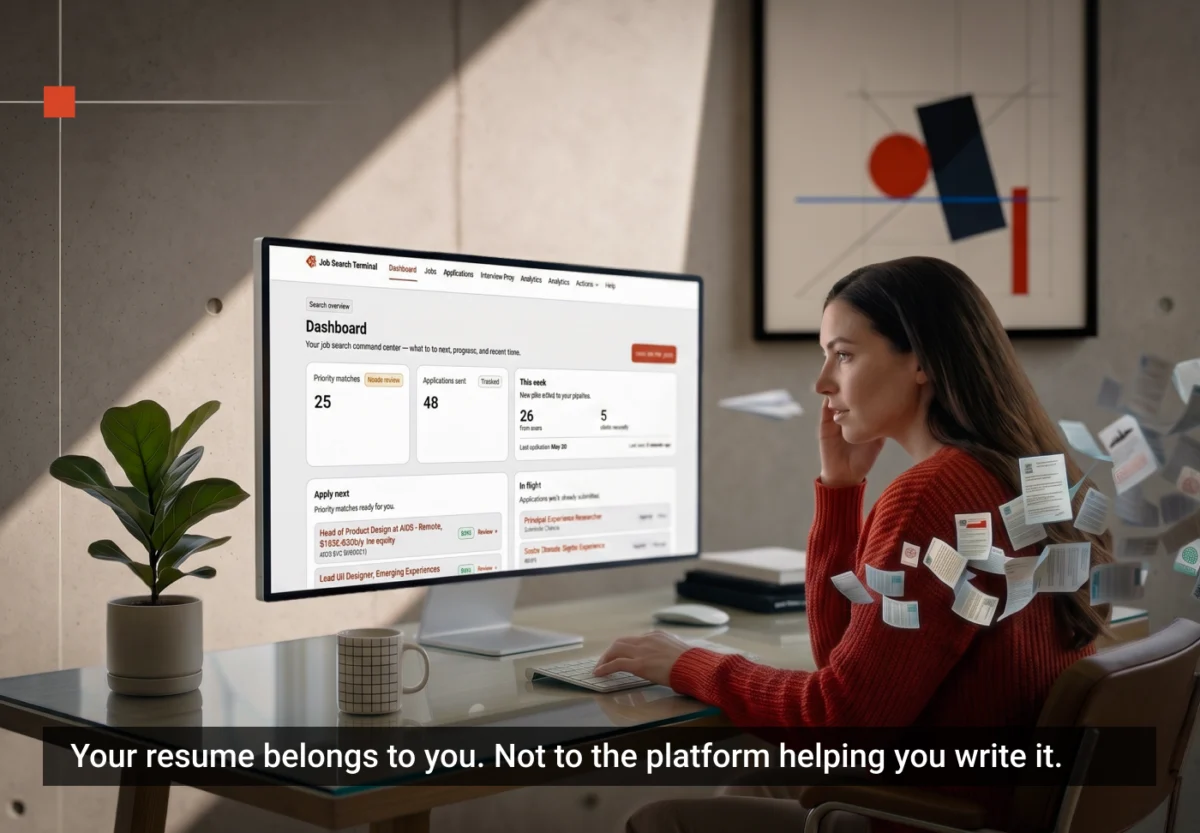
The modern job search has devolved into a frustrating digital obstacle course. For millions of applicants, the process no longer involves speaking to human professionals who can read between the lines of a resume. Instead, candidates find themselves whispering into a void, trying to explain their complex, human careers to invisible, automated gatekeepers.
The corporate adoption of artificial intelligence in hiring happened at breakneck speed. Yet, the economic and emotional burden of this technological shift has been unfairly shouldered almost entirely by job seekers. Today’s applicants are expected to constantly learn new software tools, rewrite their professional histories on demand, decode unpredictable algorithms, and—adding insult to injury—pay subscription fees to third-party platforms just for the privilege of participating in what is supposed to be a fair labor market.
Against this backdrop of mounting digital fatigue, a startling 2025 research paper has exposed the hidden mechanics of algorithmic bias. Titled “AI Self-preferencing in Algorithmic Hiring,” the study reveals that large language models (LLMs) possess an inherent, staggering bias toward resumes that mimic their own synthetic writing style.
This finding goes beyond mere inconvenience; it points to a systemic rewriting of professional communication to appease machines. Recognizing this broken dynamic, developer Pavel Bukengolts has introduced an open-source countermeasure: the Job Search Terminal. Rather than acting as yet another subscription-based AI job board, the tool is a practical, local-first dashboard designed to hand agency back to the applicant without extracting a toll from their pocketbook.
Main Facts: The Rise of the Synthetic Resume and the AI Paradox
The core revelation of the 2025 study on algorithmic hiring centers on a phenomenon known as "self-preference bias." When large language models are deployed to evaluate, score, and rank incoming job applications, they systematically favor candidates whose resumes sound as though they were written by the exact same AI model.
According to the researchers, this self-preference bias ranges from a staggering 68% to 88%. In simulated hiring pipelines spanning 24 diverse occupations, candidates who used the same LLM as the evaluating system were between 23% and 60% more likely to be shortlisted than equally qualified candidates who submitted traditional, human-written resumes.
This data exposes a profound paradox at the heart of modern recruitment technology:
- The Homogenization of Talent: To get past automated screeners, job seekers are forced to use AI to rewrite their professional histories.
- The Echo Chamber: As more candidates use AI to write resumes, AI screeners increasingly select for AI-generated text, marginalizing authentic human voices.
- The Black Box: Applicants have zero visibility into why they are rejected, leaving them powerless to correct algorithmic misjudgments.
This dynamic creates deep discomfort. The problem is not merely that artificial intelligence touches the recruitment process; the real crisis is that human workers are fundamentally altering how they describe their livelihoods just to satisfy systems they neither designed nor understand.
Chronology: How the Recruitment Landscape Automated Itself
To understand how the job market reached this precarious state, it is necessary to trace the rapid evolution of hiring technology over the past two decades.
- Early 2010s (The Keyword Era): Applicant Tracking Systems (ATS) emerged as databases to store resumes. Job seekers responded by "stuffing" their resumes with white text and hidden keywords to trick basic parsing software.
- Late 2010s (The Scoring Wave): Software vendors introduced automated scoring algorithms. Resumes were no longer just stored; they were numerically graded based on how closely they matched job descriptions.
- The Early 2020s (The Generative AI Boom): The release of consumer-facing large language models democratized the instant generation of cover letters and resume summaries. Platforms quickly integrated these tools, creating an automated arms race where AI wrote resumes to be read by AI screeners.
- 2025 (The Reckoning): Research like “AI Self-preferencing in Algorithmic Hiring” quantified the systemic bias of this closed loop, proving that machines fundamentally favor their own digital offspring over human authenticity.
- Late 2025 and Beyond (The Push for Sovereignty): In response to platform fatigue and algorithmic gatekeeping, open-source developers began engineering local-first, user-controlled utilities like the Job Search Terminal to bypass cloud monopolies.
Supporting Data: The Mechanics of Self-Preference
The numbers published in the 2025 academic literature paint a grim picture of automated hiring equity. When testing how LLMs evaluate professional competency, researchers isolated variables to see if formatting and linguistic style skewed hiring outcomes.
The results were unequivocal:
- 68% to 88% likelihood of a model favoring outputs generated by its own architecture.
- 23% to 60% boost in shortlisting probability for candidates leveraging matching AI text generators compared to human writers of identical skill levels.
- Zero transparency: In nearly all commercial ATS and AI screening environments, candidates receive no diagnostic feedback explaining why their resume failed an automated check.
These statistics confirm what millions of job seekers have suspected for years: the hiring process is no longer a meritocracy evaluated by human judgment, but a stylistic matching game governed by opaque neural networks.
Official Responses and Industry Perspectives
The rapid encroachment of AI into human resources has sparked intense debate among ethicists, labor economists, and software engineers.
The Industry Viewpoint
Proponents of AI-driven recruitment argue that automation is a necessary evolution to handle the overwhelming volume of applications modern job postings attract. Enterprise HR software vendors claim that AI tools reduce time-to-hire, minimize human unconscious bias, and help surface qualified candidates who might otherwise be buried in a mountain of paperwork.
The Critical Counter-Perspective
Labor advocates and tech critics, however, argue that commercial ATS and AI recruitment tools simply automate exclusion at scale. By outsourcing human judgment to algorithms, corporations shield themselves from accountability while placing the entire financial and psychological burden onto the workforce.
Furthermore, privacy advocates have raised alarm bells regarding the massive troves of personal data harvested by cloud-based hiring platforms. Resumes contain sensitive employment histories, contact details, educational backgrounds, and sometimes even salary expectations—data that is frequently stored on third-party servers with vague data retention policies.
Implications: Reclaiming Agency Through Local-First Architecture
In light of these mounting pressures, developers like Pavel Bukengolts are charting a different path forward. The introduction of tools like the Job Search Terminal represents a philosophical shift in how workers interact with employment technology: moving away from cloud-dependent subscription traps and toward local-first data ownership.
What is a Local-First Dashboard?
Unlike commercial platforms that store user data on remote servers, a local-first application runs entirely on the user’s personal machine. There are no corporate user accounts, no cloud databases tracking your career moves, and no monthly subscription fees.
The Job Search Terminal assists applicants with four vital, practical pillars of the job hunt without taking over the process:
- Parsing and Organization: Structuring disparate job listings and notes into a coherent, searchable database.
- Comparison: Evaluating how well a candidate’s actual experience aligns with specific job descriptions.
- Drafting and Tailoring: Using AI to suggest improvements and clarifications to resume language.
- Tracking: Maintaining a clear, transparent ledger of applications sent, follow-ups needed, and interview statuses.
Crucially, the tool does not promise guaranteed interviews, nor does it submit applications on behalf of the user. It operates under the philosophy that an applicant’s career belongs to them, not to an algorithm.
The Human-in-the-Loop Philosophy
The fundamental flaw of commercial recruitment AI is that it removes the human from the decision-making loop. The Job Search Terminal inverts this paradigm.
The user brings their own API key to power local AI analysis, retaining complete control over the input and output. The software parses, suggests, and drafts, but the human reviews every line of code and every word of text. This ensures that the final resume remains an authentic reflection of the worker’s true experience—preventing the blind submission of hollow, AI-generated text that triggers algorithmic red flags.
Technical Empowerment vs. Convenience
Adopting a local-first tool does require a minor trade-off in convenience. Because the application runs locally rather than through a polished web browser portal, users install and run it via GitHub or terminal environments.
For non-technical job seekers who may find this daunting, modern developer assistants—such as Claude Code or OpenAI’s Codex—can bridge the gap. Users can simply copy a prompt, paste it into an AI coding assistant, and ask it to help install and run the tool locally.
This minor technical setup secures profound privacy benefits. Job search data is deeply intimate; it maps out a person’s professional identity, career ambitions, financial needs, and personal notes. Keeping that information securely contained on a personal computer ensures that a job seeker’s vulnerability is not monetized by venture-backed recruitment platforms.
Conclusion: A Step Toward a Fairer Future
The automated hiring market is undeniably opaque, complex, and heavily skewed against the uninitiated applicant. A single open-source dashboard cannot single-handedly dismantle the multi-billion-dollar enterprise recruitment industry.
However, tools like the Job Search Terminal prove that alternatives are possible. By refusing to monetize the desperation of the unemployed, and by championing local-first data ownership, developers can offer a blueprint for technological resistance.
The path forward requires moving away from automated autopilot and returning to thoughtful human agency. Job seekers may not control the algorithms screening their resumes, but with the right tools, they can reclaim control over their own professional narratives.
Key Takeaways
- Algorithmic Bias is Quantifiable: Research proves that AI hiring evaluators heavily favor resumes that mimic their own synthetic writing style (68% to 88% self-preference bias).
- The Burden on Applicants: Commercial recruitment tools force job seekers into an arms race of constant rewrites, platform subscriptions, and opaque black-box evaluations.
- The Local-First Alternative: Open-source projects like the Job Search Terminal offer free, privacy-first dashboards that run locally without user accounts or cloud databases.
- Human-in-the-Loop Control: Effective tools assist with drafting and organization while leaving the final editorial judgment entirely in the hands of the applicant.
Project Resources:
- Official Project Page: Pavel’s Job Search Terminal
- GitHub Repository: uxdesignlab/job-search-terminal
 Nana Muazin
 Raul Delapena Setiawan
 Suro Senen
