
 By Lina Irawan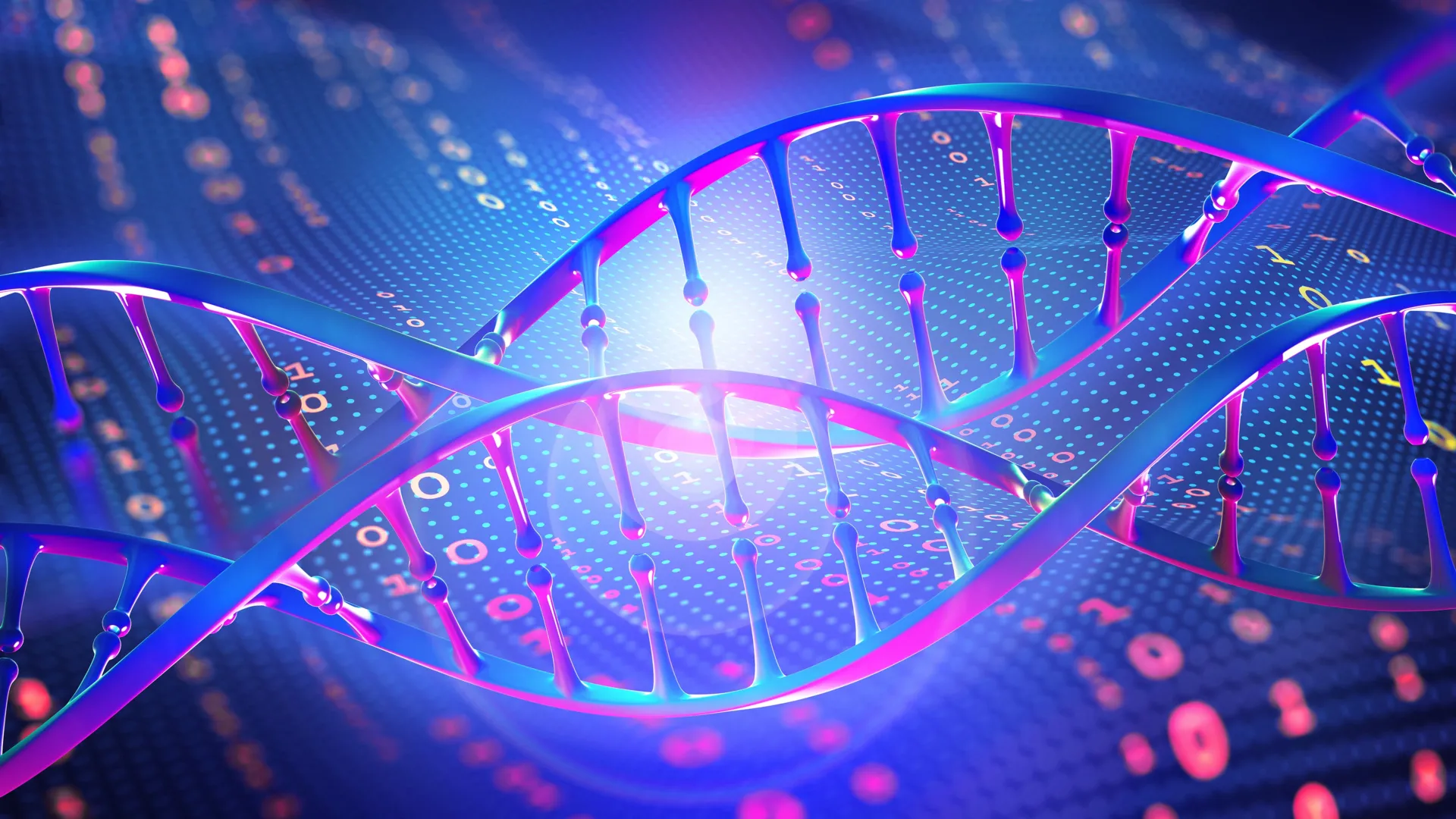
In the race to build the next generation of computing—systems capable of handling the staggering data demands of artificial intelligence—the hardware industry has hit a wall. Traditional silicon-based architecture, while revolutionary, is struggling to keep pace with the energy requirements and storage densities necessitated by modern AI, deep learning, and neuromorphic computing. Now, a breakthrough from Penn State University suggests that the solution to these bottlenecks may not be found in a lab-grown synthetic crystal, but in the very molecule that encodes life itself: DNA.
By merging the information-storage prowess of synthetic DNA with the high-performance electronic properties of perovskite semiconductors, researchers have engineered a "bio-hybrid" memristor that functions with unprecedented efficiency. This development, recently published in the journal Advanced Functional Materials, represents a fundamental shift in how we conceive of electronic memory, promising devices that are smaller, faster, and exponentially more energy-efficient than anything currently on the market.
The Convergence of Biology and Silicon: The Core Facts
At the heart of this innovation is the marriage of two disparate fields: molecular biology and materials science. DNA is nature’s ultimate storage medium, capable of holding roughly 215 million gigabytes of data in a single gram. However, integrating this biological material into an electronic circuit has historically been considered impossible due to the inherent incompatibility between organic, squishy, and temperature-sensitive molecules and the rigid, high-heat world of semiconductor manufacturing.
The Penn State team, led by researchers Kavya S. Keremane, Bed Poudel, and Neela H. Yennawar, successfully bridged this divide. They utilized "doping"—a technique common in semiconductor physics—to introduce silver nanoparticles into custom-engineered, short-strand synthetic DNA. This modification allowed the DNA to conduct electricity reliably while maintaining structural integrity when paired with crystalline perovskite. The result is a memristor: a memory resistor capable of "remembering" the state of electrical current flow even after the power is cut, mirroring the synaptic functions of the human brain.
A Chronology of Innovation: From Concept to Circuit
The path to this discovery was not linear. The research, which is now the subject of a patent application, moved through several distinct phases of development:
- Computational Design: The team began by utilizing computer modeling to determine the precise sequences and lengths of synthetic DNA required to interact with perovskite films. Unlike natural DNA, which exists in long, entangled, and unpredictable strands, synthetic DNA can be engineered for specific rigidity and length.
- Material Synthesis and Doping: Once the DNA sequences were determined, the team introduced silver ions into the molecular structure. This doping was critical; it not only enabled electrical conductivity but also forced the molecular units of the DNA to align in a highly orderly fashion, creating a consistent pathway for electrons.
- Integration with Perovskite: The doped DNA was then integrated with thin films of perovskite, a semiconductor material prized for its use in solar cells and lasers. The team discovered that when these two materials were combined, they formed a symbiotic "bio-hybrid" pathway.
- Device Testing and Benchmarking: The final phase involved rigorous stress testing. The researchers applied minimal voltages—less than 0.1 volts—to test the responsiveness of the device. Following successful signal transmission, they pushed the device to its thermal and longevity limits, observing its stability at temperatures up to 250 degrees Fahrenheit.
Supporting Data: Efficiency and Stability Metrics
The performance metrics of the new bio-hybrid device are, by industry standards, extraordinary. In current computing architecture, increasing storage capacity almost universally results in a spike in energy consumption. The Penn State device reverses this trend.
According to the research team, their memristor consumes one-tenth of the power required by comparable current-generation technologies. When compared to traditional flash storage, the power savings are even more dramatic, with the team noting that their system operates with 100 times less energy than existing commercial solutions.
Furthermore, the stability of the device is a significant leap forward for perovskite-based electronics. Perovskites are notoriously temperamental, often breaking down under heat or prolonged use. However, the addition of the engineered DNA scaffold stabilized the material, allowing the device to function consistently at 250°F (121°C). In room-temperature stress tests, the device maintained its operational integrity for over six weeks—a longevity milestone that suggests the technology is moving out of the realm of theoretical curiosity and toward practical application.
Official Perspectives: The Experts Speak
The researchers emphasize that this project was a multi-disciplinary effort, requiring expertise from material scientists, biologists, and electrical engineers.
"Biology and electronics are different domains," said Kavya S. Keremane, a postdoctoral researcher in materials science and engineering and co-corresponding author of the study. "Bridging these two fields required developing an entirely new materials platform that allows them to function seamlessly together. By combining the information storage capabilities of DNA with the exceptional electronic properties of perovskite semiconductors, we created a bio-hybrid system that fundamentally changes how low-power memory devices can be designed."
Bed Poudel, a research professor of materials science and engineering at Penn State and co-corresponding author, highlighted the urgency of this work in the context of the global AI boom. "As the demand for artificial intelligence grows, we need a new strategy for low-power, high-storage devices," Poudel stated. "Nature has the solution—we just have to find it and apply it."
Neela H. Yennawar, director of the Huck Institutes of the Life Sciences’ Biomolecular Interactions Core Facility, noted the advantage of synthetic over natural DNA. "We can computationally determine exactly which sequences we need and how long they should be, and then we can rationally design them with synthetic DNA," Yennawar explained. "These structures can be systematically doped with silver and other ions and engineered to interface seamlessly with perovskites—transforming DNA from a biological macromolecule into a programmable, multifunctional nanomaterials platform."
Implications for the Future of Computing
The implications of this breakthrough are far-reaching, particularly for the development of "neuromorphic" computing. Current computers are based on the von Neumann architecture, which separates the processor from the memory, leading to constant data shuffling that consumes power and limits speed. The human brain, conversely, processes and stores information in the same physical space—the synapses.
By mimicking this synaptic function through memristors, the Penn State team is paving the way for computers that can process multiple inputs simultaneously and "learn" from previous experiences. This is the cornerstone of advanced artificial intelligence. In a world where data centers are becoming some of the largest consumers of global electricity, a device that offers higher storage density at a fraction of the power cost could be transformative for climate sustainability and technological progress.
Furthermore, the use of synthetic DNA as a programmable scaffold opens doors to a new field of "bio-inspired electronics." If scientists can engineer DNA to handle conductivity and structural organization, they may eventually be able to create self-assembling electronic components that are biodegradable, scalable, and biocompatible.
Looking Ahead
The team’s immediate goals include refining the manufacturing process for these bio-hybrid devices and exploring how to scale them for mass production. They are also investigating the potential for these devices to be integrated into wearable health monitors or edge-computing sensors that require extreme longevity and minimal power consumption.
The project, which included contributions from the University of Minnesota and was supported by the National Science Foundation and the National Institutes of Health, serves as a testament to the power of interdisciplinary research. As Bed Poudel noted, the work provides a "glimpse into what is possible" when we stop viewing biology and technology as separate, conflicting systems, and instead begin to see them as partners in the next evolution of human innovation. While commercial adoption may still be years away, the integration of DNA into our hardware is no longer a science-fiction trope; it is a tangible, functioning reality.
 Iffa Jayyana
  Ammar Sabilarrohman
  Laily UPN