
 By Iffa Jayyana
In the modern digital economy, social media advertising has graduated from a secondary marketing experiment into the backbone of global brand strategy. As we head into 2026, the industry is no longer just about "boosting" a post; it is a sophisticated, data-driven ecosystem where artificial intelligence, creator-led content, and precision targeting converge. With global ad spend projected to hit an staggering $338.75 billion by the end of 2026, understanding the mechanics of paid social is no longer optional for businesses—it is a competitive necessity.
The Core Fundamentals: Paid vs. Organic
To understand the landscape, one must distinguish between the two primary pillars of social presence: organic marketing and paid advertising.

Organic social media marketing encompasses the long-term, relationship-building activities: content strategy, community management, and consistent posting. It is the brand’s "voice." However, organic reach is increasingly subject to the whims of platform algorithms, which prioritize engagement over distribution.
Social media advertising, or "paid social," is the tactical application of capital to bypass these algorithmic constraints. By paying for placement, brands ensure their message reaches a specific, high-intent audience. As Cedric Bruce-Kotey, Senior Manager of Paid Social at Hootsuite, notes, "Standard Meta ads are no longer the only way to reach users. Advertisers must now navigate the rise of diverse platforms like TikTok, Snapchat, and Reddit, all of which are aggressively updating their advertising capabilities to stay competitive."

A Brief Chronology: From Static Banners to Immersive Commerce
The journey of social advertising has been one of rapid transformation:
- The Early 2010s: The "Wild West" era. Advertising was primarily static, dominated by desktop sidebar banners on Facebook. Targeting was broad and demographic-based.
- The Mid-2010s: The mobile shift. As users migrated to smartphones, platforms introduced native, in-feed ads that felt less like billboards and more like content.
- The Late 2010s to Early 2020s: The rise of video and direct-response. Instagram Stories, Snapchat, and eventually TikTok moved the needle toward short-form video and seamless "Shop" integrations.
- 2025–2026: The AI and Creator Era. Today, advertising is defined by machine-learning-led optimization and "Spark Ads" or "Whitelisting," where brand messaging is filtered through the credibility of content creators.
The Mechanics: How Modern Campaigns Are Built
While each platform possesses unique nuances, the architecture of a successful campaign relies on four universal building blocks:

1. Objective Alignment
Every campaign begins with a "north star." Whether the goal is awareness, traffic, lead generation, or bottom-line conversions, the platform’s algorithm adjusts its delivery based on your choice. Choosing "Conversions" forces the system to find users historically likely to purchase, while "Awareness" focuses on maximizing reach at the lowest possible cost-per-thousand-impressions (CPM).
2. Precision Audience Targeting
Modern social advertising allows for granular control. Beyond basic age, location, and gender, brands now utilize:
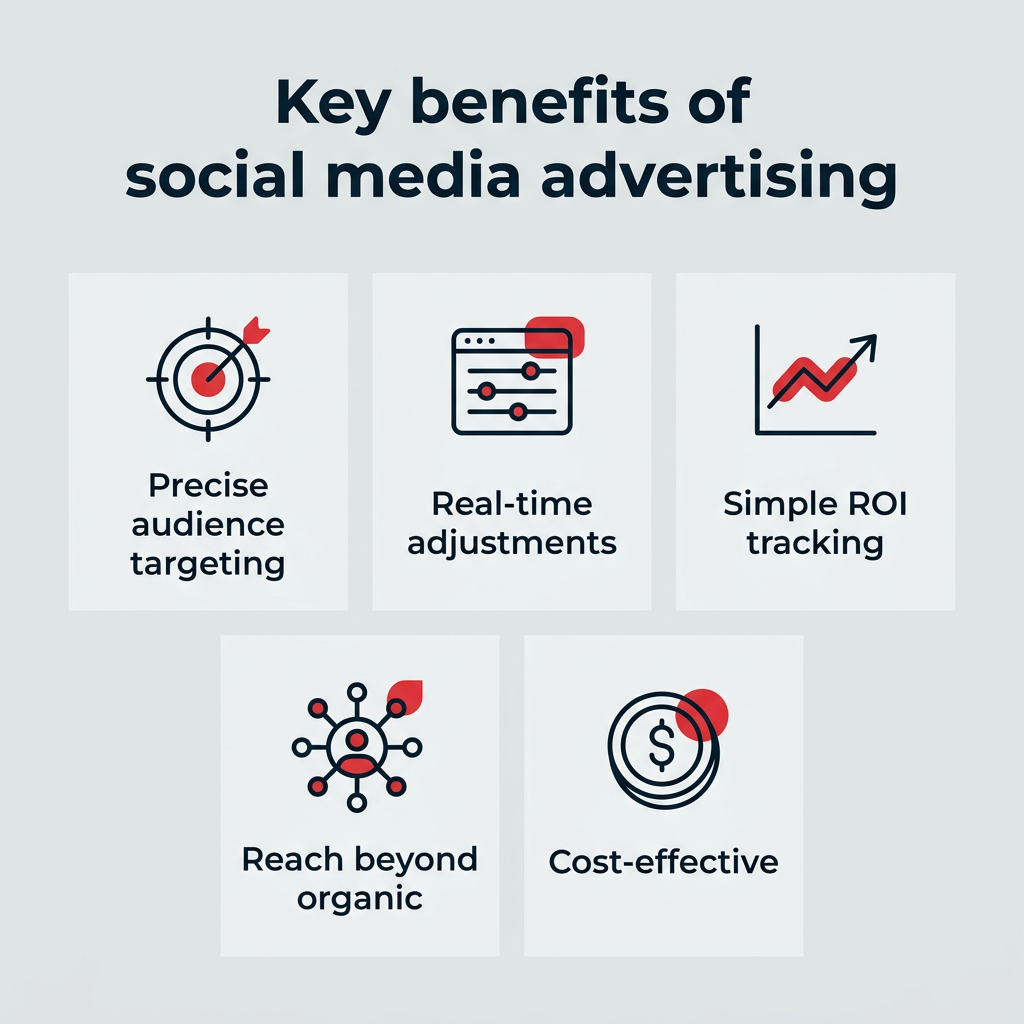
- Custom Audiences: Uploading customer lists to reach existing users.
- Lookalike Audiences: Allowing AI to find new users who mirror the profile of your best existing customers.
- Behavioral Targeting: Reaching users based on their online purchasing habits and content consumption history.
3. Creative Strategy
Creative is the new targeting. Because algorithms are now so good at finding the right people, the primary barrier to success is the ad content itself. Authentic, low-fidelity, "lo-fi" content—videos that look like they were filmed on a phone—often outperform high-budget, polished commercials because they feel native to the user experience.
4. Auction Dynamics
Social ad space is a real-time, global auction. You aren’t just paying for a spot; you are competing against other brands. Platforms weigh your bid against your ad’s "relevance score." This means that highly engaging, high-quality ads can actually win placements at a lower cost than poorly performing ads with higher budgets.
Supporting Data: The Economic Reality of 2026
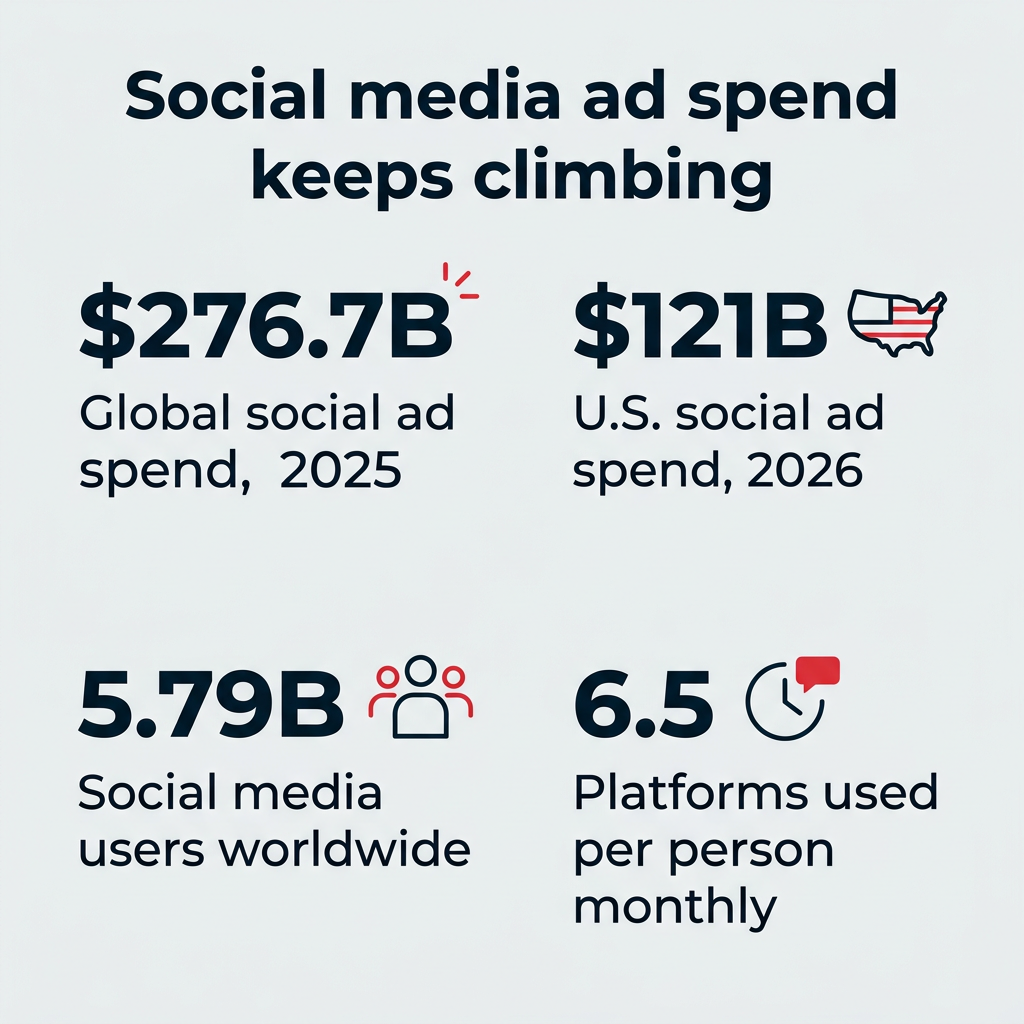
The financial commitment from brands continues to climb. With U.S. social ad spending expected to exceed $121 billion in 2026 alone, the cost of entry is rising.
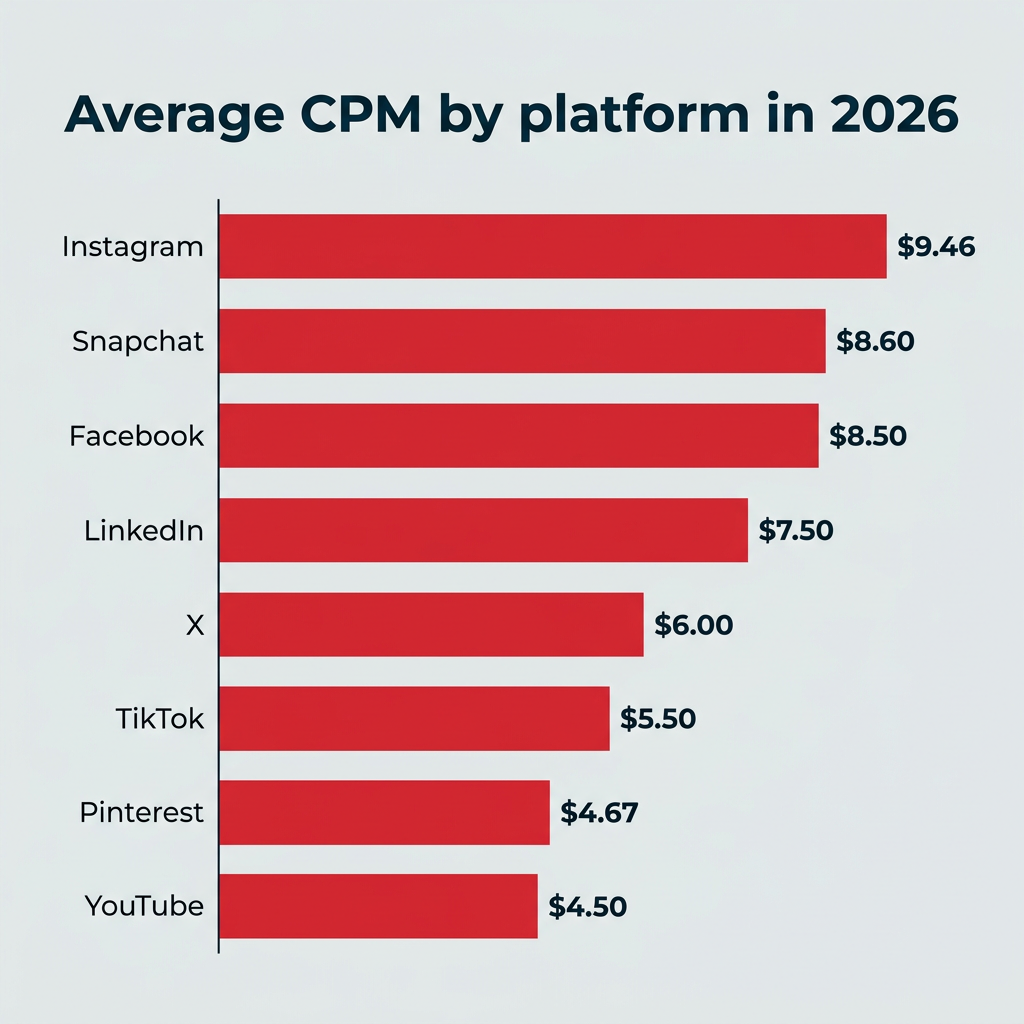
| Platform | Average CPM (Cost per 1k impressions) | Average CPC (Cost per click) |
|---|---|---|
| $8 – $9 | $0.40 – $0.70 | |
| $9.46 | $0.50 – $0.75 | |
| TikTok | $4 – $7 | $0.50 – $1.00 |
| YouTube | $4 – $5 | $0.10 – $0.30 |
| $6 – $9 | $5.00 – $12.00 |
These figures underscore a critical truth: competition for attention is intensifying. As CPMs rise, the importance of a lean, iterative, and data-backed strategy becomes the only way to maintain a positive return on investment (ROI).
Expert Perspective: The Role of A/B Testing
Cedric Bruce-Kotey emphasizes that the modern advertiser’s greatest tool is the hypothesis. "Optimizing ads is all about testing," he explains. "You need to determine which creative resonates best, explore new platforms, and take advantage of new features. A/B testing is the only way to separate intuition from reality."
Successful brands rarely launch a campaign and walk away. They run multiple versions of an ad (testing headlines, hooks, and call-to-actions), analyze the metrics, and shift their budget toward the "winners" in real-time.

Real-World Case Studies
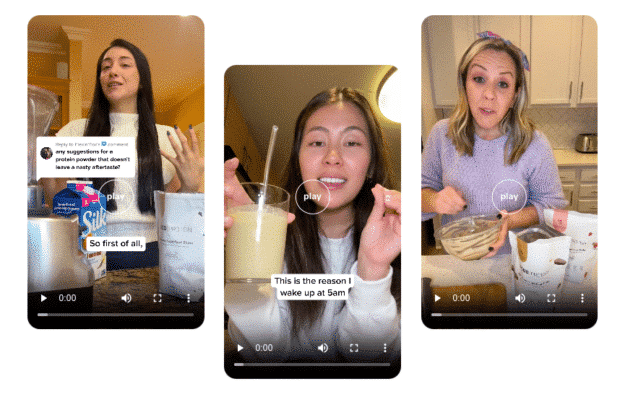
- Good Protein (TikTok): By utilizing Spark Ads—which promote creator content—the brand saw a 25% increase in watch time. This highlights the "trust gap"; users trust peers more than brands, and advertising should reflect that.
- PureGym (Instagram): By shifting from polished commercials to lo-fi, handheld-style Reels, the brand achieved a 5.6x increase in video completion rates. The lesson: don’t look like an ad; look like a user.
- NARS Cosmetics (Instagram Shop): By testing a frictionless checkout experience within the app, NARS reduced their cost-per-purchase by 24%. Removing barriers between discovery and transaction is a key conversion driver.
- Cetaphil (Pinterest): By aligning their creative with trending search topics (e.g., "simple skincare routine"), they demonstrated that social ads function best when they solve a user’s immediate search intent.
Implications for the Future
The implications for businesses in 2026 are clear:
- Stop Siloing Marketing and Advertising: The two must work in tandem. Use organic data to determine what messaging works, then use paid budgets to scale that content to new audiences.
- Focus on "Social SEO": As users increasingly use social platforms like TikTok and Pinterest as search engines, ads must be optimized for keywords and user intent, not just visual appeal.
- Prioritize First-Party Data: With privacy regulations and the decline of third-party cookies, building your own email lists and customer databases is vital. Use social ads to drive users into your owned ecosystems, not just to the platform itself.
- Embrace the "Creator Economy": If your brand voice feels corporate or cold, partner with creators who can translate your message into the native language of the platform.
Conclusion: The Path Forward
Social media advertising is no longer a "set it and forget it" channel. It is a dynamic, high-stakes game that rewards those who are agile, data-literate, and willing to experiment. Whether you are a small business starting with a $10-per-day budget or a Fortune 500 company scaling a multi-million dollar campaign, the principles remain the same: identify your objective, respect the platform’s native culture, test rigorously, and keep the customer’s journey as frictionless as possible.
As the industry moves toward 2027 and beyond, the brands that win will be those that view their social advertising not as a cost center, but as a laboratory for constant improvement and a bridge to authentic customer connection.
 Reynand Wu
  Muslim
  Nila Kartika Wati