
 By rifanmuazin

The landscape of professional 3D design is undergoing a tectonic shift. As creative software giants race to integrate generative artificial intelligence into their toolsets, Maxon—the developer behind the industry-standard Cinema 4D—has taken a distinctive, pragmatic approach. Rather than forcing users into a proprietary, closed-loop AI ecosystem, Maxon has officially introduced native support for third-party AI assistants, including Claude, ChatGPT, and Codex, through the implementation of a Model Context Protocol (MCP) server.
This move marks a significant departure from the "walled garden" strategies often seen in creative tech. By allowing artists to leverage the reasoning capabilities of major LLMs (Large Language Models) to manipulate 3D scenes directly, Maxon is attempting to solve the industry’s greatest pain point: the friction between creative intent and technical execution.
The Evolution of AI in Creative Software
The integration of AI into creative workflows is no longer a futuristic concept; it is an immediate reality. Earlier this year, Adobe sent shockwaves through the industry by embedding generative AI directly into Photoshop, effectively changing how digital artists approach photo manipulation and asset generation. While Adobe’s focus has been largely on image synthesis, Maxon’s new implementation is geared toward structural and procedural efficiency.
Maxon’s latest update, arriving with the launch of Cinema 4D 2026.4, does not introduce a standalone "Maxon AI." Instead, it provides the bridge—the Model Context Protocol—that allows users to connect their preferred chatbot to the software. This architectural decision places the power of choice in the hands of the artist, allowing them to select an AI model that best fits their specific workflow or project needs.
Chronology: A Rapid Shift Toward Intelligent Automation
The journey toward this integration has been swift, reflecting the breakneck pace of AI development.

- Early 2024: Maxon begins exploring deeper AI integration to augment its 3D toolset, moving beyond basic machine learning features.
- Mid-2024: The industry observes a surge in demand for AI-assisted procedural generation, leading Maxon to refine its API capabilities.
- Late 2024: Maxon formalizes its support for the Model Context Protocol, recognizing it as the most efficient, secure, and flexible way to allow AI to "read" and "act" upon 3D scene data.
- December 2024: Official deployment of the MCP server support in Cinema 4D 2026.4, accompanied by documentation on how to link external LLMs to the software’s internal API.
This progression mirrors the broader industry trend of moving away from "black box" AI tools toward "agentic" workflows—where the AI acts as a digital assistant capable of executing complex, multi-step tasks.
Breaking Down the Workflow: How MCP Changes the Game
For a 3D artist, time is the most precious commodity. Hours often disappear into the "grunt work" of 3D production: organizing hierarchies, renaming thousands of objects, UV mapping, or setting up complex render queues.
Maxon’s MCP implementation allows artists to issue natural language instructions to their chosen AI assistant. For example, an artist can type, "Organize all imported assets into a clean hierarchy based on material type," or "Create five variations of this scene with different lighting configurations and add them to the render queue." The AI then interprets these requests, communicates with the Cinema 4D API, and executes the changes in real-time.
Key Functional Applications
- Scene Management: Automating the cleanup of messy imports and establishing naming conventions.
- Procedural Variation: Rapidly generating multiple scene iterations based on external CSV data, which is invaluable for motion graphics and broadcast design.
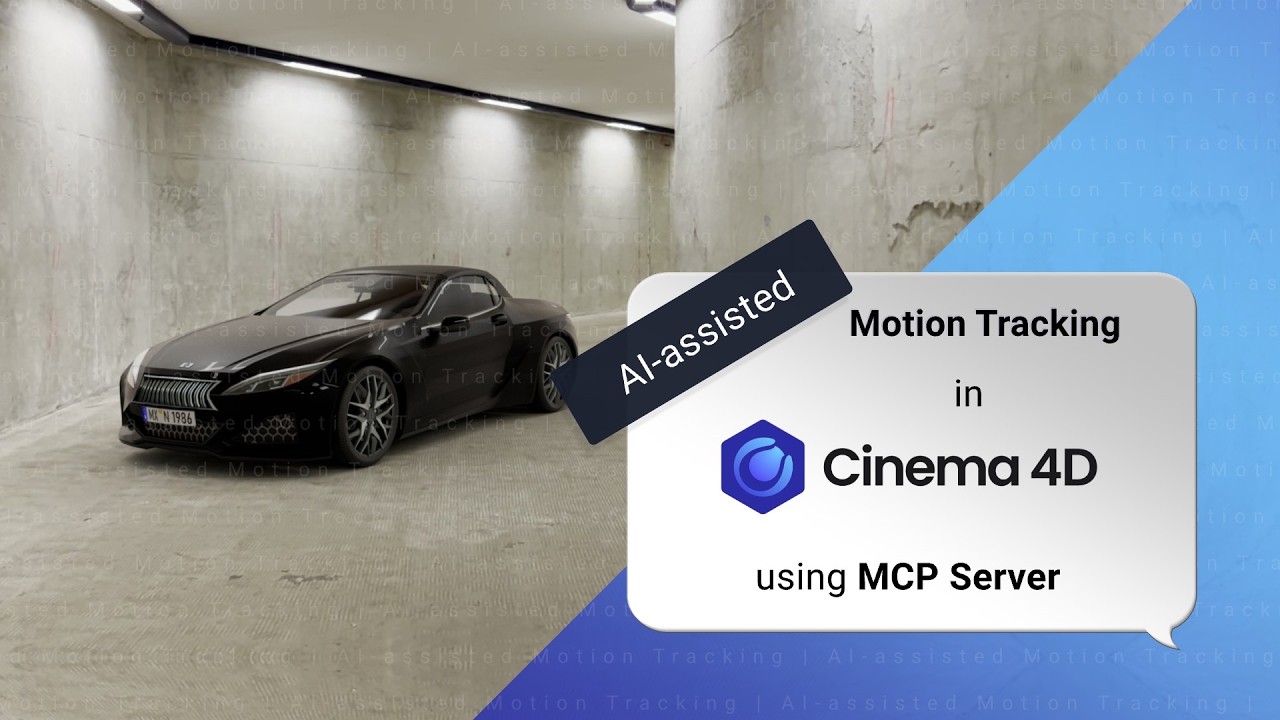
- Technical Rigging and Animation: Handling the heavy lifting of basic rigging and camera tracking, allowing the artist to focus on the nuances of performance.
- Render Pipeline Optimization: Preparing multipass renders and setting up complex export paths without the need for manual clicking through sub-menus.
Official Stance: Prioritizing Control and Security
One of the primary concerns surrounding AI in professional software is the fear of "hallucinations" or unintended, irreversible changes to a project. Maxon has addressed these concerns by building a "human-in-the-loop" infrastructure.
The "Safe" Implementation
- Local Execution: Crucially, all actions performed by the AI happen through Cinema 4D’s own internal tools, running locally on the user’s workstation. The AI does not "generate" the 3D geometry in a vacuum; it commands the software to build it.
- Granular Permissions: The MCP server is disabled by default. When enabled, users must authenticate via an access token. Furthermore, artists can whitelist specific groups of tools that the AI is permitted to access, ensuring it cannot touch sensitive parts of the project file.
- Audit and Undo: Because the AI utilizes the standard Cinema 4D API, every change is reflected in the software’s undo history. If the AI makes a mistake, the user can hit "Ctrl+Z" just as they would for a manual edit. Additionally, a local audit log provides a transparent record of every command the AI has executed, maintaining complete accountability.
Implications: The Future of 3D Artistry
The introduction of MCP support in Cinema 4D has profound implications for the professional 3D studio.
1. The Death of Procedural Monotony
The role of the "junior artist" or "technical assistant" is likely to evolve. Tasks that were once considered training-level duties—such as scene optimization and file prep—are now being automated. This shifts the value of a 3D artist toward creative direction, complex problem solving, and high-level composition rather than mere technical labor.
2. Democratization of Complexity
By lowering the barrier to entry for complex procedural tasks, Maxon is essentially democratizing high-end 3D production. A solo freelancer, through the help of an AI assistant, can now manage a level of scene complexity that previously required a dedicated technical director.
3. A Shift in Competitive Advantage
Studios that embrace these AI-assisted workflows will almost certainly see an increase in throughput. The ability to iterate on 3D variations in minutes rather than hours will allow for more creative exploration within the same production budgets.
Challenges and Considerations
While the promise is immense, the integration of LLMs into professional 3D pipelines is not without hurdles. The reliability of AI depends on the quality of the "context" provided. Users will need to learn "prompt engineering for 3D"—a new skill set involving the ability to translate technical requirements into clear, logical instructions that the AI can map to specific software APIs.
Furthermore, there remains the broader question of data privacy. While Maxon’s implementation keeps the 3D data locally accessible, the natural language instructions sent to the chatbot (e.g., "Create a scene of a burning city") are sent to third-party servers. Studios with high security requirements will need to evaluate the privacy policies of the AI providers they choose to integrate.
The Road Ahead
With the release of Cinema 4D 2026.4, Maxon has signaled that the future of 3D software is collaborative. The upcoming release of the Cinema 4D iPad app, expected later this year, will likely see these AI capabilities extended to mobile, allowing for "on-the-go" scene management and generation.
Maxon’s decision to adopt an open protocol like MCP rather than locking users into a proprietary, potentially inferior internal AI model is a masterstroke of developer-centric strategy. It respects the existing expertise of its user base while providing them with a powerful new lever to multiply their output.
As we look toward 2025, the conversation around AI in 3D will likely move away from "Will it replace artists?" to "How efficiently can I integrate my AI assistant into my established pipeline?" For the Cinema 4D community, that bridge has now been built. Whether this leads to a new golden age of creative efficiency or a chaotic influx of AI-generated assets remains to be seen, but one thing is certain: the speed at which a 3D scene can be brought to life has forever changed.
About the Technology
The Model Context Protocol (MCP) is an open standard that allows AI assistants to connect to data sources and development tools. By adopting this, Maxon ensures that Cinema 4D remains future-proof, capable of integrating with any LLM that adopts the standard, thereby avoiding vendor lock-in for its users.
Further Reading
Interested users can visit the official Maxon MCP documentation to learn more about setting up the server and exploring the available API commands.
 Iffa Jayyana
 Reynand Wu
 Nila Kartika Wati
