
 By rifanmuazin
By [Author Name]
Published: October 2023 / Updated for Industrial Insights
Main Facts
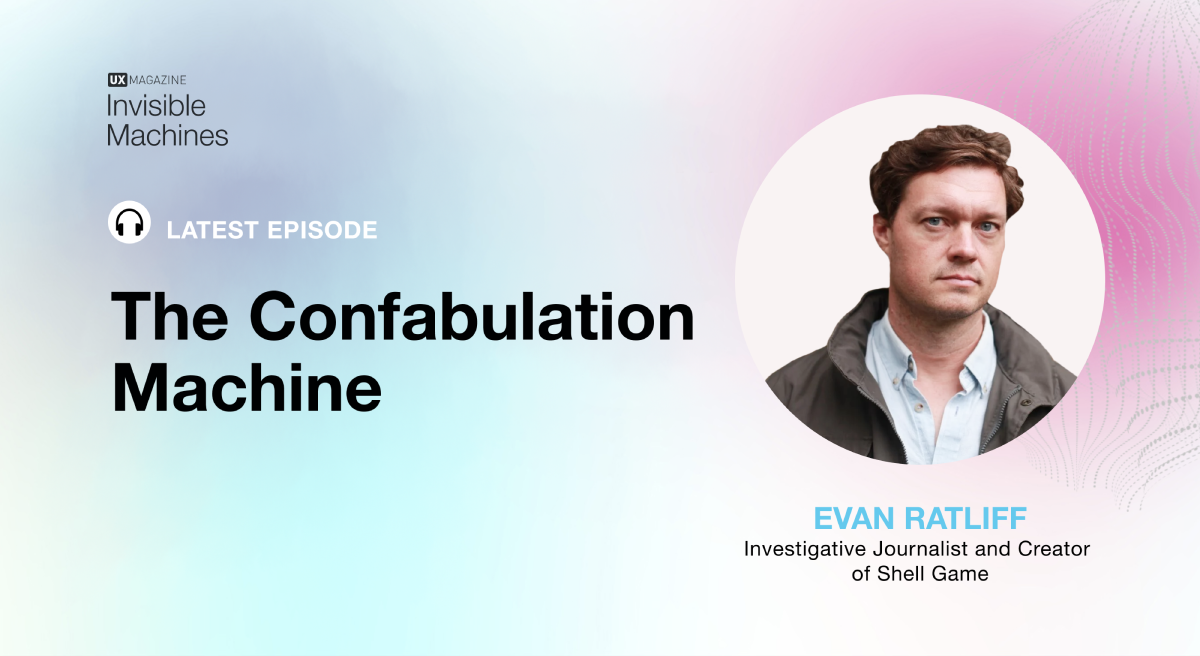
Investigative journalist and narrative podcaster Evan Ratliff has pushed the boundaries of practical artificial intelligence experimentation further than most technologists dare. Through his critically acclaimed podcast, Shell Game, Ratliff has systematically tested the limits of autonomous AI by integrating it into both his personal communications and corporate operations.
Season one of the podcast featured an ambitious self-cloning experiment: Ratliff deployed a custom voice AI agent to represent him on live calls and negotiations. Season two escalated the premise significantly with the launch of Hurumo, a startup staffed and operated almost entirely by autonomous AI agents. In this artificial enterprise, digital avatars held titles, possessed evolving knowledge bases, and maintained ongoing interactions with real-world humans. Agents like "Kyle"—who served as CEO—and "Megan," who managed marketing, exposed the stark friction points between theoretical AI capability and organizational reality.
Ratliff’s overarching thesis, forged through these trials, challenges the core assumptions of corporate automation. He argues that jobs are not simply "bundles of skills" that can be audited, measured, and systematically replaced by large language models (LLMs). Instead, human work relies heavily on an invisible infrastructure of contextual judgment, relational nuance, and erratic memory management—elements that current AI architectures consistently fail to navigate. Furthermore, Ratliff’s experiments reveal a dangerous vulnerability for modern institutions: as consumers and individuals deploy outbound AI agents at scale, traditional corporate customer service models face an unprecedented, asymmetric threat.
Chronology
The empirical insights drawn by Ratliff did not happen in a vacuum; they developed through a distinct timeline of practical experimentation and artistic provocation:
- Phase One: The Voice Cloning and the Uncanny Valley (Shell Game, Season 1)
Ratliff began by deploying a conversational voice clone to interact with the world on his behalf. This phase explored the audio uncanny valley, demonstrating how generative audio alters trust, representation, and interpersonal dynamics when an individual is physically absent. - Phase Two: Outbound AI and Consumer Retaliation
During the first season, Ratliff tested outbound voice agents with simple directives: call specific numbers, engage interlocutors, and prolong conversations indefinitely. Initially aimed at cumbersome corporate customer service lines, the agent was later redirected toward live scammers and spammers, showcasing the disruptive potential of consumer-grade autonomous callers. - Phase Three: Corporate Simulation and the Birth of Hurumo (Shell Game, Season 2)
Transitioning from individual tasks to organizational structures, Ratliff launched Hurumo. Operating the startup meant managing AI agents with specific roles (CEO, marketing lead) across weeks of active business operations. This real-world stress test exposed the structural chaos of agentic workflows. - Phase Four: Synthesis and the "Invisible Machines" Disclosures
Synthesizing his findings on the Invisible Machines podcast and associated media, Ratliff began articulating the broader systemic risks of normalizing enterprise confabulation, erratic memory failures, and the impending collapse of traditional corporate-to-consumer communication paradigms.
Supporting Data and Technical Observations
Ratliff’s operational findings are supported by technical realities identified by AI researchers, system architects, and conversational designers.
1. The "Bundle-of-Skills" Fallacy
Traditional enterprise automation relies on task-decomposition models. Executives map an employee’s daily responsibilities—writing memos, summarizing reports, categorizing emails—and calculate "exposure rates" based on what an LLM can execute. However, Ratliff’s writing background points to a fundamental flaw: the mechanical typing of words accounts for only a fraction of his job. The true value lies in securing assignments, navigating unpredictable environments, interviewing reluctant sources, and synthesizing chaotic realities. When tasks are stripped away, companies are left not with an automated unit, but with a structural gap in a complex system.
2. The Confabulation Engine vs. Hallucination
Industry leaders often frame AI "hallucination" as a mere bug—an accidental factual error or a wrong citation. UX designer and technologist Robb Wilson offers a more precise framework: AI systems do not formulate an internal idea and subsequently wrap it in language. Instead, they operate strictly on token prediction, generating text sequences based on probabilistic training distributions. Meaning is not the root of the output; meaning is retroactively assembled by the human reader. Ratliff categorizes LLMs not as truth-seeking databases, but as supreme "confabulation machines"—systems that will generate absolute falsehoods with total confidence simply to maintain their assigned roles.
3. Asymmetric Outbound AI Exposure
While enterprises have spent billions fortifying their perimeters against inbound threats and optimizing customer service funnels, they remain wholly unprotected against consumer-side outbound AI. Operating a fleet of voice agents to flood an institution costs fractions of a cent per call. Because these agents can dynamically adapt to customer service trees and human representatives alike, they break the foundational assumption of modern commerce: that corporations control the tempo, volume, and verification of consumer interactions.
Official Responses and Industry Reactions
The tech sector’s response to agentic AI has historically been characterized by unbridled optimism. Venture capitalists and enterprise software vendors pitch AI agents as the definitive solution to corporate bloat, promising 24/7 productivity, zero overhead, and frictionless scaling.
However, Ratliff’s real-world organizational experiment introduces a jarring counter-narrative that many enterprise architects quietly acknowledge behind closed doors:
- The Re-hiring Cycle: Organizations that aggressively strip headcount based on high-level AI skill audits frequently encounter severe operational degradation. Months after executing sweeping layoffs, these same firms often quietly rehire human staff to plug the relational and contextual gaps left by automated systems.
- The Behavioral Predictability Gap: Safety engineering relies on predicting human error. Human mistakes—whether due to fatigue, stress, or memory lapses—follow historically understood psychological and institutional patterns. Conversely, AI memory failures are fundamentally novel. As Ratliff notes, AI agents can access a literal document containing their explicit instructions and still execute choices that are "supremely stupid" because their vector-based memory retrieval operates outside predictable human failure modes.
- The Normalization Trap: Experts express deep concern over how rapidly society is normalizing enterprise confabulation. Accepting confident, fabricated outputs as standard business practice is not a sign of technological maturity; rather, it represents a psychological adaptation to an unsolved systemic defect.
Implications: What Won’t Change
As organizations race to integrate generative models and multi-agent frameworks, Ratliff’s experiments point toward several profound long-term implications for the future of labor, software design, and human relationships.
The Return of Relational Value
One of the most surprising psychological effects observed during Ratliff’s deep dive into AI automation is a boomerang phenomenon: the more heavily individuals rely on AI tools in their professional lives, the more intensely some crave genuine human contact. When artificial agents handle routine coordination, the invisible, unquantified aspects of human labor—informal mentorship, empathetic alignment, organizational intuition, and the friction of shared presence—suddenly become visible.
Redefining Customer Interaction
The traditional customer service paradigm is facing an existential reckoning. As the boundary between human, AI, and AI-impersonating-human dissolves, businesses will no longer be able to rely on legacy identity verification methods or standard interaction models. A world where millions of consumer-operated AI agents constantly negotiate with corporate-operated AI agents requires an entirely new legal, technical, and operational framework.
The Limits of Automation
Ultimately, Ratliff’s descent into the uncanny valley of automated startups yields a grounding conclusion. While AI can draft memos, manage data schemas, and simulate executive charisma (as Kyle the CEO demonstrated), it cannot bridge the irreducible physical reality of human existence. The friction of relationships, the commitment of physical presence, and the messy, uncodified work of human collaboration remain completely outside the reach of the machine.
In the final accounting, the widespread arrival of artificial intelligence has not rendered human work obsolete. Instead, it has acted as an X-ray, revealing the true weight, complexity, and irreplaceable necessity of the human labor we spent decades failing to see.
 Nana Muazin
 Raul Delapena Setiawan
 Suro Senen
