
 By Iffa Jayyana
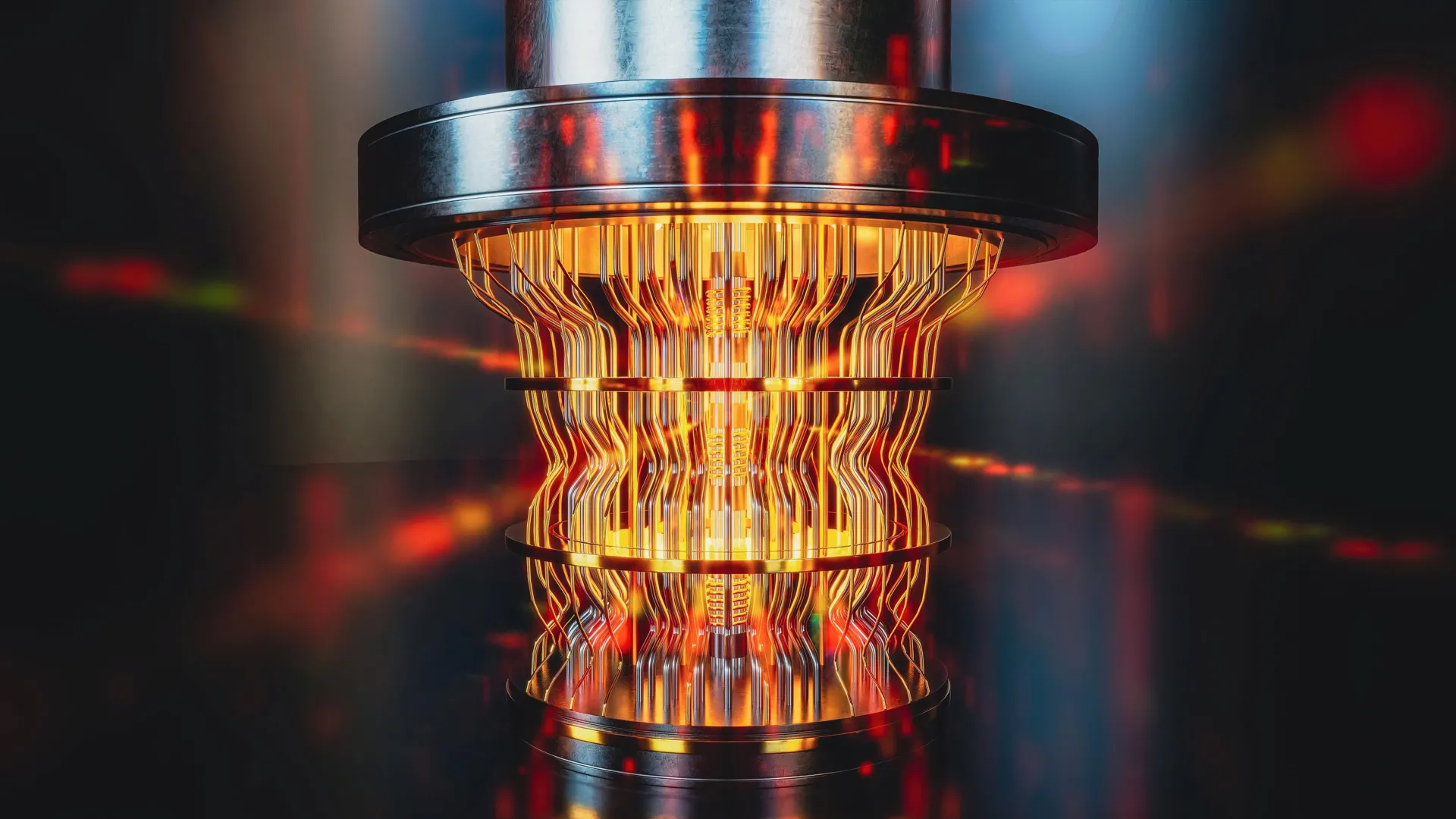
The promise of quantum computing—machines capable of solving problems that would take today’s most powerful supercomputers millennia to process—has long been hampered by a fundamental engineering paradox: the more power you add, the more unstable the system becomes. However, a landmark study recently published in Nature Physics by researchers at the RIKEN Center for Emergent Matter Science (CEMS) has unveiled a critical breakthrough. By solving a persistent error-correction challenge in silicon spin qubits, the team has cleared a significant hurdle in the race toward scalable, fault-tolerant quantum processors.
The Silicon Advantage: Manufacturing at Scale
Silicon spin qubits are widely considered the "holy grail" of quantum hardware, primarily due to their compatibility with the existing semiconductor industry. Unlike exotic superconducting circuits that require bespoke manufacturing processes, silicon qubits can theoretically be mass-produced using the same CMOS (complementary metal-oxide-semiconductor) fabrication techniques that power everything from smartphones to data center servers.
However, the transition from theory to practice has been fraught with difficulty. In a quantum environment, individual qubits—which encode information in the spin of an electron—are notoriously fragile. When multiple qubits are grouped together and subjected to simultaneous control signals, their fidelity (a measure of accuracy) typically plummets. To build a truly useful quantum computer, scientists must be able to orchestrate hundreds, or eventually millions, of qubits in unison while keeping error rates infinitesimally low. The RIKEN team’s latest work represents a massive leap toward that reality.
Chronology: Unmasking the "Hidden" Enemy
The path to this discovery began with a granular analysis of how microwave signals—the primary tool used to manipulate electron spins—interact with an array of qubits.
The Problem of Crosstalk
For years, researchers observed that when they attempted to drive multiple qubits simultaneously using a shared microwave control line, the individual gate operations lost precision. The team at RIKEN, led by project manager Seigo Tarucha and supervised by research scientist Leon Camenzind, sought to isolate the cause. They utilized a custom-designed array of five silicon spin qubits, all tethered to a single shared control line.
Through rigorous testing, the team identified the "AC Stark shift" as a primary antagonist. This phenomenon occurs when microwave control pulses unintentionally alter the effective energy levels of a qubit, causing a shift in the phase of its quantum state. In a multi-qubit system, these shifts are not isolated; the microwave pulse meant for one qubit ripples through the environment, affecting the phase of its neighbors. This "crosstalk" creates a cascade of errors that makes synchronized operation unreliable.
The Calibration Breakthrough
In previous attempts to fix this, engineers tried to map out every possible interaction between every qubit. As the number of qubits increases, this method becomes mathematically impossible—a phenomenon known as the "combinatorial explosion."
The RIKEN team opted for a more elegant, scalable solution. Lead author Yi-Hsien Wu developed a calibration method based on pairwise interactions. Instead of calculating every complex configuration, the team performed calibrations only between pairs of qubits. This data was then used to create a predictive model that compensates for the unwanted phase shifts across the entire array. By systematically adjusting microwave pulses based on these pairwise metrics, the researchers effectively "canceled out" the noise caused by the AC Stark shift.
Supporting Data: Achieving Record-Breaking Fidelity
The results of the calibration method were starkly apparent in the performance metrics recorded during the experiments.
Single vs. Parallel Operation
When tested individually, the five qubits demonstrated world-class performance. Each achieved single-qubit gate fidelity well above 99.99%, with the most precise unit reaching 99.999%. These numbers are crucial, as they place the system well within the threshold required for quantum error correction codes, which can theoretically suppress errors even further if the base fidelity is high enough.
The real test, however, was the parallel operation:
- Three-Qubit Parallelism: When the team operated three qubits simultaneously, the fidelity remained robust at above 99.99%.
- Five-Qubit Parallelism: Even when the full five-qubit array was driven in unison, the accuracy remained at approximately 99.9%.
While 99.9% is slightly lower than the single-qubit peak, it is a significant achievement for a system using shared control lines, proving that large-scale architectures can maintain operational integrity without requiring an individual, bulky control line for every single qubit.
Identifying the Next Hurdle
The team was transparent about the remaining challenges. While the calibration method addressed the AC Stark shift, it did not eliminate all errors. The researchers identified "drive-induced decoherence" as the remaining culprit. This occurs because operating multiple qubits simultaneously requires a higher microwave power density, which inadvertently disturbs the delicate quantum coherence of the electrons. As Leon Camenzind noted, this is a distinct limitation, but one that is addressable through refined hardware design rather than a fundamental flaw in the control architecture.
Official Responses and Strategic Implications
The RIKEN study has sent ripples through the global quantum research community, as it addresses one of the most practical bottlenecks in the field.
"This shows that high-fidelity control can be maintained even when several qubits are operated at the same time and represents an important step toward scaling up silicon-based quantum processors," said Leon Camenzind, underscoring that the research is not just about isolated qubits, but about the architecture of the machine itself.
Yi-Hsien Wu, the first author of the study, emphasized the practicality of the new methodology. "Rather than requiring an entirely separate calibration procedure for every possible combination of qubits, our method uses calibrations between pairs of qubits to compensate for the unwanted phase shifts," he explained. This efficiency is the cornerstone of the study’s contribution to industrial scalability.
Seigo Tarucha, overseeing the project as part of the JST Moonshot Goal 6, framed the achievement within the broader context of the field’s long-term objectives. "Our long-term goal is to build a fault-tolerant quantum computer based on silicon spin qubits, and reliable parallel control is an essential step toward that goal," Tarucha stated.
Implications for the Future of Quantum Processors
The implications of this work are far-reaching. By demonstrating that shared control lines can be managed effectively through intelligent calibration, the RIKEN team has provided a blueprint for reducing the physical complexity of quantum processors.
The Path to Fault-Tolerance
A fault-tolerant quantum computer requires not only high-fidelity qubits but also the ability to perform "error correction"—where redundant qubits work together to detect and fix mistakes in real-time. This process requires a massive, coordinated effort across the processor. If every qubit required its own unique control hardware, the heat, space, and wiring complexity would make building a functional processor nearly impossible. The RIKEN approach suggests that the industry can leverage shared infrastructure without sacrificing the precision needed for complex, deep-circuit calculations.
Industry Compatibility
Because this research utilizes silicon, it bridges the gap between quantum research and established semiconductor manufacturing. As the industry moves toward 2nm and 1nm process nodes, the ability to integrate quantum logic into the same silicon substrates as classical control circuitry could eventually lead to "hybrid" processors. In such a device, a classical CPU core could manage the control pulses for an adjacent quantum core, creating a seamless and powerful computing environment.
Conclusion: A Step Closer to Reality
The RIKEN Center for Emergent Matter Science has effectively moved the needle on the "scalability" aspect of the quantum computing roadmap. By turning the "AC Stark shift" from a mysterious source of error into a manageable, calibratable variable, the team has proven that silicon spin qubits are not merely a laboratory curiosity but a viable pathway to powerful, practical machines.
As the research progresses toward mitigating drive-induced decoherence and integrating these arrays into larger, more complex systems, the vision of a fault-tolerant quantum computer becomes significantly clearer. With this milestone, the scientific community moves one step closer to solving the most complex computational problems of the 21st century—from climate modeling and materials science to the encryption protocols that secure our digital world. The journey is far from over, but the path ahead, paved in silicon, is looking more reliable than ever.
 Reynand Wu
 Ammar Sabilarrohman
 rifanmuazin
