
 By Suro Senen
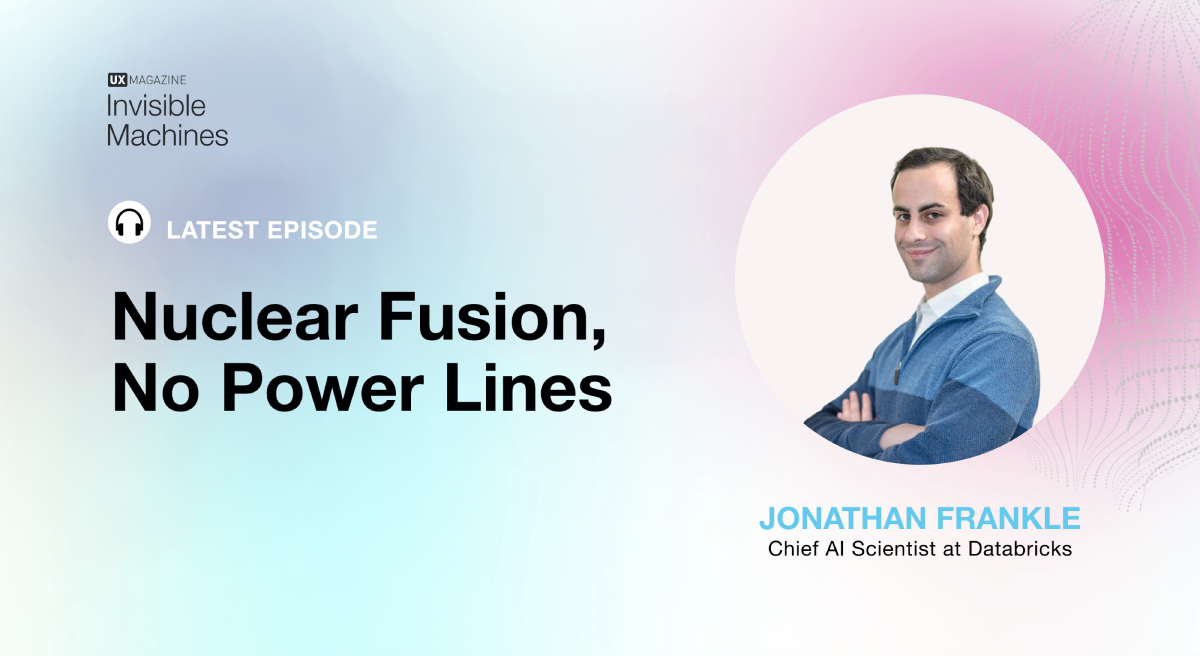
Three years after pioneering the "data mixology" framework for training language models, Databricks Chief AI Scientist Jonathan Frankle returns with a sharper diagnosis: the artificial intelligence community has successfully unlocked the nuclear fusion of computing, yet completely neglected the power lines required to distribute it.
Main Facts
The current state of artificial intelligence is defined by an extraordinary paradox. On one hand, foundational large language models (LLMs) represent a historic breakthrough—generating raw, high-dimensional intelligence that was deemed science fiction just a decade ago. On the other hand, the foundational infrastructure required to safely, reliably, and predictably translate that raw capability into human intent remains virtually nonexistent.
Appearing on the Invisible Machines podcast, Jonathan Frankle—Chief AI Scientist at Databricks and formerly chief scientist at MosaicML—argued that the tech industry is currently operating in the "Fortran days" of artificial intelligence. While the capability curve has skyrocketed, the engineering disciplines required to govern, test, and specify model behavior have stagnated.
Key takeaways from Frankle’s diagnostic include:
- The Infrastructure Deficit: While enterprises possess access to unprecedented raw intelligence (the "nuclear fusion"), they lack standardized software engineering paradigms (the "power lines")—such as rigorous specification frameworks, predictable editing tools, and robust verification mechanisms.
- Prompts as Parameters: Interacting with advanced models via natural language is, fundamentally, a form of programming. Users optimizing prompts are tuning natural-language parameters, yet they are doing so without the traditional safety nets of software engineering, like unit tests, integration tests, or regression tracking.
- The Illusion of Benchmarks: Standard academic benchmarks (such as HellaSwag or broad leaderboard scores) offer little to no predictive value regarding how an LLM will perform against specific, nuanced human intent in enterprise settings.
- The Rise of LLM Optimization (LLMO): As the web shifts from being read exclusively by humans and search crawlers to being ingested directly by AI agents, organizations must adapt by treating their digital content as an active training signal.
Chronology: The Evolution of Frankle’s AI Diagnosis
To understand the weight of Frankle’s current warnings, it is necessary to trace his intellectual trajectory over the past three years across successive technological paradigms.
2023: The "Data Mixology" Era
When Frankle first appeared on Invisible Machines as MosaicML’s chief scientist, the generative AI gold rush was in its infancy. Organizations were grappling with the chaotic reality of training language models. Frankle famously introduced the "Betty Crocker problem" of data mixology—the necessity of testing mini-cupcake datasets before baking the multi-million-dollar enterprise cake.
During this period, the conversation centered on data composition, compute efficiency, and the limitations of static academic benchmarks. Frankle warned that organizations were blindly trusting leaderboards while ignoring the fundamental quality of their underlying training data. Shortly after, MosaicML was acquired by Databricks, positioning Frankle at the intersection of cutting-edge research and massive enterprise deployments.
2025: Scaling to the Enterprise
Fast forward three years, and Frankle’s purview has expanded from a boutique research lab to advising upwards of 12,000 enterprise customers at Databricks. The challenges have shifted from how to train the model to how to wire the model into real-world business logic.
While the underlying science of deep learning has matured—introducing massive context windows, multimodal processing, and sophisticated document-dumping capabilities—the fundamental operational bottlenecks remain stubbornly persistent. Enterprises are no longer asking whether LLMs are powerful; they are discovering that pouring millions of uncurated documents into a million-token context window often results in systemic hallucinations and declining relevance.
Supporting Data and Technical Realities
The friction between raw AI capability and enterprise deployment is exacerbated by several technical realities that challenge conventional wisdom in software development and data science.
The Myth of the Infinite Context Window
A major industry narrative over the past two years has been the march toward infinite context windows—the fantasy that organizations can simply dump decades of uncurated PDFs, internal memos, and legacy codebases into a model, eliminating the need for fine-tuning or retrieval-augmented generation (RAG).
According to Frankle, this approach often yields diminishing returns. As context lengths scale up, models frequently struggle with "distractors"—irrelevant details buried within massive data dumps that degrade the precision of the output. The garbage-in, garbage-out axiom of data mixology remains unbroken: whether corrupted data enters a model via pre-training, RAG, or brute-force prompt stuffing, the systemic outcome is unpredictable model behavior.
The Analogy to Computing History
Frankle breaks down the current paradigm using computing history as a compass:
- Current State: We are in the Fortran era—powerful, imperative, and deeply reliant on specialized experts who understand the idiosyncratic quirks of the underlying hardware.
- Desired State: We need to invent the Java, Pascal, or C of AI—languages and frameworks that empower everyday practitioners to describe their intent human-comprehensively, edit software systems predictably, and mathematically verify that the system executed the command accurately.
Official Perspectives and Industry Implications
The implications of Frankle’s analysis ripple across multiple domains, fundamentally altering how enterprises approach software architecture, brand strategy, and knowledge management.
The Disconnect Between Prompts and Code
Discussing user experience platforms like OneReach.ai and various graphical user interfaces (GUIs), the podcast hosts and Frankle explored a fascinating meta-phenomenon: developers are building complex graphical tools whose sole purpose is to construct and manage written natural-language prompts.
This represents a classic Marshall McLuhan loop—old media wrapped inside new media. Users are attempting to regain visual control over systems that are fundamentally opaque. Without deterministic source code, software engineering disciplines like regression testing and continuous integration cannot function in their traditional forms. Enterprises are essentially flying blind, deploying trillion-parameter probabilistic systems into mission-critical workflows without an instrument panel.
The Birth of LLM Optimization (LLMO)
For content teams, brand strategists, and enterprise communications departments, Frankle’s insights signal a profound shift in how digital information is published and maintained.
The open internet is no longer just a library for human readers or an indexing playground for deterministic search engine crawlers. It is an active, continuous training signal for the next generation of foundational models and autonomous agents. Frankle predicts the emergence of a robust cottage industry dubbed LLM Optimization (LLMO)—analogous to the rise of Search Engine Optimization (SEO) two decades ago.
Key strategies for the LLMO era will include:
- Curated Canonical Facts: Enterprises will need to deliberately separate stable, verified truth from tentative draft content, preventing unread or outdated internal files from polluting public-facing model weights.
- Structured Knowledge Repositories: Static FAQ pages and rigorously maintained knowledge graphs will become vital strategic assets, ensuring that external agents ingest accurate brand representations.
- Separation of Knowledge and Reasoning: The holy grail for enterprise AI architecture remains the clean structural separation of raw brand guidelines from a faithful, independent reasoning engine—a milestone the industry has yet to achieve.
Future Implications: What Comes After the Hype?
As the generative AI market matures past its initial hyper-growth phase, Frankle’s value system offers a sobering corrective for technologists and business leaders alike.
Rather than chasing speculative fantasies of Artificial General Intelligence (AGI) just around the corner, Frankle measures his professional impact through tangible, real-world interventions. He remains as proud of a pre-PhD research report he authored on the civil liberties implications of police facial recognition technology—work that directly influenced public policy—as he is of his celebrated academic breakthroughs in neural network optimization (such as the "lottery ticket hypothesis").
For enterprise leaders, the directive is clear:
- Ditch the Leaderboards: Stop evaluating model readiness based on generic academic benchmarks that bear no resemblance to your specific business workflows.
- Build the Spec First: Before arguing over which model architecture or vendor to deploy, invest the hard intellectual labor into translating organizational intent into precise, testable specifications.
- Focus on Experiment Design: Replace vague hype with rigorous empirical testing, treating prompts with the same methodological discipline traditionally reserved for code compilation.
The fusion reactor is online, humming with unimaginable power. Now, the real work of engineering the grid begins.
 Nana Muazin
 Raul Delapena Setiawan
