
 By Laily UPN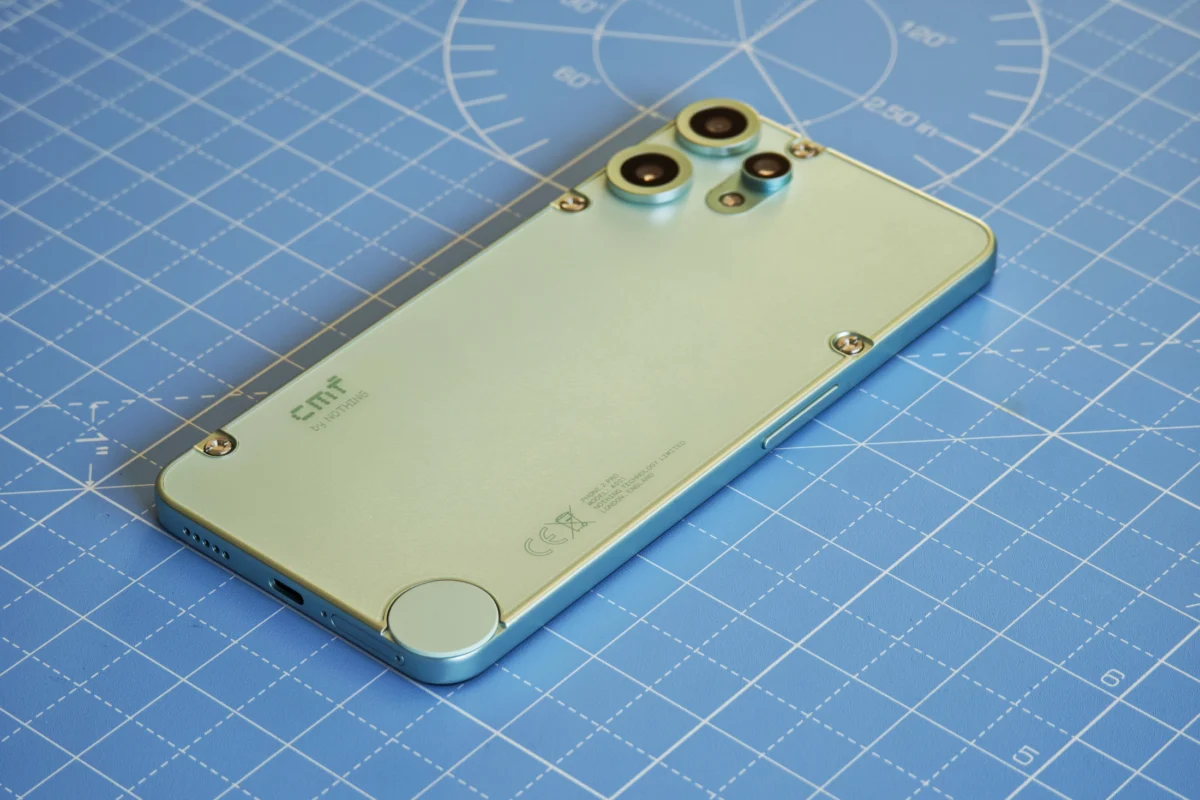
In an industry defined by relentless annual release cycles, Nothing’s decision to pull the plug on its next CMF-branded smartphone serves as a stark indicator of a broader, systemic crisis. As memory prices continue to surge, the company has officially confirmed that there will be no successor to the CMF Phone 2 Pro in 2026. This move highlights the precarious reality of the mid-range smartphone market, where thin profit margins are being rapidly eroded by the skyrocketing cost of random-access memory (RAM).
The Core Announcement: A Strategic Retreat
The confirmation came directly from Akis Evangelidis, co-founder of Nothing, via a candid post on X (formerly Twitter). Addressing the expectations of fans and tech enthusiasts who were anticipating an evolution of the budget-friendly CMF line, Evangelidis explained that the company’s internal product roadmap had hit an insurmountable economic wall.
"We were working on a successor but with memory prices where they are right now, we can’t build a phone that feels like a genuine step forward at a price that makes sense for CMF," Evangelidis stated. "As a result, we’ve decided not to launch a new CMF phone this year."
For a brand that prides itself on disruptive pricing and unique design aesthetics, the inability to produce a device that remains "affordable" while offering meaningful hardware improvements is a significant blow. It suggests that for Nothing, the CMF identity—which relies heavily on value-for-money propositions—is fundamentally incompatible with the current commodity market for memory components.
A Chronology of the Memory Crisis
To understand why a company as agile as Nothing would abruptly cancel a product line, one must look at the timeline of the current "RAMageddon."
- Early 2025: Initial reports of supply chain tightening began to emerge. Manufacturers, buoyed by the explosion of generative AI models requiring massive local memory, began pivoting their DRAM production capacity toward high-bandwidth memory (HBM) and enterprise-grade chips.
- Spring 2025: Smartphone manufacturers, including Nothing, began finalizing their component procurement for 2026 models. At this stage, cost projections for RAM were already volatile.
- Late 2025: The disparity between consumer-grade RAM and the specialized memory required for modern smartphone multitasking widened. As Carl Pei noted, the cost of these components didn’t just increase—it began to compound.
- June 2026: The crisis reached a breaking point. With the cost of memory doubling since the initial planning phase for their devices, Nothing reached the conclusion that passing these costs to consumers would destroy the value proposition of the CMF brand.
Supporting Data: The Economics of Modern Smartphones
The smartphone industry has long operated on the assumption that memory costs would follow a predictable downward trajectory. However, the integration of AI-driven features—which require significantly more RAM to run local Large Language Models (LLMs)—has fundamentally altered the demand curve.
Nothing CEO Carl Pei provided a sobering look into the company’s internal financials during a recent interview. He highlighted that for their mid-range Phone 4A, memory costs doubled between the initial design phase and the product’s actual launch. Even more concerning, he noted that costs have doubled again in the months since.
"Memory is now the most expensive component in a smartphone," Pei remarked. This is a seismic shift. Historically, the display and the application processor (the SoC) held the top spots in the bill-of-materials (BOM) hierarchy. When the base component—the memory that allows the OS and applications to function—becomes the most expensive part of the device, manufacturers are forced into a corner: either sacrifice performance, increase the MSRP, or, as in the case of CMF, cancel the project entirely.
The industry-wide nature of this problem is further evidenced by Apple’s recent shift in market strategy. Tim Cook, speaking on the state of the component market earlier this week, confirmed that Apple will be raising prices across its mobile lineup. Cook’s description of the situation as "unsustainable" signals that even the world’s most powerful company, with the most leverage in the supply chain, is finding it difficult to absorb the costs of current DRAM and NAND pricing.

Official Responses and Corporate Philosophy
Nothing’s leadership has been notably transparent regarding the decision, framing it as a commitment to the brand’s core principles rather than a failure of execution. By opting to cancel the device rather than releasing an underpowered, overpriced product, Nothing is attempting to protect the reputation of the CMF sub-brand.
However, the company is careful not to suggest that its hardware ambitions are fading. Evangelidis’s statement left the door open for future growth, noting that CMF still has "several new products launching as well as some entirely new categories." This implies that the brand is diversifying its portfolio to reduce reliance on the volatile smartphone sector.
Furthermore, the teaser that "the smartphone launch season at Nothing isn’t over yet" suggests that while the CMF budget line is on pause, the flagship "Nothing" branded devices may still be subject to a different strategy, potentially leveraging higher price tiers to absorb the memory cost spikes that are currently crushing the budget-conscious CMF category.
Implications: The Future of Budget Tech
The cancellation of the next CMF phone is a harbinger of a broader trend: the death of the "cheap" high-performance smartphone. For years, consumers have grown accustomed to receiving 8GB or 12GB of RAM in mid-range devices priced under $400. If memory pricing remains high, this "golden era" of budget hardware may be coming to an end.
1. The Death of Value Propositions
The mid-range market relies on the ability to pack flagship-adjacent specs into affordable chassis. If memory continues to occupy the majority of the BOM, manufacturers will likely revert to shipping devices with 4GB or 6GB of RAM—specs that were acceptable four years ago but are woefully inadequate for the AI-integrated Android experience of 2026. This will lead to a fragmented market where budget phones feel sluggish and outdated almost immediately upon purchase.
2. A Shift Toward Specialized Hardware
Nothing’s pivot toward "entirely new categories" for CMF may be the survival blueprint for other tech startups. By moving into wearables, smart home integration, or audio equipment—categories that are less dependent on massive amounts of high-speed RAM compared to smartphones—companies can maintain their brand identity while insulating themselves from the specific volatility of the memory market.
3. The "AI Premium" Tax
Consumers should prepare for an era where the "AI tax" is a reality. As manufacturers add neural processing units and increased memory requirements to accommodate on-device AI, the baseline price for a functional, long-term-use smartphone is trending upward. We are witnessing the end of the commoditization of the smartphone, as hardware requirements once again become a point of significant differentiation and cost.
Conclusion: A Prudent Pivot
Nothing’s decision to cancel the next CMF phone is, ultimately, an act of market discipline. While it will undoubtedly disappoint fans of the brand’s budget offerings, it serves as a necessary acknowledgment of the economic reality facing the consumer electronics industry.
As the world watches the "RAMageddon" unfold, the companies that survive will be those that can successfully navigate the tension between hardware demands and consumer pricing thresholds. For now, Nothing has chosen to wait for the storm to pass, prioritizing the integrity of its brand over the release of a compromised product. Whether this strategy will allow them to re-enter the mid-range market with renewed strength in 2027 remains to be seen, but for now, the message is clear: in the world of high-tech manufacturing, memory is the new king, and it is a ruler that demands a heavy tribute.
 Raul Delapena Setiawan
  Siti Muinah
  Asro
Asro 