
 By Layla Zulfa
In the hyper-competitive landscape of 2026, the battle for consumer attention is won or lost in milliseconds. As algorithms become increasingly sophisticated, the "length" of a social media post—whether it be a text update, a video, or an advertisement—has emerged as a critical variable in determining reach and engagement. For digital marketers and brand managers, understanding the precise character counts and temporal benchmarks for each platform is no longer just a technical detail; it is a fundamental pillar of content strategy.
The Core Philosophy: Why Length Matters
At the heart of social media engagement is a simple psychological reality: human attention spans are finite. Most major platforms, including Facebook, LinkedIn, and X, utilize a "See More" mechanism that truncates content. When a user is forced to tap a button to expand a post, that extra friction point serves as a barrier to consumption.

Fewer readers mean fewer likes, comments, and shares—the very signals that algorithms prioritize. By keeping your message concise and front-loading the value, you remove that barrier, allowing the content to resonate immediately. Research consistently shows that content that is easy to consume enjoys higher organic reach.
The Chronology of Digital Brevity
The evolution of content length has shifted from the "more is better" era of early blogging to the current "hook-first" paradigm.

- The Early Years: Platforms like Facebook allowed for long-form updates, and early SEO strategies encouraged high word counts to satisfy search engine crawlers.
- The Shift to Mobile (2015–2020): As mobile device usage became the primary way to access the internet, scroll-through rates dictated that content had to be visual and concise.
- The Algorithm Era (2021–Present): With the rise of TikTok and short-form video, all platforms began prioritizing "time-spent-on-content." Today, the ideal length is dictated by the specific platform’s ability to keep a user engaged without requiring them to leave the feed.
Benchmarking: The Ideal Length by Platform
To navigate the varying requirements of social channels, consider this comprehensive breakdown of ideal lengths versus platform limits.
Facebook: The Power of Conciseness
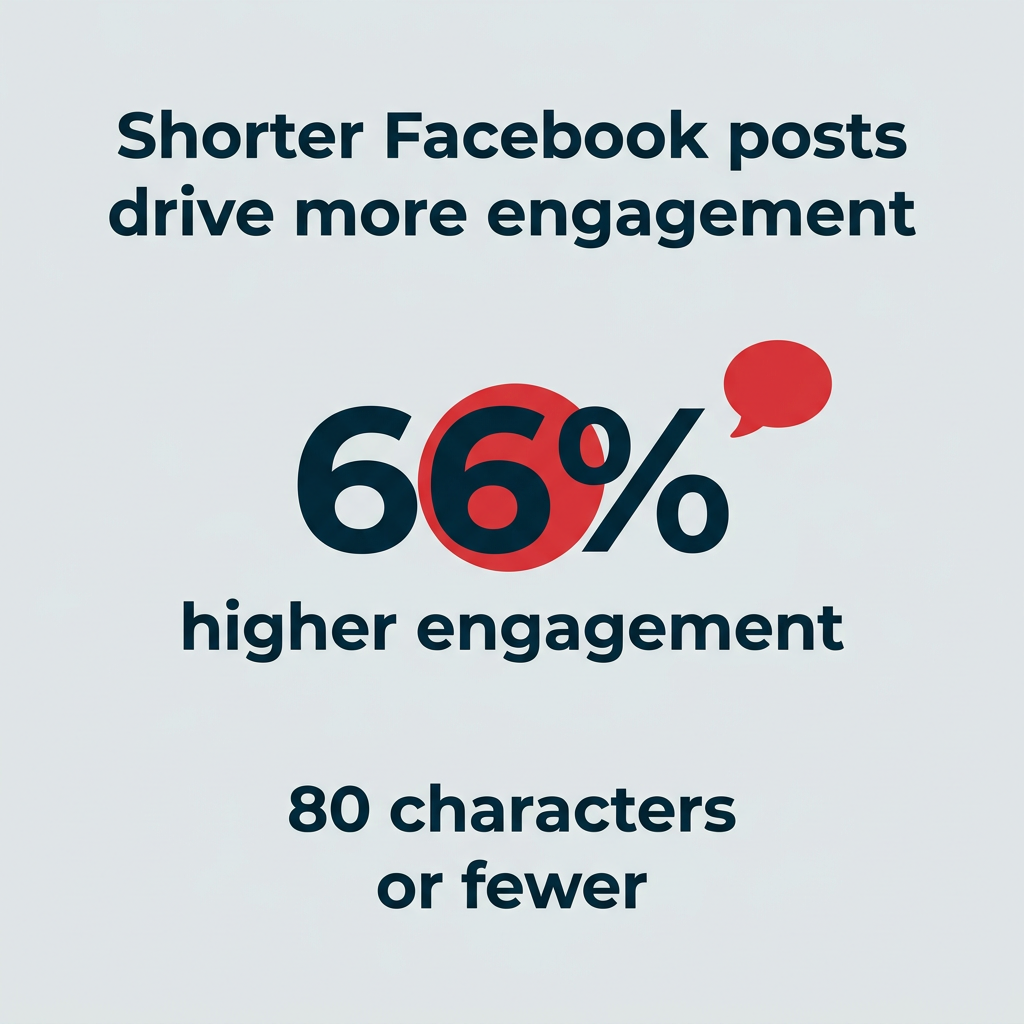
Despite a technical character limit of 63,206, data from Buddy Media and BuzzSumo suggests that brevity is the soul of Facebook success.
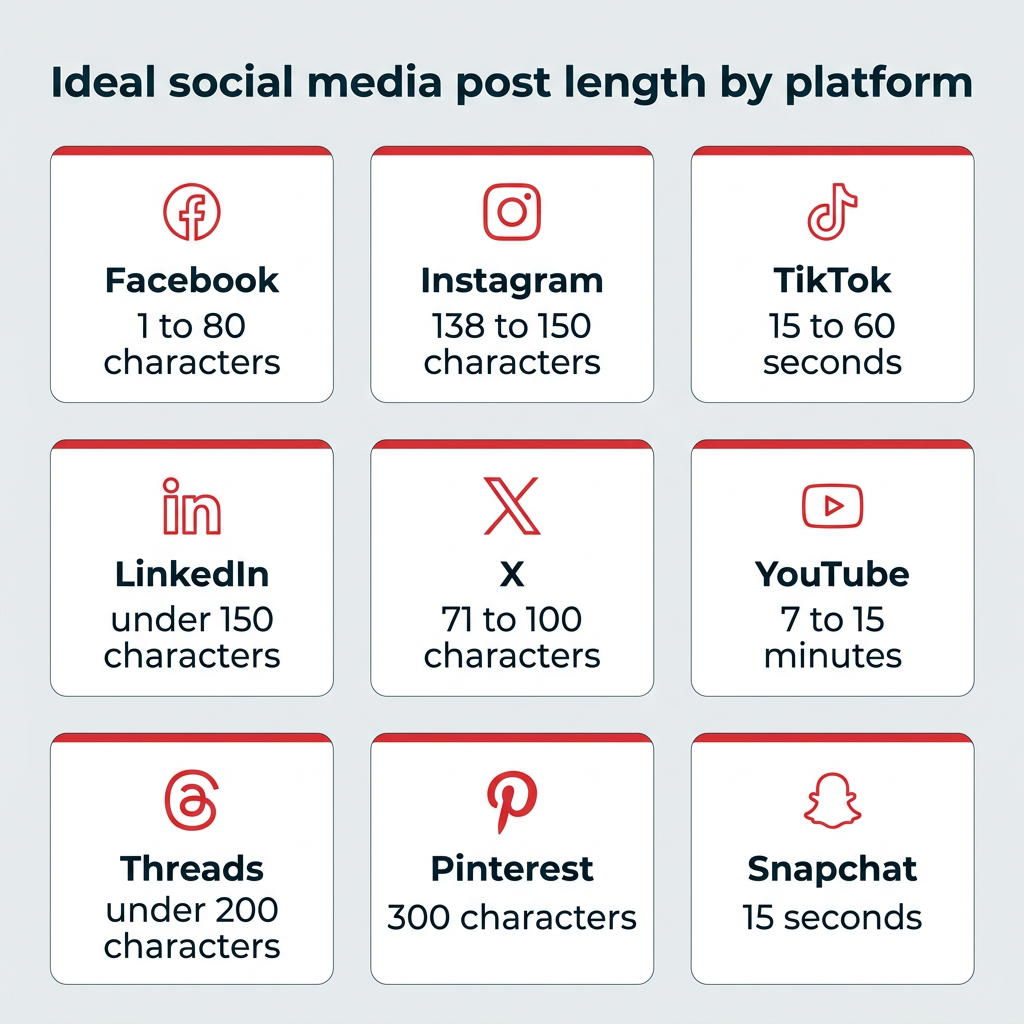
- Organic Posts: Aim for 1 to 80 characters. Posts in this range receive significantly higher engagement because they appear entirely above the "See More" fold.
- Ad Copy: Successful Facebook ads lean toward 5 to 19 words. Clear, direct language that avoids jargon and passive voice is essential.
- Video: While long-form is possible, 30 to 60 seconds is the sweet spot for retention. Videos over three minutes are reserved for specific episodic or in-stream ad-monetized content.
Instagram: Visual First, Text Second
Instagram is a visual-first platform where captions serve to provide context.
- Captions: Keep your organic captions between 138 and 150 characters. This length is punchy and ensures the full message is visible without truncation.
- Sponsored Content: Instagram recommends keeping ad copy under 125 characters to maintain mobile-first readability.
- Reels: The sweet spot is 15 to 60 seconds. While the platform allows up to 3 minutes, shorter clips often earn higher completion rates, which signals the algorithm to push the content to more users.
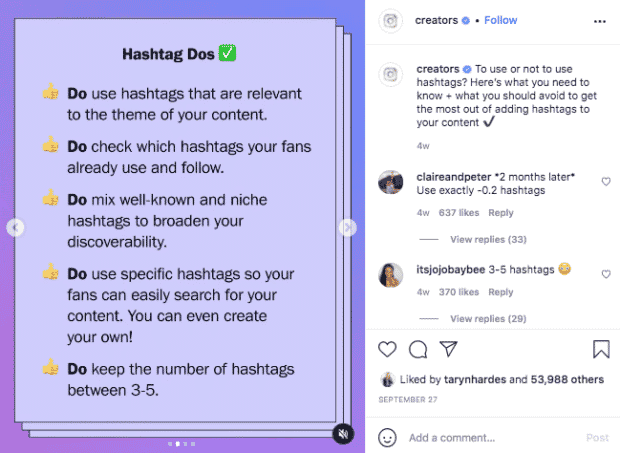
- Hashtags: Less is more. Using 3 to 5 highly relevant hashtags outperforms "hashtag stuffing."
LinkedIn: Professional Insight
LinkedIn has evolved from a simple job-seeking site to a content-heavy hub.
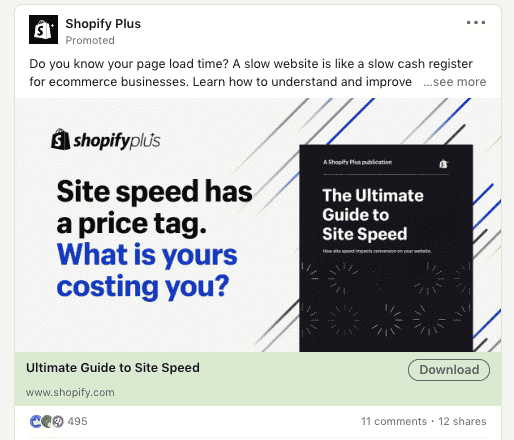
- Posts: Keep your key message under 150 characters before the "See More" break.
- Articles: Paradoxically, for long-form articles, length is an asset. Research indicates that posts between 1,900 and 2,000 words generate the highest levels of professional engagement and shares.
- Video: For awareness, keep videos under 30 seconds. For deeper content, 30 to 90 seconds is the recommended window.
TikTok and YouTube: The Video Retention Battle
On video-centric platforms, "length" is measured by how long a user stays before swiping away.
- TikTok: Aim for 15 to 60 seconds. A strong hook in the first second is mandatory. For ads, 21 to 34 seconds is the optimal range for conversion.
- YouTube: For long-form content, 7 to 15 minutes is the industry standard for high-retention videos. For Shorts, 30 to 60 seconds maximizes the likelihood of a loop—a critical metric for the Shorts algorithm.
Supporting Data and Industry Insights
The shift toward shorter content is backed by consistent data. For instance, an analysis of 3,000 top-performing LinkedIn posts revealed that the depth of the content in articles correlates with authority, whereas the brevity of posts correlates with reach. Conversely, in the ad space, AdEspresso’s analysis of over 750,000 Facebook ads confirmed that the most successful campaigns were those that communicated value in fewer than 20 words.

These findings suggest that while "long-form" has a place for educational content, "snackable" content is the primary driver of top-of-funnel brand awareness.
Official Platform Guidance and Implications
Meta, TikTok, and LinkedIn have all adjusted their algorithms to reward "native" behavior. This means they penalize content that feels like an advertisement or a wall of text.
The Implications for Strategy:
- Stop Using "See More" as a Design Feature: If your post requires a click to be understood, you have already lost a portion of your audience.
- Prioritize Video Hooks: On TikTok and Reels, the first second of your video is more important than the remaining 59 seconds. If the hook fails, the length of the video is irrelevant.
- SEO Matters: For platforms like YouTube and Pinterest, text length is tied to discoverability. Use descriptions to include relevant keywords, but ensure the first 150 characters provide the most value.
Strategic Frameworks for Content Planning
To manage these complex requirements, marketers often rely on established frameworks:
- The 5-3-1 Rule: A content mix strategy suggesting that for every nine posts, five should be curated, three should be original, and one should be promotional.
- The 40-40-20 Rule: 40% of success comes from audience targeting, 40% from the offer, and 20% from the creative/copy length.
- The 5-5-5 Rule: Dedicating five minutes to creation, five to engagement, and five to community management daily.
Conclusion: Experimentation is Key
While these benchmarks provide a reliable starting point, every brand’s audience is unique. The "ideal" length is ultimately a metric you must discover through A/B testing. By monitoring your specific engagement rates—likes, comments, and, most importantly, video retention—you can tailor these global standards to your brand’s voice.
The goal is not to be short for the sake of brevity; the goal is to be efficient. In an era where attention is the most valuable currency, your ability to deliver maximum value in minimum time will define your success. Use these data-backed benchmarks to guide your planning, but never stop testing, refining, and optimizing your approach to keep your audience engaged and returning for more.
 Reynand Wu
  Muslim
  Nila Kartika Wati