
 By Raul Delapena Setiawan
By Entertainment Desk
Published October 2025
Introduction: The Monumental Craft of Wildwood
In an era dominated by instantaneous digital creation, compressed rendering pipelines, and algorithmic automation, the stop-motion animation studio Laika continues to build worlds the hard way—one microscopic movement, one physical puppet, and one painstaking frame at a time.
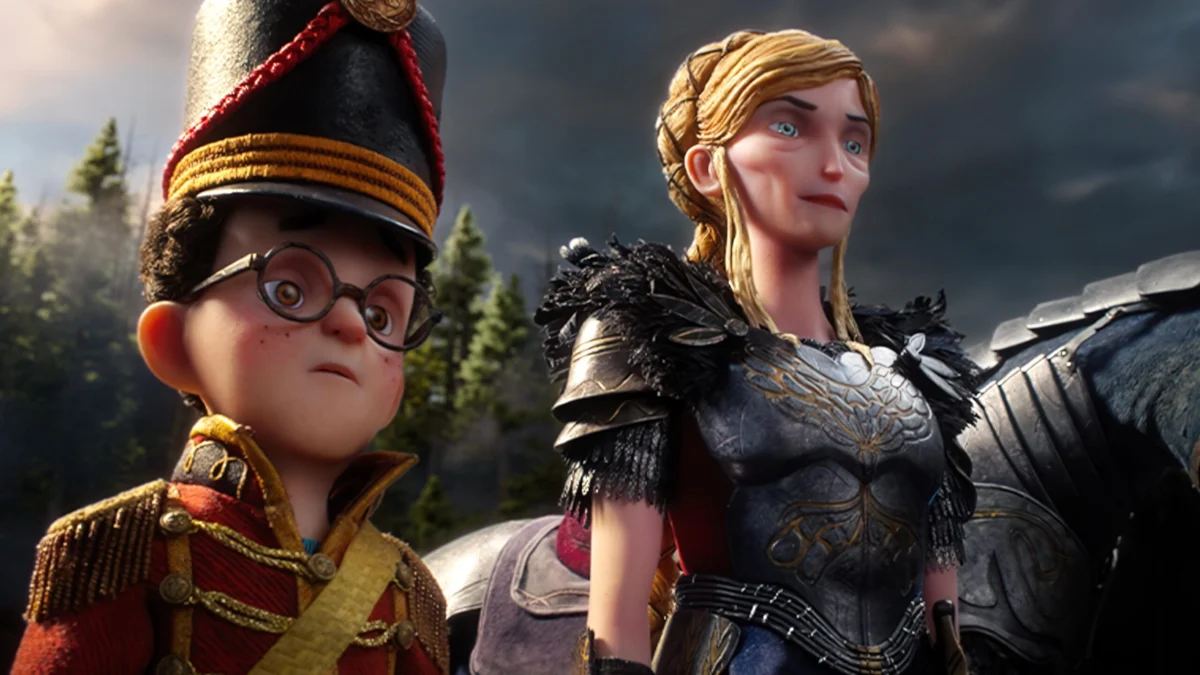
Set to premiere on October 23, Wildwood represents the most ambitious cinematic undertaking in the studio’s history. Following in the critically acclaimed footsteps of modern stop-motion milestones like Coraline, ParaNorman, The Boxtrolls, Kubo and the Two Strings, and Missing Link, Wildwood is a sprawling, immersive fantasy adventure that required five grueling years of physical production.
The scope of the project staggers the imagination: the production utilized more than 230 distinct puppets, including an astonishing 36 dedicated solely to the main character, Prue. These figures were brought to life by a specialized team of 49 animators, while an army of more than 1,000 artists, technicians, and craftspeople contributed to the film’s completion.
Yet, beyond its narrative and artistic merits, Wildwood arrives at a pivotal cultural juncture. As Hollywood increasingly rushes to integrate generative artificial intelligence into its pipelines—from background asset generation to the contentious prospect of digital actor replicas—Laika’s ultra-manual, analog-heavy process serves as a deliberate, defiant counterpoint.
Ahead of the film’s premiere, Laika CEO and Wildwood director Travis Knight sat down to discuss the monumental effort behind the film, the shifting technological landscape of the entertainment industry, and why he believes generative AI represents an existential threat to the soul of storytelling.
Main Facts: Scale, Scope, and Technical Milestones
To understand the magnitude of Wildwood, one must first examine the sheer physical infrastructure required to produce a feature-length stop-motion film at Laika’s level.
- Production Timeline: The film took five years to complete from concept to final cut, reflecting the slow, deliberate nature of high-end stop-motion animation.
- Puppet Engineering: More than 230 individual puppets were constructed for the film. To accommodate complex emotional and physical sequences, the production required 36 iterations of the protagonist, Prue.
- Human Capital: A core animation team of 49 artists was tasked with manipulating the puppets frame by frame, supported by a broader crew exceeding 1,000 total contributors.
- Technical Innovation: Wildwood pushes the boundaries of the studio’s previous work by introducing advanced internal mechanics, including newly designed diaphragms that allow puppets to simulate breathing, upgraded musculature for hyper-realistic limb movement, and more flexible, resilient materials for hair, fur, and period-accurate clothing.
Despite these cutting-edge mechanical enhancements—many of which rely on advanced tools like 3D printing and digital design workstations—Knight draws a sharp, unyielding line between technological evolution and generative AI.
Chronology: The Rise of Hollywood’s Anti-AI Backlash
The debate surrounding artificial intelligence in Hollywood has escalated rapidly over the last several years. What began as speculative discourse during the 2023 SAG-AFTRA and WGA strikes has transformed into a full-scale ideological battle within the creative community.
- July 2023: During the historic Hollywood double strikes, actors and writers fiercely contested the use of generative AI and digital replicas, cementing the protection of human likeness and labor as a primary union demand.
- September 2024: Major studios began formalizing partnerships with AI platforms. Notably, Lionsgate struck a deal with Runway to train custom AI models on the studio’s internal film library, sparking intense concern among independent creators and guilds.
- Late 2024 to Mid-2025: A growing coalition of A-list filmmakers—including Guillermo del Toro, Rian Johnson, and Christopher Nolan—vocalized severe skepticism or outright hostility toward generative AI. Del Toro notably remarked that he would "rather die than use generative AI," while Johnson blasted the technology for "making everything worse in every single way."
- October 2025: Travis Knight joins this outspoken chorus of auteur resistance. As Wildwood prepares for its theatrical rollout, Knight’s public commentary frames Laika’s latest release not merely as a fantasy film, but as a cultural manifesto in defense of human artistry.
Supporting Data: The Expanding Footprint of AI in Entertainment
While AI-generated films and narrative shorts still face widespread critical derision and fail to capture mainstream audiences, the technology’s institutional footprint within the entertainment business continues to expand through financial backing and strategic partnerships.
Major media conglomerates are heavily subsidizing AI research and integration. Streaming giants like Netflix and legacy studios are actively exploring machine learning models to optimize post-production, streamline visual effects, and analyze audience behavior. Furthermore, the commercialization of text-to-video and image-generation models has altered the calculus for commercial production and pre-visualization, pushing studios to rethink traditional department structures.
However, these efficiency-driven innovations have created a profound philosophical schism. For studios like Laika, the elimination of friction is viewed not as a triumph, but as a tragedy. In an industry rushing toward automation, Laika’s commitment to manual friction—where every error, adjustment, and physical touch is preserved on celluloid—makes its output increasingly anomalous.
Official Responses: Travis Knight on Tools vs. Theft
Speaking candidly about the intersection of technology and art, Travis Knight drew a precise distinction between the tools artists have used for centuries and the mechanisms of generative AI.
"In so many ways, generative AI is antithetical to everything that we are at this studio," Knight said. "It’s not that we don’t believe in technology. We do. We use technology, we use computers. We’re not just making films entirely with tools that we’ve inherited from a watchmaker’s widow."
Knight cataloged the expansive definition of artistic technology, noting that foundational instruments—from a simple pencil or paintbrush to a 3D printer and a digital workstation—share a common denominator: human intent.
"A pencil is technology, a paintbrush is technology, a 3D printer is technology, a computer workstation is technology," he explained. "But all of these things have meaning and value when you put them in the hands of an artist."
When the conversation shifted explicitly to generative AI, Knight’s tone grew stern, characterizing the technology’s core methodology as inherently extractive.
"When the technology is doing the work of the artist, that’s a different proposition," Knight stated. "And that’s something that I am steadfastly against, because there is no humanity in what comes out of the other side of that. When you’ve ingested the material that an artist has actually created, and then regurgitate it in a different way, there’s no soul, there’s no spirit, there’s no humanity behind it. That’s theft."
To Knight, the irreplaceable value of art lies in lived human experience—grief, love, trauma, and resilience—none of which can be replicated by a data-processing algorithm.
"I really do believe that when you’re telling a human story, when you’re telling a story about loss and grief and something that means something to someone, that has to come from a person," Knight emphasized. "A computer has never fallen in love. A computer has never lost someone. They’ve never made a terrible choice and lost a brother. They’ve never had their heart broken. Only a person has done that. And so only a person can speak to what that experience is and what that feels like."
Implications: A Dual Future for Technology and Society
While Knight remains unyielding in his defense of traditional cinematic artistry against generative AI, his perspective on artificial intelligence as a broader societal tool is more nuanced. Rather than dismissing the technology entirely, he draws a sharp boundary between its potential applications in empirical fields versus creative disciplines.
"I think AI is extraordinary technology," Knight reflected. "On the one hand, you have to marvel at the advancement of it. And I do think that it’s going to be disruptive to our society and our world. I think there are a great many benefits that can come from it when you look at medicine and science. There’s a world in which these things can benefit humanity tremendously."
At the same time, he voiced deep-seated concerns regarding humanity’s preparedness to govern such a powerful, disruptive force responsibly.
"And then there’s a world where they can be devastating," Knight warned. "I fear for the latter, I hope for the former, but it requires people to be good stewards of this technology. As a group of humans, we have not shown generally that we’re good at that."
Despite these systemic anxieties, Knight concluded with a note of characteristic resilience—an outlook that mirrors the relentless patience required to animate a stop-motion epic over five long years.
"I’m ever an optimist," Knight said, "and I hope that collectively we can see the value in the technology and use it responsibly, and see the danger in the technology and push back against it."
As Wildwood hits theaters on October 23, audiences will not only experience the culmination of a monumental artistic collaboration, but they will also witness a living testament to the proposition that some things in cinema—and in life—cannot, and should not, be automated.
 Pevita Pearce
 Sagoh
 Azzam Bilal Chamdy
