
 By Azzam Bilal Chamdy
Main Facts
When the autumn air turns crisp and culture pivots toward the macabre, the soundtrack of the season typically divides into two predictable categories. On one side are the festive novelties: the whimsical swing of Bobby "Boris" Pickett’s "The Monster Mash," the campy nostalgia of Michael Jackson’s "Thriller," and the reassuringly synthy pulse of John Carpenter’s iconic Halloween theme. These tracks provide a safe, theatrical brush with the supernatural—funhouse scares designed for costume parties and haunted hayrides.
On the other side of the spectrum lies music that operates not as a costume, but as an existential threat. This is the domain of genuine terror, populated by the industrial dread of Throbbing Gristle, the subterranean sludge of The Body, and, towering above them all, Scott Walker’s 2006 masterwork, The Drift.
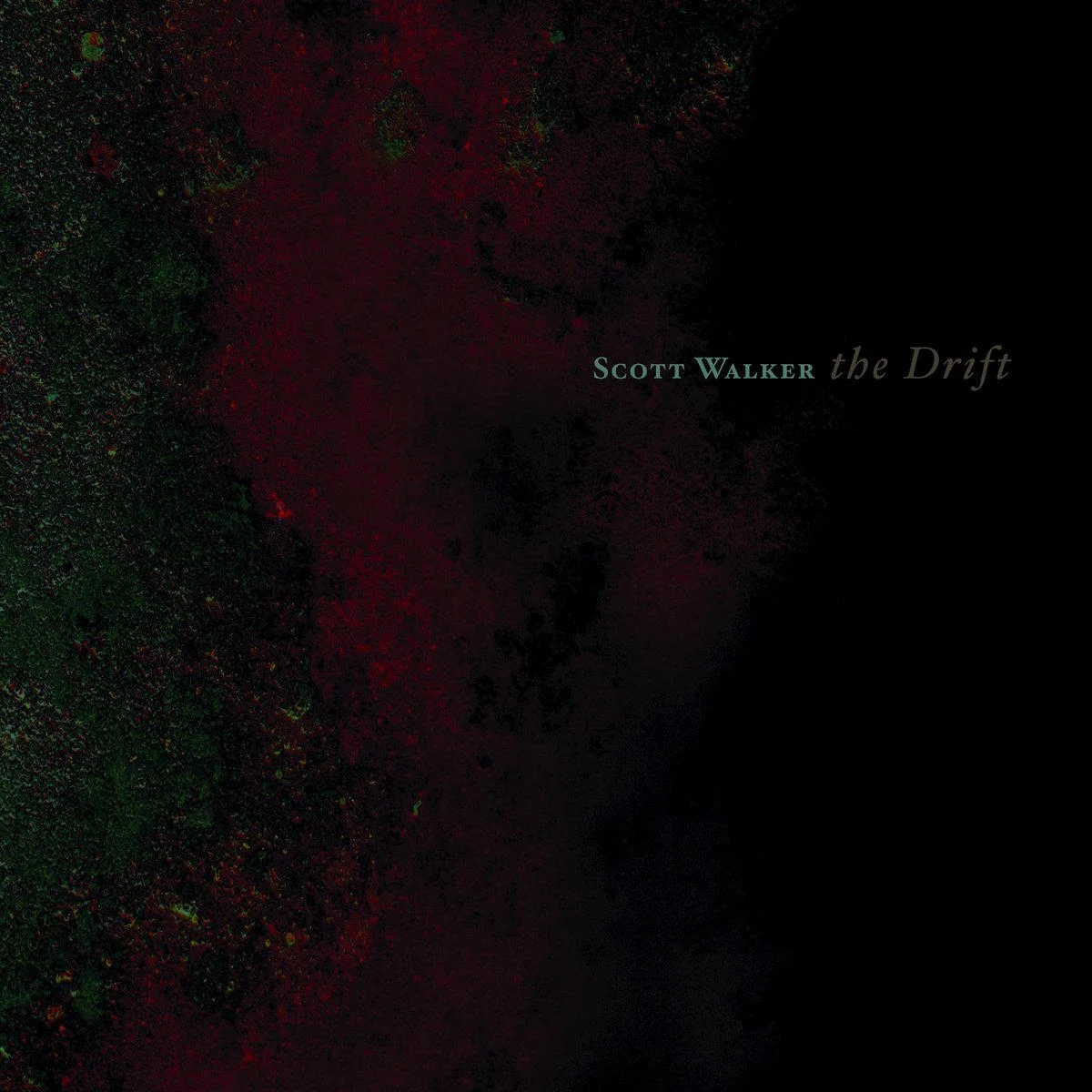
Released via 4AD, The Drift is not a record designed for casual listening, nor is it entertainment in the traditional sense. It is a grueling, magnificent, and deeply unsettling sonic exploration of humanity’s darkest impulses, historical atrocities, and psychological disintegration. Spanning ten tracks over nearly an hour, Walker abandons the lush, baritone-led orchestrations of his 1960s pop heyday with The Walker Brothers—and even the challenging avant-garde folk of his late-career renaissance—to construct an architectural marvel of modern musical horror.
Lyrically, the album grapples with mortality, geopolitical violence, terminal disease, and inescapable tragedy. Sonically, it utilizes a jarring vocabulary of microtonal tension, abrasive foley work, sudden silence, and industrial percussion. More akin to the nightmarish cinematic scores of Ari Aster (Hereditary, Midsommar) or David Lynch than anything traditionally recognized as popular music, The Drift challenges the listener to endure a state of sustained psychological unease. It does not offer the spine-tingling thrill of a ghost story; rather, it makes your skin crawl, invoking an involuntary physical and psychological rejection that lingers long after the final track fades into silence.
Chronology: From Pop Idol to Avant-Garde Recluse
To understand the profound shock of The Drift, one must first trace the astonishing trajectory of Noel Scott Engel, known professionally as Scott Walker. The chronology of his career is one of the most singular evolutions in the history of recorded music.
The 1960s: Pop Stardom and Orchestral Ennui
In the mid-1960s, Walker was an unlikely heartthrob. As the charismatic frontman of The Walker Brothers, he achieved massive mainstream success in the United Kingdom, where the group rivaled The Beatles in popularity. Blessed with a rich, soaring baritone reminiscent of Jacques Brel and Frank Sinatra, Walker sang baroque pop hits like "The Sun Ain’t Gonna Shine Anymore." However, the adulation of teen-pop stardom weighed heavily on him. By the late ’60s, Walker began pivoting toward deeply idiosyncratic solo work—albums like Scott 3 and Scott 4—which integrated European art-song sensibilities, literary references, and orchestration that hinted at the darkness simmering beneath the surface.
The Wilderness Years and Creative Rebirth
Following the commercial failure of his early ’70s releases, Walker entered a prolonged period of writer’s block and obscurity, occasionally reuniting with The Walker Brothers for sporadic, more conventional projects.
The true turning point arrived in 1984 with the release of Climate of Hunter. The album marked a radical departure, shedding the last vestiges of conventional pop structures in favor of fragmented narratives, fractured jazz chords, and an increasingly austere vocal delivery. It took another eleven years for Walker to release a follow-up, 1995’s Tilt. With Tilt, the blueprint for The Drift was officially established: sparse, skeletal arrangements punctuated by violent eruptions of noise, operatic drama, and an uncompromising focus on historical trauma.
2006: The Arrival of The Drift
Eleven years after Tilt, working at a glacial and uncompromising creative pace, Walker released The Drift in May 2006. Produced by Walker himself, the album was met with universal critical bewilderment and awe. It cemented his legacy not as a nostalgic pop relic, but as one of the most uncompromising, avant-garde sonic architects of the 21st century. Walker would follow this with Bish Bosch in 2012 before passing away in 2019 at the age of 76, leaving The Drift as the penultimate monument of his late-period masterworks.
Supporting Data & Lyrical Architecture: The Anatomy of Terror
The true power of The Drift lies in the synthesis of its harrowing lyrical themes and its punishing, hyper-detailed production choices. Walker treats subject matter that most artists wouldn’t dare approach, treating historical atrocities and deeply personal grief with unblinking, journalistic clinicality.
The Lyrical Landscape
Lyrically, the record is about as dark as recorded music gets. Walker refuses to view tragedy from an abstract, safe distance; instead, he dives headfirst into the visceral, messy reality of human suffering:
- The Hanging of Mussolini: On the song "Clara," Walker explores the final moments of Italian dictator Benito Mussolini and his mistress, Clara Petacci, following their execution by partisans in April 1945. The lyrics imagine the swinging bodies, the degradation, and the morbid public spectacle of their corpses hung upside down at a Milan gas station.
- Geopolitical and National Trauma: The specter of 9/11 hangs heavily over the album, specifically on the track "Jesse," which obliquely references the twin towers, alongside meditations on the Srebrenica genocide during the Bosnian War.
- Personal Grief: In "Buzzers," Walker addresses profound personal loss, touching upon the trauma of his stillborn twin brother—a lifelong psychological ghost that haunted his art and identity.
Sonic Terror and Instrumentation
If the lyrics provide the conceptual horror, the musical arrangement acts as the physical torture device. Walker employs a bizarre, kitchen-sink approach to orchestration that defies conventional harmony:
- The Pig Carcass: Perhaps the most infamous urban legend (and confirmed production detail) surrounding the album involves the track "Clara." To achieve a specific, percussive thud for the rhythm track, Walker’s percussionist allegedly punched a hanging pig carcass in the recording studio, capturing a dull, fleshy impact that no synthetic drum machine could ever replicate.
- Sonic Dissonance: On "Jesse," the verses are driven by seasick, undulating guitars that sound as though they are melting under intense heat. These give way to dissonant string sections that drone oppressively over the chorus, creating a feeling of profound claustrophobia.
- Dynamic Violence: Songs routinely subvert expectations of musical flow. A track will stop dead on a dime, lingering in uncomfortable, deafening silence before erupting without warning into bursts of industrial mechanical noise, atonal orchestral stabs, and animal bleating.
- Audio Degradation: Walker purposefully plays with fidelity. The opening moments of tracks feature low-bitrate MP3 noise artifacts that grate against the ear, creating a tactile sensation so abrasive that listeners often report feeling it physically in their jaws and teeth.
Nothing on The Drift is ever quite in tune. Instruments drift lazily or violently out of pitch, creating a psychological effect akin to vertigo or sea sickness.
Official Responses and Critical Reception
Upon its release in the spring of 2006, the music industry did not quite know how to process The Drift. Mainstream outlets were forced to reckon with an artist who had once been a teen idol now crafting avant-garde nightmares about European dictators.
Critical response was overwhelmingly, if nervously, positive. Reviewers across the board praised Walker’s uncompromising vision, though many noted the sheer endurance test required to listen to the album from start to finish.
- Critical Acclaim: The Guardian awarded the album five stars, describing it as a work of "terrifying power" and noting that Walker had successfully mapped out the psychological terrors of the modern age. Pitchfork heralded it as a masterpiece of contemporary composition, highlighting its fearless interrogation of history.
- The Artist’s Perspective: In rare interviews surrounding the release, Walker remained characteristically enigmatic about his inspirations. He spoke of his meticulous writing process—often spending years researching historical documents, medical texts, and war archives before writing a single lyric. For Walker, the darkness of the songs was not gratuitous shock value, but a necessary artistic confrontation with the horrors that humanity routinely inflicts upon itself.
- Peer Recognition: Contemporary avant-garde musicians, noise artists, and extreme metal acts—such as Sunn O))), The Body, and Chelsea Wolfe—have frequently cited Walker as a foundational influence. They recognize in The Drift a rare breed of fearlessness: the willingness to strip away all comfort, melody, and consumer-friendly polish in pursuit of absolute emotional and sonic truth.
Implications: Redefining "Spooky Music" for the Modern Age
What does the enduring legacy of Scott Walker’s The Drift mean for how we consume art, horror, and seasonal media?
As Halloween culture becomes increasingly commercialized, sanitized, and fun—dominated by plastic skeletons, upbeat party playlists, and jump-scare cinema—The Drift serves as a stark reminder of what true, unadulterated horror feels like. It challenges the listener to move beyond passive consumption. Watching a horror movie or listening to a novelty monster song allows us to compartmentalize fear; it is a controlled burn that we can easily extinguish by turning off the television.
The Drift offers no such comfort. It posits that the most frightening things on earth are not fictional vampires, zombies, or ghouls, but real historical atrocities, political corruption, physical decay, and the deep, inescapable traumas of the human condition.
Listening to the album is not an act of relaxation; it is an endurance trial. Yet, for those brave enough to subject themselves to its sonic onslaught, the reward is profound. Much like gazing into an abyss, surviving The Drift forces a confrontation with the darker corners of human history and psychology that standard pop music simply cannot reach.
So, as the autumn nights lengthen and the cultural appetite turns toward things that go bump in the night, consider shelving the novelty records for an evening. Step away from the rubber masks and the cinematic tropes. Instead, stream Scott Walker’s The Drift on Bandcamp, Spotify, Apple Music, or Qobuz. Turn off the lights, put on a pair of good headphones, and prepare yourself for an auditory experience that won’t just give you goosebumps—it will make your skin crawl, your teeth ache, and your perception of horror change forever.
 Pevita Pearce
 Sagoh
 Nana
