
 By Dwi Wanna
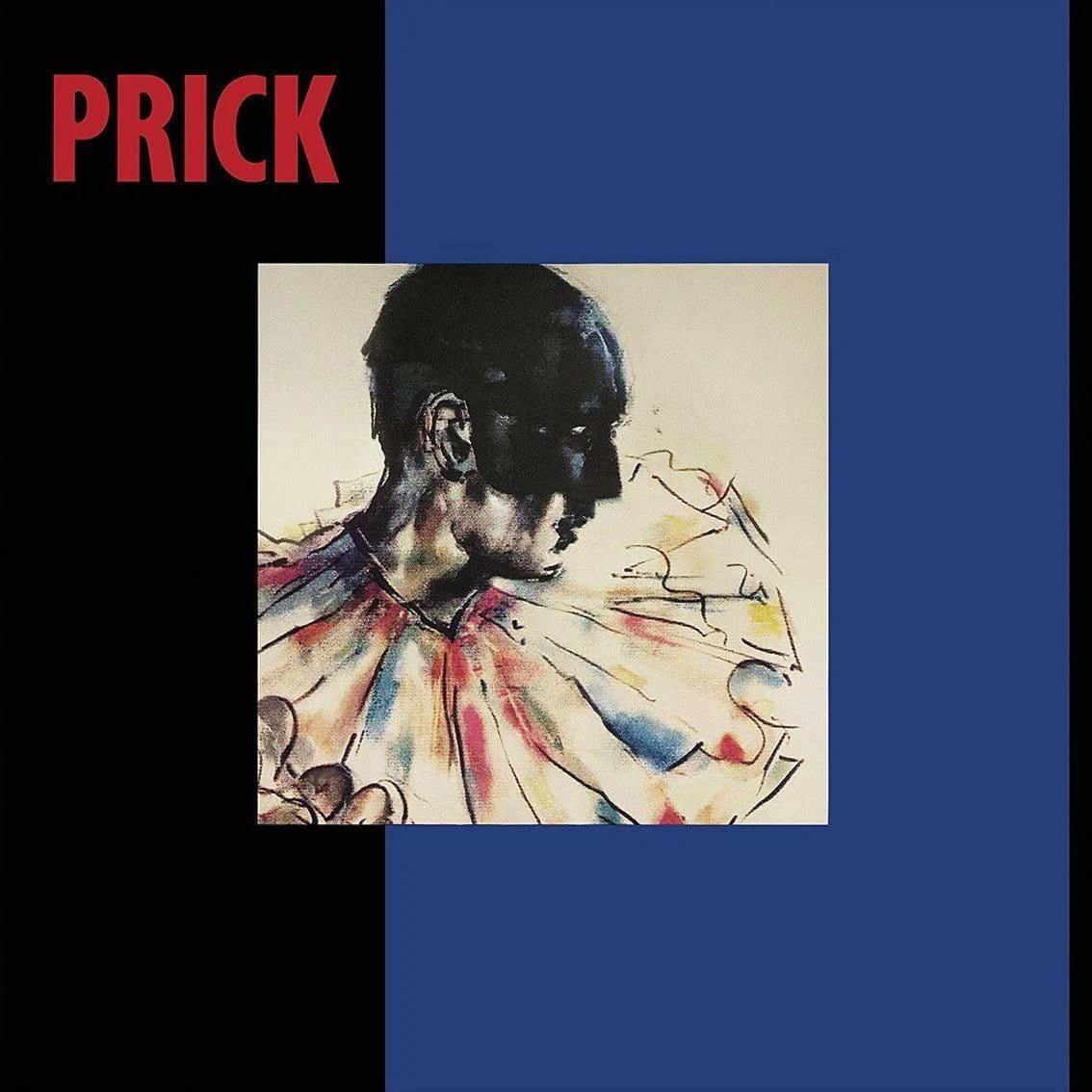
Main Facts: The Cult Legacy of Prick’s 1994 Debut
In the hyper-competitive and sonically aggressive landscape of 1990s industrial rock, few albums occupy as fascinating a niche as Prick, the 1994 self-titled debut by Kevin McMahon’s primary musical vehicle. Released during a golden era for electronic-infused heavy music, the album arrived courtesy of Nothing Records—the highly influential boutique label formed by Nine Inch Nails mastermind Trent Reznor and his longtime manager, John Malm.
While Reznor officially lent his production talents and sonic fingerprint to only four tracks on the record, his presence is felt across the entire duration of the LP. At its core, Prick is a masterclass in tension: it merges the abrasive digital distortion and mechanical precision of mid-90s industrial with the swagger, theatricality, and glam-rock flamboyance reminiscent of T. Rex and David Bowie.
Unlike many of his contemporaries who fell into the trap of becoming flat, carbon-copy Nine Inch Nails imitators, McMahon infused his work with a self-aware sense of humor and unhinged theatricality. The result is an album that bridges the gap between the dark, shadowy aesthetics of goth subculture and the loose, unpredictable energy of garage punk. Today, decades after its initial commercial release and subsequent drift into cult-classic status, Prick remains a vital piece of the Nothing Records puzzle—a rewarding, chaotic artifact that continues to captivate adventurous listeners across major digital streaming platforms.
Chronology: From Lucky Pierre to the Halls of Nothing Records
To understand the genesis of Prick, one must trace the timeline of frontman Kevin McMahon’s career and his enduring relationship with Trent Reznor.
The New Wave Beginnings (Pre-1990s)
Long before the industrial explosion of the 1990s, McMahon was active in the underground music scene as a member of Lucky Pierre, a forward-thinking new wave outfit. It was during this early chapter that McMahon crossed paths with a young Trent Reznor, who briefly served as a member of the band. Though their paths diverged as Reznor set his sights on building the industrial juggernaut that would become Nine Inch Nails, a mutual respect and creative bond remained intact.
The Crucible of The Downward Spiral (1993–1994)
By 1993, Reznor was locked deep inside Le Pig—the infamous Los Angeles studio housed at 10050 Cielo Drive—recording what would become Nine Inch Nails’ monumental sophomore full-length album, The Downward Spiral. Amid the grueling, famously intense sessions that defined the creation of that record, Reznor carved out time to assist his old friend. He signed McMahon’s new project, Prick, to his newly minted Interscope-affiliated imprint, Nothing Records.
Reznor stepped into the studio to produce four key tracks for Prick’s debut, bringing the same sonic aggression and immaculate ear for texture that elevated his own work. However, the collaborative spirit extended past official credits; the entire record was steeped in the sonic philosophies that Reznor was exploring at the time.
Release and Cult Discovery (1994–Present)
Prick dropped in 1994 to critical intrigue, highlighted by the minor alternative radio and MTV rotation success of its standout single, "Animal." Despite its pedigree, the album eventually slipped out of print physically, shifting into the realm of rare-find status for die-hard industrial completionists. In the years since, the record has found a second life through digital preservation. Today, Prick is readily accessible on major streaming services including Apple Music, Spotify, Qobuz, Deezer, and YouTube Music, allowing a new generation of electronic and industrial fans to dissect its eccentricities.
Supporting Data & Track-by-Track Breakdown: Dissecting the Chaos
A granular look at the tracklist of Prick reveals a volatile concoction of precise electronic engineering and loose, unhinged garage-band chaos.
1. "Communiqué" and the Prototype Sound
The album opens with "Communiqué," a fuzzy, unpolished blast of stripped-down punk riffs peppered with subtle electronic flourishes. McMahon’s vocal delivery sets the tone immediately: he shifts unpredictably from theatrical, half-spoken verses that sound lifted directly from a Broadway stage to full-throated, Al Jourgensen-esque screams. Music critics and retro-analysts have noted that the rough-around-the-edges production and heavy reliance on live instrumentation act as a clear stylistic blueprint for sounds Reznor would later revisit a decade later on Nine Inch Nails’ 2005 album, With Teeth.
2. "Riverhead" and the Bowie-Reznor Nexus
It is on the second track, "Riverhead," that the Reznor-era influence completely takes over, despite Reznor not holding an official production credit on the song. The vocal melodies swoop and sway with the experimental, angular cadence of David Bowie’s Outside and Earthling eras, riding above guitar tones buzzing with the digital charr and grit familiar to fans of the Broken EP.
Approximately three minutes into the track, the song undergoes a dramatic structural breakdown. It slowly reconstructs itself through stacked layers of electronic drums, grinding mechanical chords, and loping, synthetic guitar melodies. The back half of "Riverhead" possesses enough atmospheric depth to easily pass as an unreleased B-side from The Downward Spiral or The Fragile.
3. The Charm of Imperfection: "Tough" and "Other People"
Crucially, these soaring moments of heavily layered, pristine industrial production are often deliberately undercut by raw human error. For instance, the lush soundscapes of the record frequently crash into the sloppy garage-punk intro of a track like "Tough."
This friction gives Prick its distinct charm: it is an undeniably serious record that refuses to take itself too seriously. McMahon gleefully leans into moments of intentional goofiness and melodrama. On "Other People," he gleefully belts out ridiculous lines with total sincerity:
"Pink panties, blue panties, yellow panties. I’m gonna wrap around your nose, oh panty-ho-hose."
He routinely lets guitar lines drift out of time, permits bass strings to audibly rattle against the fretboard, and revels in the glorious grit of lo-fi industrial aesthetics.
4. "Animal": The MTV Hit
The album’s commercial high-water mark, "Animal," benefited from an official music video that secured occasional airplay on MTV. The track heavily features backward melodic samples that bear a striking resemblance to the hypnotic textures of Nine Inch Nails’ "Closer," paired with parallel lyrical themes of carnal awakening:
Consent is all I need
To bring out the savage in me
Your scent is all I need
To bring out the animal in me
Yet, where "Closer" opts for a slinky, calculating disco-funk sleaze, "Animal" approaches the same subject matter through a lens of raw, shouted, unadulterated desire.
5. "I Apologize": The Ultimate Microcosm
Perhaps no song encapsulates the eccentric brilliance of Prick better than "I Apologize," arguably the most scatter-brained composition on the tracklist. It opens with stark, awkward percussion resembling a cracking whip, paired with McMahon singing slightly flat and completely unaffected.
Without warning, the song pivots into a jangly new wave verse that violently mutates into a hard-rock stop during the chorus. But stability is fleeting here: the second verse pivots once more into acoustic strums reminiscent of Space Oddity-era David Bowie, followed immediately by a guitar solo that sounds precisely like an arcade cabinet malfunctioning on the verge of a total meltdown.
This chaos eventually collapses into a Ministry-esque dirge of layered wall-of-sound guitars and piercing screams. True to form, the song attempts to return to its original chorus, cramming in so many competing elements that it ultimately buckles under its own weight and folds in on itself.
Official Responses and Industry Perspectives
At the time of its release, Prick occupied a unique space within the Nothing Records catalog. While Trent Reznor was exceptionally selective about the artists he chose to back—notably fostering groundbreaking acts like Marilyn Manson and Plug—his support of Kevin McMahon was rooted deeply in personal history and creative admiration rather than cynical commercial strategy.
In retrospective interviews and archival features, music critics and industry insiders have consistently praised Nothing Records for its uncompromising curation. While labels of that era often signed soundalikes to cash in on the explosive mainstream breakthrough of industrial rock, Reznor’s imprint championed authenticity and artistic eccentricity. McMahon’s perspective on the project has always aligned with the music itself: an unpretentious, highly theatrical experiment driven by friendship, creative freedom, and a refusal to adhere strictly to genre rules.
While mainstream press outlets at the time didn’t award Prick the multi-platinum status of its stablemates, the industry response acknowledged the album as a delightfully bizarre outlier—a record that proved industrial music could possess a sense of humor without sacrificing its sonic teeth.
Implications: The Lasting Legacy of an Industrial Outlier
The enduring legacy of Prick extends far beyond its status as a mere footnote in the exhaustive career timeline of Trent Reznor. In a broader historical context, the album serves as a vital reminder of what the alternative music scene of the 1990s achieved through cross-pollination and fearless artistic risk-taking.
Redefining Industrial Tropes
By blending the icy, digital precision of industrial music with the theatrical flamboyance of classic glam rock and the loose, aggressive unpredictability of garage punk, McMahon mapped out a distinct stylistic territory. While many 90s industrial acts burned out quickly by adhering rigidly to formulaic stomping beats and whispered, misanthropic vocals, Prick demonstrated that the genre could accommodate theatricality, self-awareness, and unhinged joy.
The Blueprint for Future Experimentation
Furthermore, the album’s structural fluidity—its willingness to let songs collapse under their own weight, shift genres mid-verse, and embrace lo-fi imperfections—foreshadowed the eclectic direction that experimental rock and electronic music would take in the decades following. Artists looking to blend harsh sonic textures with pop-sensibility melodies and performance art can trace a direct lineage back to the eccentricities found within Nothing Records’ lesser-known catalog gems.
Accessibility in the Streaming Age
Ultimately, the transition of Prick from a physically scarce, sought-after compact disc into a readily available streaming staple has insured its survival. Today’s listeners can easily explore the album on platforms like Apple Music, Spotify, and YouTube Music, allowing McMahon’s brilliant madness to find the fresh, appreciative audience it has always deserved. Far from being swallowed by the shadow of its more famous producer, Prick stands proudly on its own terms—a brilliantly flawed, endlessly entertaining masterclass in industrial chaos.
 Pevita Pearce
 Sagoh
 Azzam Bilal Chamdy
