
 By Neng Nana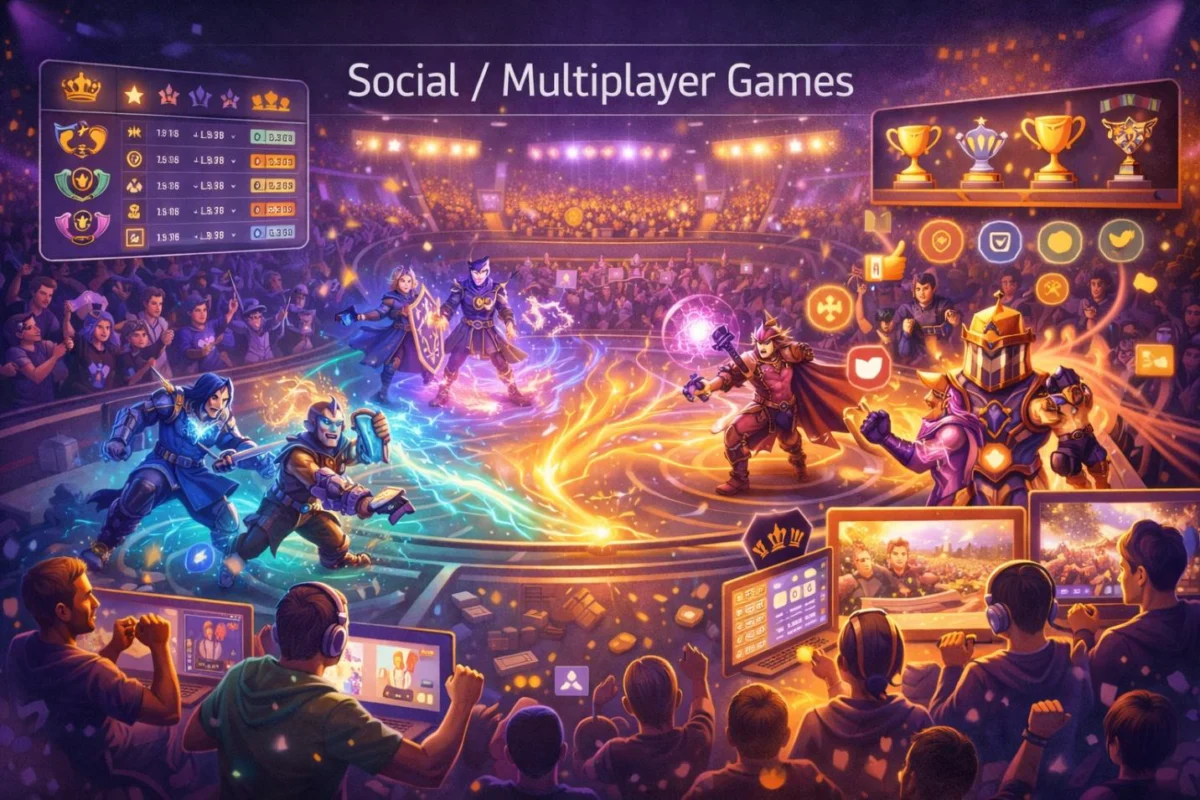
SAN FRANCISCO — In the rapidly evolving landscape of product development, a silent epidemic of ineffective design persists. When digital product teams decide to incorporate "gamification" into their applications, they frequently commit a fundamental, strategic error. They treat game mechanics as a universal patch, dropping arbitrary leaderboards, trivial XP counters, and superficial badges onto enterprise software, fitness trackers, and educational platforms alike.
According to leading human-experience design theorists, this approach is the equivalent of a record producer saying, "Let’s add music," without specifying whether the composition should be heavy metal, jazz, or classical.
This oversight has birthed a movement toward Gamification 2.0—a comprehensive framework arguing that there is no single "game psychology." Just as distinct musical genres trigger vastly different emotional reactions, different video game genres attract entirely separate audiences through fundamentally unique motivational structures. For product managers, developers, and UX designers, understanding these genres is no longer just a creative luxury; it is a commercial necessity.
The Genesis of Gamification 2.0: Moving Past Superficial Rewards
The Core Flaw in Legacy Product Design
For over a decade, corporate gamification relied on extrinsic motivators: streaks, badges, and points. While effective at driving short-term engagement, these mechanisms frequently lead to user fatigue. Once the novelty of a badge wears off, the underlying task—whether it is completing expense reports or logging daily caloric intake—remains a chore.
The Gamification 2.0 paradigm shifts the focus from extrinsic rewards to intrinsic alignment. By examining how modern video games command billions of hours of voluntary, deeply focused human attention, product teams can learn to map their software’s core functionality to the correct psychological archetype.
To achieve this, designers must first categorize the psychological hooks of major gaming genres and extract their underlying principles for non-gaming software.
Category Breakdown: The Seven Pillars of Game-Inspired Design
A. Narrative-Driven Games and RPGs (The Last of Us, Final Fantasy, Mass Effect)
Who They Attract and The Core Hook
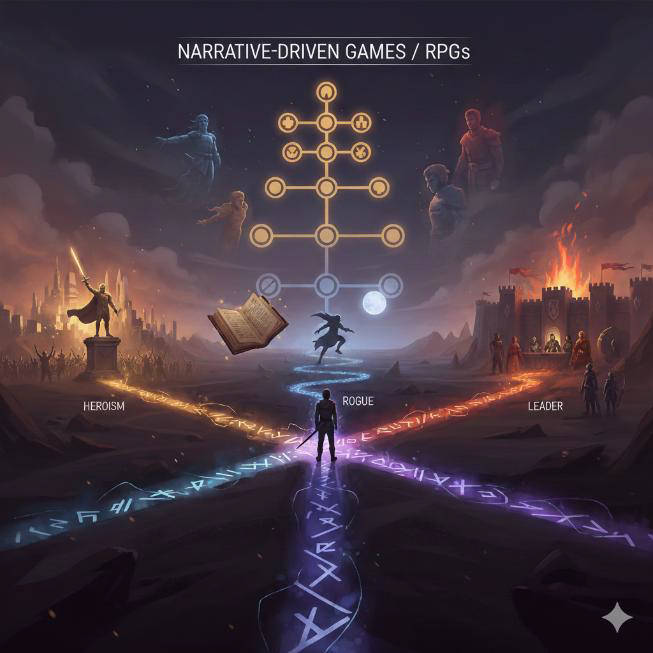
Role-Playing Games (RPGs) attract story-seekers—users who crave emotional weight, character development, and world-building. These players remember dialogue from a decade ago and replay campaigns to explore alternate story branches. Their primary psychological hook is identity formation and emotional investment over time.
What Gamification Can Learn
Traditional apps present user journeys as sterile feature checklists. RPG-inspired design replaces the progress bar with a narrative arc.
- Case Study: Rather than telling a language learner on Duolingo they have earned 500 XP (Level 5), a narrative frame reframes the milestone: “You’ve mastered the present tense—you can now navigate a Spanish-speaking country and describe your daily life.”
- Actionable Takeaway: If an application helps users build long-term skills, projects, or health markers, developers should establish a narrative identity arc. Users should see themselves becoming someone new, viewing growth through reflections of past achievements rather than cold, arbitrary digits.
B. Action and Twitch-Based Games (DOOM, Call of Duty, Street Fighter)
Who They Attract and The Core Hook
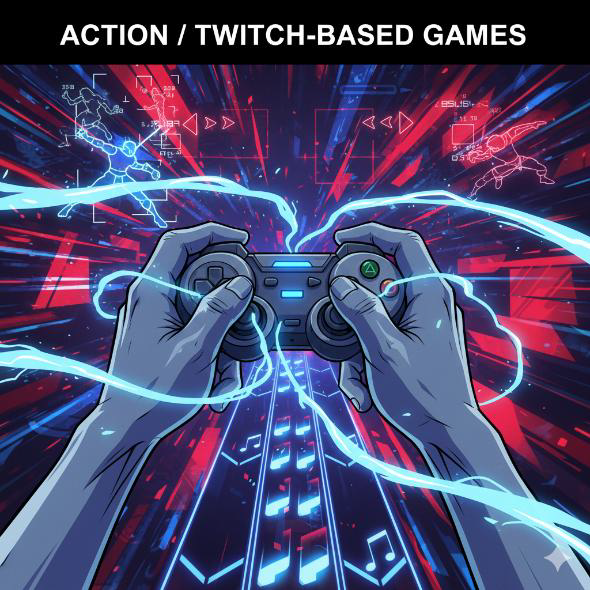
Action games attract skill-focused players who enjoy motor mastery, physical precision, and intense competitive execution. Members of the Street Fighter community, for instance, spend years refining frame-perfect combos through deliberate practice. The core hook here is instant feedback loops and sensory satisfaction.
What Gamification Can Learn
Most productivity and tracking applications fail because they treat interactions as chores to endure before reaching a reward. Action games teach a vital counter-lesson: the core action itself must feel satisfying.
- Application: When a user logs a workout or clears an inbox item, the tactile and auditory feedback should mirror the precision of landing a combat combo. Smooth micro-animations, responsive haptics, and immediate sensory cues transform data entry from a burdensome chore into a pleasurable physical action.
C. Strategy and 4X Games (Civilization, StarCraft, Whiteout Survival)
Who They Attract and The Core Hook
Strategy games attract long-term planners, system optimizers, and alliance-oriented players who thrive on complex interdependencies. Mobile strategy titles like Whiteout Survival generate hundreds of millions of dollars by fostering social commitments through real-time alliance events and deep strategic resource trees.
What Gamification Can Learn
While most apps chase immediate gratification, strategy games prove that users will engage more deeply if allowed to make plans that take weeks or months to materialize.
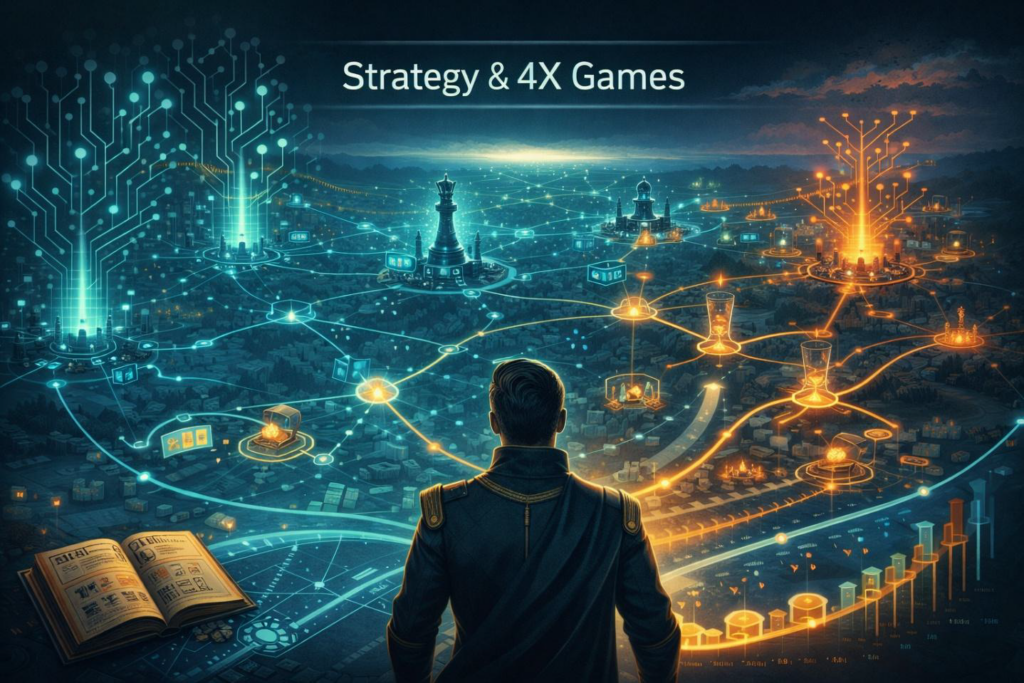
- Application: Project management tools can adopt "tech tree" models, showing users how minor structural decisions today cascade into different project timelines months down the road. Furthermore, introducing cooperative interdependencies—where team members rely on one another’s distinct contributions—generates retention metrics that simple individual leaderboards can never match.
D. Puzzle Games (Portal, Wordle, Royal Match)
Who They Attract and The Core Hook
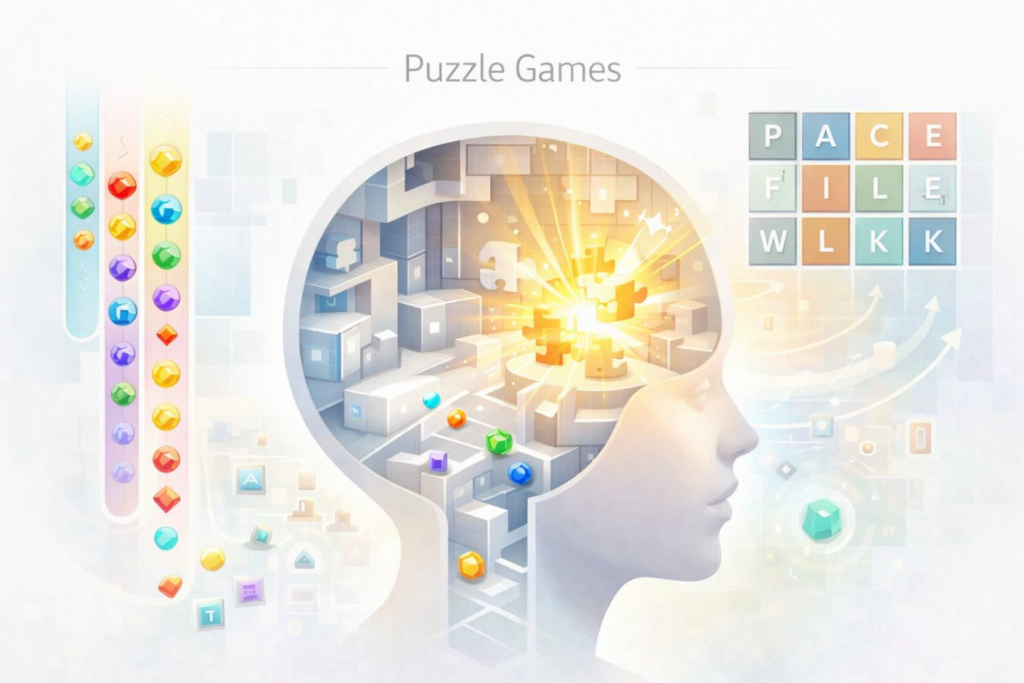
Puzzle games attract problem-solvers who live for the "aha!" moment—the sudden flash of insight when an elegant solution clicks into place. Casual titles like Royal Match engage hundreds of millions through precisely calibrated difficulty curves that make users feel smart rather than busy.
What Gamification Can Learn
Complex user onboarding walls frequently drive users away. Puzzle mechanics teach designers to present one clear, clean problem at a time.
- Application: Educational and financial applications should present core concepts as puzzles rather than lectures. For instance, rather than displaying an explicit rule about personal finance, a budgeting tool can present a challenge: “Here are your monthly expenses—find three pathways to save $200.” Discovery breeds deeper retention than instruction.
E. Simulation and Management Games (The Sims, Cities: Skylines, RollerCoaster Tycoon)
Who They Attract and The Core Hook
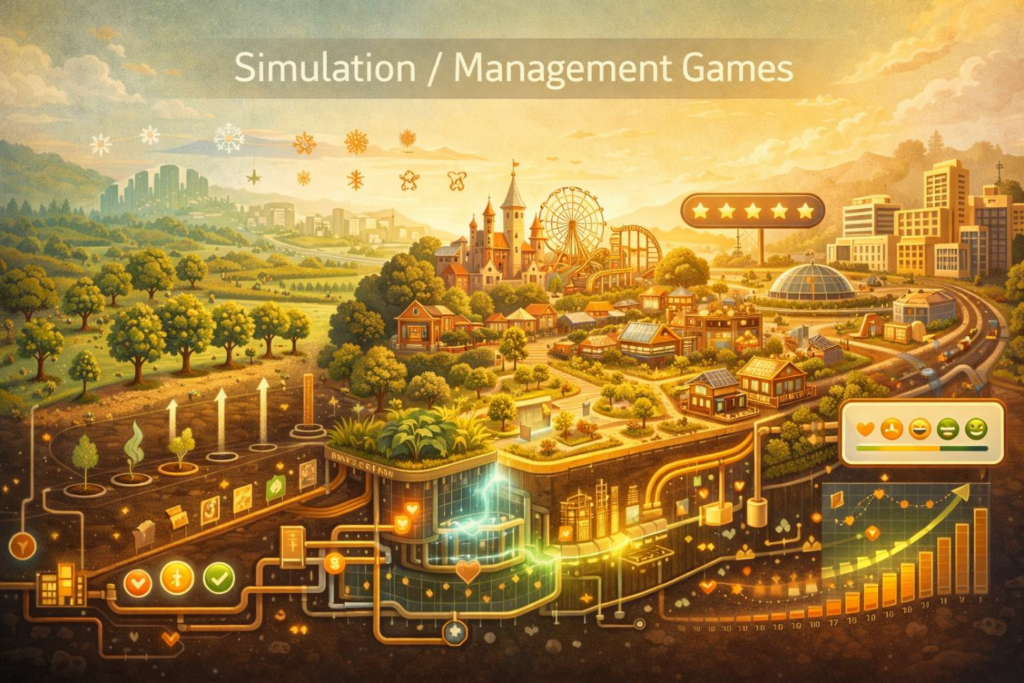
Simulation games draw systems-thinkers and organizers who want to build, customize, and watch living environments grow over time. Players manage complex variables like guest satisfaction, traffic flow, and economic balance.
What Gamification Can Learn
Most consumer software relies entirely on consumption. Simulation design demonstrates that users prefer creation.
- Application: Productivity or CRM tools can abandon rigid templates, allowing users to build and visualize their workflow ecosystems as living gardens or structural architectures. When net worth is visualized as a growing physical structure, financial engagement shifts from passive tracking to active stewardship.
F. Sandbox and Open-Ended Games (Minecraft, Terraria)
Who They Attract and The Core Hook
Sandbox titles attract highly creative explorers who resist rigid instructions. These users define success on their own terms, investing hundreds of hours into self-directed projects.
What Gamification Can Learn
For creative power users, absolute agency is infinitely more engaging than any linear progression system.
- Application: Note-taking environments like Notion and Obsidian succeed precisely because they operate as sandboxes. By providing raw building blocks rather than prescriptive user journeys, developers empower users to construct workflows tailored specifically to their individual cognitive styles.
G. Social and Multiplayer Games (Fortnite, Among Us, Roblox)
Who They Attract and The Core Hook
Multiplayer spaces attract status-seekers, competitive rivals, and cooperative team players. Crucially, platforms like Roblox (pulling in over 70 million daily active users) prove that transforming consumers into creators builds unmatched long-term loyalty.
What Gamification Can Learn
Social mechanics cannot simply be bolted onto an app as an afterthought; they must be foundational.
- Application: Fitness apps should feature training squads and accountability partnerships rather than anonymous public leaderboards. Professional tools should cultivate community contributors by allowing power users to build templates, mentor beginners, and earn genuine status through helping others succeed.
Implications for the Product Design Industry
As the digital marketplace matures, the demand for sophisticated user engagement models is accelerating. Industry analysts note that companies transitioning from primitive "points-and-badges" structures to genre-informed Gamification 2.0 frameworks are seeing significant lifts in user retention, lifetime value, and organic advocacy.
The underlying mandate for modern product architects is clear: know your audience. If your users value structure and linear guidance, lean into puzzle or narrative frameworks. If they value creative freedom and expression, construct a sandbox.
By treating gamification not as a cosmetic overlay, but as a deep psychological alignment with established human play styles, developers can build digital environments where users are no longer just passive consumers—they become invested stakeholders, creators, and community members.
 Sagoh
Sagoh  Nana Wu
  Azzam Bilal Chamdy