
 By Nana
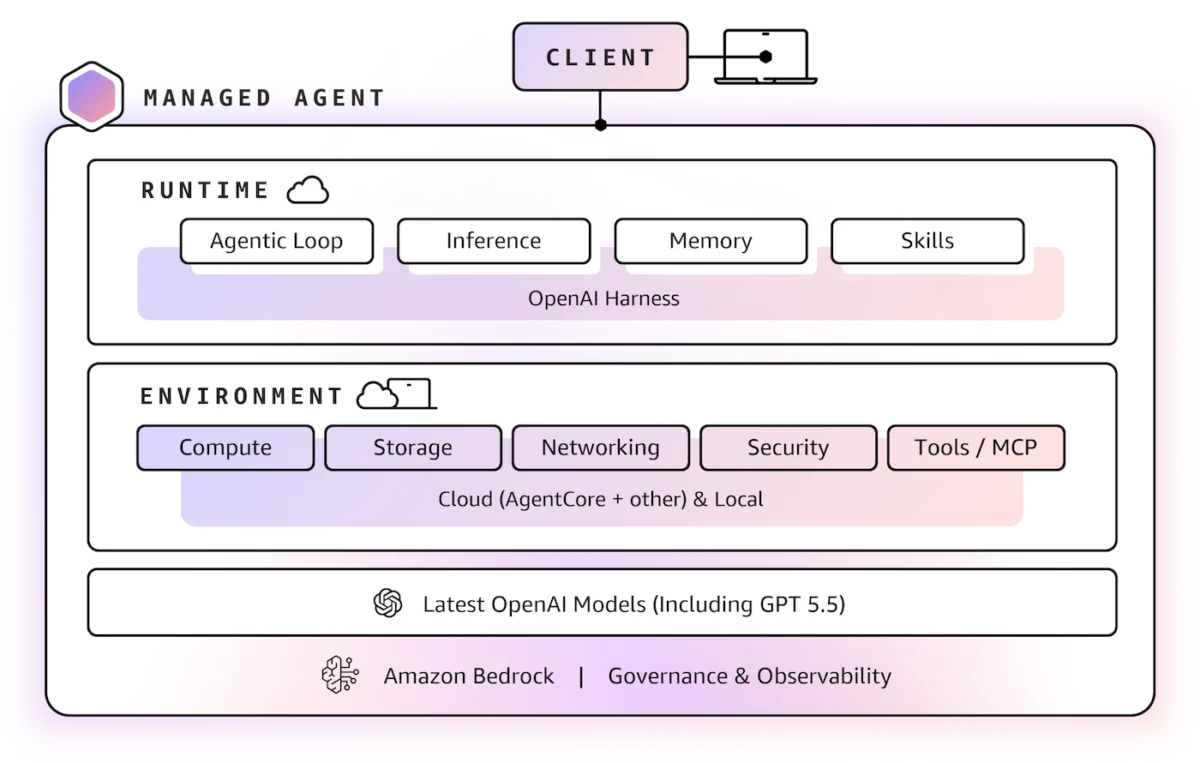
SEATTLE — In a significant development for cloud-based artificial intelligence and enterprise machine learning infrastructure, Amazon Web Services (AWS) has announced the public preview of Amazon Bedrock Managed Agents powered by OpenAI. Revealed last week in a major platform update, this capability introduces a customized version of OpenAI’s Agents API that has been specifically re-engineered to be native to the AWS ecosystem.
The announcement bridges two prominent pillars of the enterprise technology landscape, allowing developers to leverage OpenAI’s powerful agentic architectures while maintaining the rigorous governance, robust security, and deep resource integration expected from AWS. Alongside this release, AWS has outlined critical updates to its product lifecycle, service availability schedules, and upcoming developer ecosystems.
Main Facts
The core announcement centers on the launch of Amazon Bedrock Managed Agents powered by OpenAI. This offering allows organizations to build, deploy, and scale autonomous AI agents optimized for OpenAI models entirely within their AWS environments.
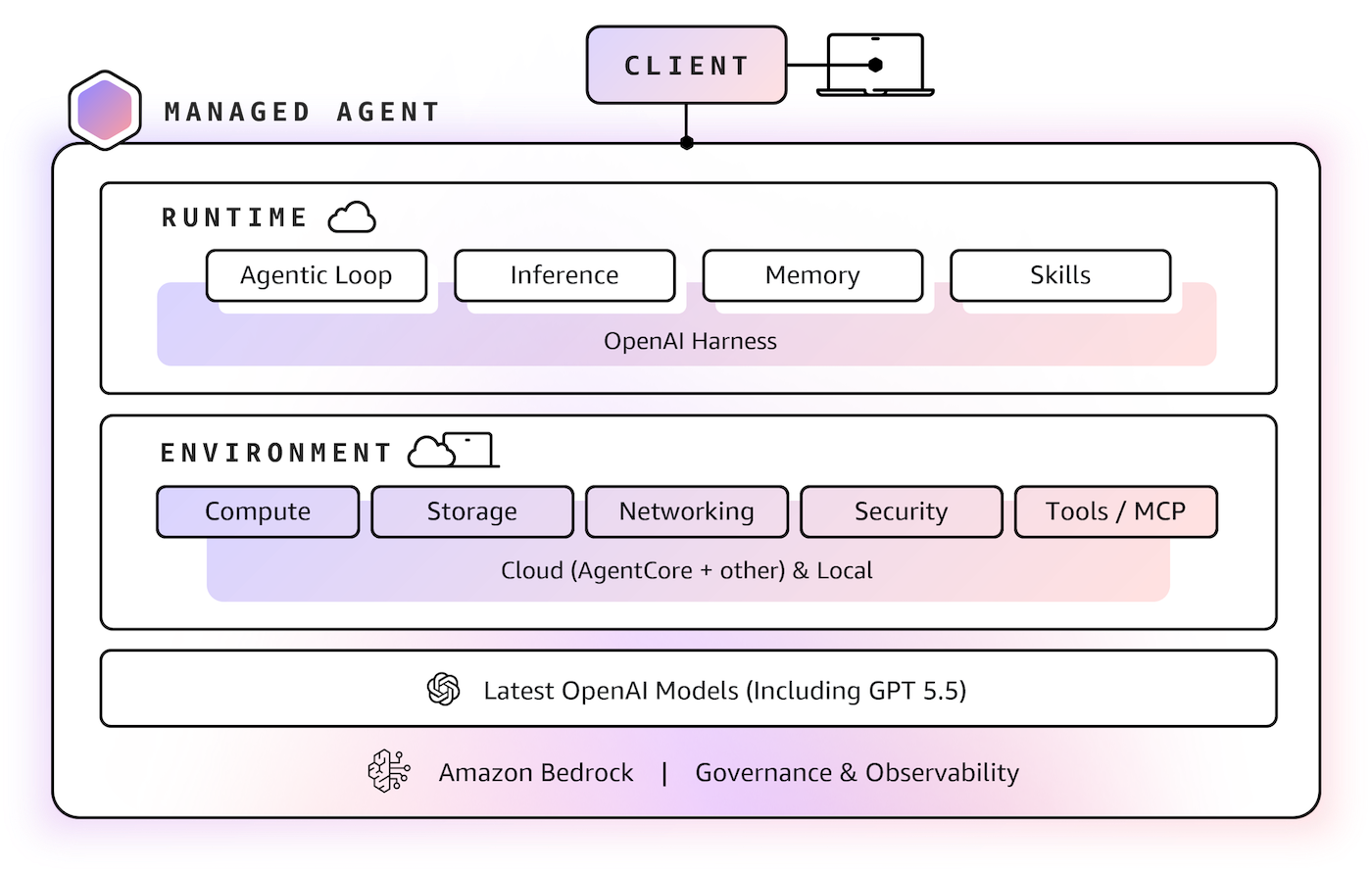
Rather than relying on disjointed third-party bridges, these agents operate natively alongside existing AWS infrastructure. Key architectural highlights include:
- Native AWS Integration: Agents are embedded directly into the security and management frameworks already utilized by enterprises, ensuring seamless compliance and operational continuity.
- Unified Governance and Security: Organizations can apply existing enterprise identities, granular permissions, and compliance guardrails straight to their OpenAI-powered workloads.
- Flexible Execution Environments: Developers are not locked into a single hosting paradigm. They can choose between two primary deployment pathways:
- Self-Hosted Compute: Ideal for development machines, custom containers, or existing compute environments where teams prefer granular infrastructure control.
- Amazon Bedrock AgentCore Runtime: A fully managed runtime service providing managed sessions, scalable execution, and configurable storage natively integrated within the user’s AWS account.
This move expands the strategic flexibility of Amazon Bedrock, which has traditionally focused on offering a wide array of foundational models—including Anthropic’s Claude, Meta’s Llama, Mistral AI, and Amazon’s own Titan models—by formally integrating optimized OpenAI capabilities into its managed agent infrastructure.
Chronology
The introduction of Bedrock Managed Agents and the surrounding updates follow a structured rollout timeline defined by AWS product management and engineering teams:
- September 29, 2026: AWS implemented major product lifecycle updates, formally adjusting service availability targets, designating specific legacy tools to move into maintenance, and establishing end-of-support benchmarks.
- Early October 2026: AWS officially released the public preview of Amazon Bedrock Managed Agents powered by OpenAI, supported by comprehensive user documentation and architectural framework guides.
- October 29, 2026 (Upcoming): The established deadline for services transitioning into the "Maintenance" phase, after which point they will no longer be accessible to new customers.
- Ongoing (Fall 2026): Continuous updates to frontier model availability on Amazon Bedrock, running concurrently with preparations for upcoming developer conferences, including AWS re:Invent and regional AWS Community Days.
Supporting Data
While specific benchmark performance metrics for the OpenAI-powered Bedrock agents vary depending on enterprise workloads, the underlying infrastructure relies on scalable, distributed cloud primitives designed to minimize latency and maximize throughput.
According to technical documentation released alongside the preview, the deployment architecture is split into two primary operational tiers:
[ Developer / Client Request ]
             │
             ▼
┌─────────────────────────────────────────┐
│        Amazon Bedrock Environment       │
│                                         │
│  ┌───────────────────────────────────┐  │
│  │   Bedrock AgentCore Runtime       │  │
│  │   (Managed Sessions & Storage)    │  │
│  └─────────────────┬─────────────────┘  │
│                    │                    │
│                    ▼                    │
│  ┌───────────────────────────────────┐  │
│  │   AWS Native IAM & Governance     │  │
│  └───────────────────────────────────┘  │
└────────────────────┬────────────────────┘
                     │
         ┌───────────┴───────────┐
         ▼                       ▼
[ Self-Hosted Compute ]   [ AWS Cloud Resources ]
Product Lifecycle and Availability Metrics
As part of the routine administrative updates announced on September 29, 2026, AWS detailed its ongoing pruning of legacy infrastructure to make room for modern generative AI and cloud-native services.
- Maintenance Phase: Select older features and auxiliary services are being deprecated, restricting onboarding for new customers starting October 29, 2026.
- Sunset & End-of-Support: Multiple legacy configurations have reached their formal end-of-support milestone, prompting engineering teams to migrate existing workloads to recommended modern equivalents. AWS has emphasized that migration paths and alternative solutions are fully documented within the AWS Product Lifecycle Changes portal.
Official Responses and Expert Perspective
In the weekly developer briefing delivered by AWS Principal Developer Advocate Channy Yun, the emphasis was heavily placed on balancing developer choice with enterprise-grade operational control.

"You can now build agents optimized for OpenAI models that run entirely inside AWS with the identities, permissions, and governance controls you already use," Yun noted in the announcement. By addressing the historical friction between multi-model experimentation and corporate compliance, AWS is signaling a pragmatic approach to enterprise AI adoption.
Enterprise architects have long faced a dilemma: engineering teams often prefer cutting-edge models and specialized agent frameworks from external providers, while Chief Information Security Officers (CISOs) and compliance officers demand strict perimeter defense, localized data governance, and unified Identity and Access Management (IAM). By offering a managed runtime environment—Amazon Bedrock AgentCore Runtime—AWS aims to alleviate these friction points, allowing organizations to experiment with frontier capabilities without sacrificing internal security postures.
Furthermore, industry analysts view the integration as a validation of the multi-model paradigm. Rather than forcing enterprises onto a single proprietary stack, cloud providers are increasingly acting as orchestration layers, bringing diverse foundational models under a unified operational umbrella.
Implications
The launch of Amazon Bedrock Managed Agents powered by OpenAI carries profound implications for software developers, enterprise IT leaders, and the broader cloud computing ecosystem.
1. Accelerated Enterprise AI Deployment
Building autonomous agents that can securely interact with databases, APIs, and business software traditionally required stitching together complex middleware, authentication tokens, and disparate APIs. By moving this logic into a managed, AWS-native service, development velocity is expected to increase significantly. Organizations can prototype agentic workflows using advanced OpenAI models in days rather than months.
2. Heightened Security and Compliance Assurance
For heavily regulated industries such as finance, healthcare, and public sector services, data sovereignty and access control are non-negotiable. Because Bedrock Managed Agents operate within the user’s AWS account boundaries and leverage native IAM policies, audit trails remain unbroken. Security teams can monitor agentic behavior, restrict tool access, and enforce data boundaries using the exact same toolsets applied to traditional cloud databases and microservices.
3. Evolution of Cloud Infrastructure Strategies
The choice between self-hosted compute environments and the managed Bedrock AgentCore Runtime reflects a maturing market. Enterprises no longer want to manage the underlying infrastructure of every experimental AI model. Managed runtimes reduce operational overhead, lower total cost of ownership (TCO), and ensure automatic scaling as agent usage spikes.
4. Community and Developer Engagement
As AWS heads toward its flagship annual conference, AWS re:Invent, alongside various global AWS Community Days and startup events, the developer community is being encouraged to explore these new agentic capabilities via the AWS Builder Center. These forums will serve as testing grounds for early adopters to share reference architectures, discuss optimization strategies, and provide feedback on the Bedrock Managed Agents public preview.
Looking Ahead
As the public preview period progresses, engineering teams are expected to stress-test the limits of multi-model orchestration within AWS. With continuous updates to frontier models and a tightening focus on streamlining legacy cloud services, AWS continues to position itself as the foundational engine for the next generation of intelligent, autonomous enterprise applications. Developers interested in getting started can review the official Amazon Bedrock documentation or access upcoming educational sessions through the AWS Builder network.
 Reynand Wu
 Jia Lissa
 Nana Wu
