
 By Nana
By Global Tech & Design Correspondent
Published: October 24, 2023
Main Facts
For modern product designers operating within agile frameworks, a pervasive sense of time famine has become the defining characteristic of daily work life. The contemporary software development lifecycle—defined by rapid-fire two-week sprints, relentless backlogs, and perpetual feature deployment—leaves little room for deep, reflective UX thinking. As soon as one feature ships, the agile mandate requires teams to observe performance metrics, harvest user feedback, and immediately iterate. The cycle is infinite, leaving many designers feeling less like creative strategists and more like assembly-line workers producing endless streams of user interface (UI) assets.
However, a counter-movement is quietly taking root across high-performing product organizations. Industry veterans and UX leaders, such as product expert Laura Klein, are increasingly championing an unexpected antidote to the agile chaos: design systems.
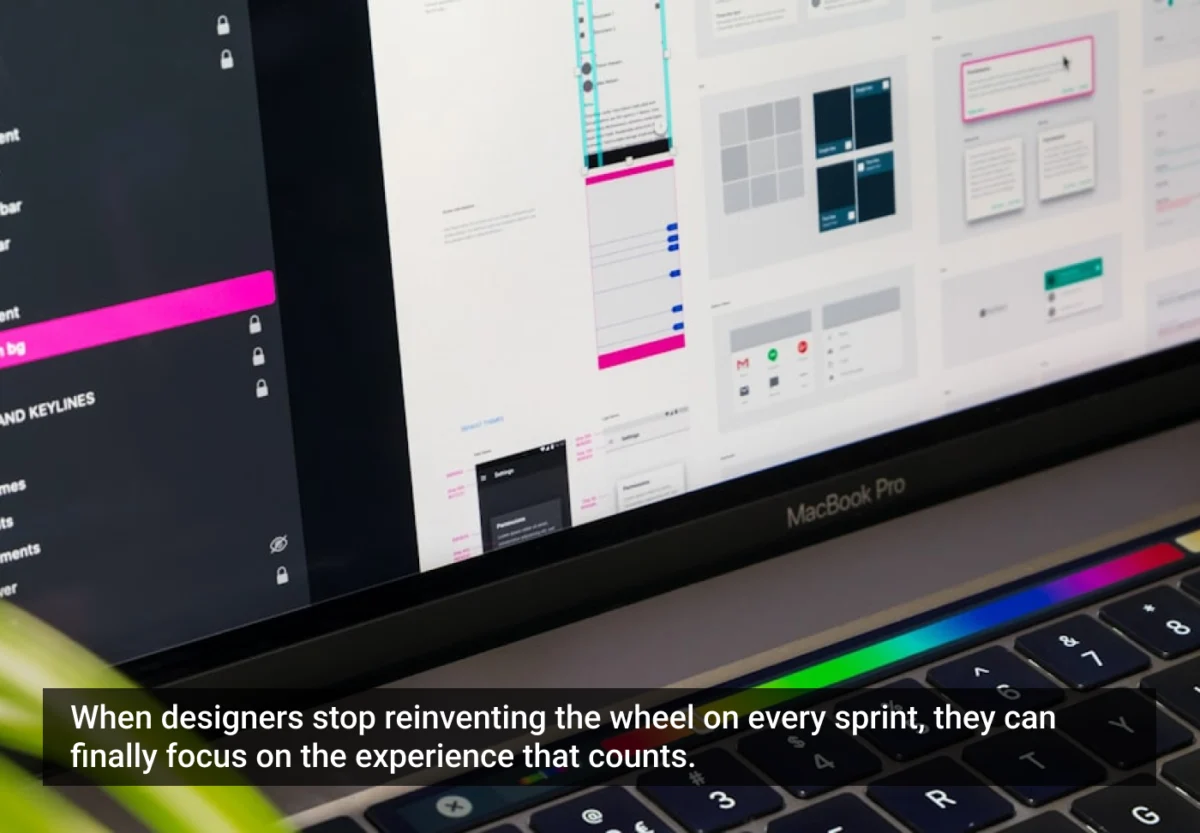
While design systems are often viewed strictly through a technical lens as code libraries or UI kits, their true power lies in workflow transformation. By establishing a single source of truth comprising reusable components, standardized typography, and codified interaction patterns, design systems liberate agile designers from the repetitive drudgery of pixel-pushing. Instead of debating button radius or layout alignments from scratch for every new screen, teams can leverage pre-approved components. This shifts the organizational focus away from how a product looks toward how it functions, enabling agile teams to scale their output without sacrificing quality, consistency, or designer sanity.
Chronology: The Evolution of Agile Design and the Rise of Systems
To understand how product design and agile development reached this friction point, it is necessary to examine the historical evolution of digital product creation over the past two decades.
- The Early 2000s (The Waterfall Era): Design and engineering operated in rigid, sequential silos. Designers spent months crafting comprehensive, highly polished master design documents and pixel-perfect mockups. Once finalized, these documents were "thrown over the wall" to engineering teams for long-term development. While thorough, this method failed to adapt to shifting market demands.
- The Agile Transformation (Late 2000s–2010s): Companies rapidly adopted Scrum, Kanban, and agile methodologies to accelerate time-to-market. Software was broken down into minimum viable products (MVPs) and shipped in rapid iterations. While engineering thrived under this structure, designers struggled. The traditional "design handoff" model broke down because designers could not produce comprehensive UI specifications fast enough to feed hungry engineering backlogs.
- The Rise of Component-Driven UI (Mid-2010s): Pioneers in tech began noticing massive UI degradation as products scaled across multiple platforms. Front-end frameworks (like React and Vue) popularized component-based architecture. Concurrently, forward-thinking design teams began building internal UI libraries to bridge the gap between design mockups and front-end code.
- The Modern Era (Present Day): Design systems have matured from simple UI style guides into enterprise-grade, cross-functional ecosystems. Today, organizations recognize that a mature design system is not just a timesaver for designers, but a strategic infrastructure play that directly aligns with agile velocity.
Supporting Data & Industry Insights
The tension between agile velocity and design depth is heavily documented across modern UX research. Industry surveys consistently highlight structural friction points within product organizations:
- The Redundancy Tax: Research into design workflows indicates that up to 40% of a UI designer’s time on non-systemized agile teams is spent recreating foundational elements—such as form fields, navigation bars, and data tables—that have already been designed dozens of times before.
- Velocity vs. Quality Metrics: According to agile productivity benchmarks, teams utilizing a robust, mature design system report a 34% to 50% reduction in time-to-market for new features compared to teams working without standardized components.
- The Delivery Bottleneck: Over 60% of agile designers report feeling frequent burnout due to the "ticket-to-ticket" lifestyle, where deep qualitative user research is routinely deprioritized in favor of pumping out rapid-fire interface mockups to satisfy upcoming sprint planning sessions.
- Design Debt Accumulation: Organizations that continuously ship incremental updates without a unified design system experience a compound visual and interaction "debt." This debt manifests as degraded user trust, increased customer support tickets regarding interface confusion, and a longer onboarding curve for new users.
Official Responses and Expert Perspectives
Industry leaders and practitioners on the front lines of agile product development have increasingly spoken out about the necessity of integrating design systems to protect creative output and maintain product integrity.
The Shift from Visuals to Experience
Industry veterans emphasize that the primary danger of agile design is the reversion to the outdated handoff model. When designers are forced to act as rapid-fire sketch artists, true collaboration dies.
"Design is not just what it looks like and feels like. Design is how it works."
— A sentiment frequently echoed by design visionaries like Steve Jobs, which forms the operational philosophy behind modern design systems.
By shifting the baseline elements of a product into a shared repository, the nature of the conversation between designers and developers changes entirely. Rather than arguing over aesthetic minutiae during sprint planning, multidisciplinary teams are empowered to focus on complex user flows, edge cases, error states, and systemic accessibility (a11y) standards.
The Lean Documentation Model
Practitioners embedded in agile squads note that design systems allow for a radical slimming down of traditional design deliverables. Instead of generating sprawling, multi-page Figma prototypes for every minor ticket, agile designers increasingly utilize lean documentation:
- Writing concise design logic and acceptance criteria directly into Jira or GitHub tickets.
- Referencing standardized components rather than redlining custom dimensions.
- Assembling rough wireframes using existing system components that are "good enough" for initial user testing or engineering alignment.
This operational efficiency frees up valuable hours for designers to engage in upstream generative research, usability testing, and strategic product thinking—areas that are typically starved of time in high-velocity agile environments.
Implications: The Future of Agile Product Development
The widespread adoption of design systems carries profound implications for the future of digital product creation, touching everything from organizational culture to career paths within the tech sector.
1. Bridging the Chasm Between Design and Engineering
For years, a cultural divide persisted between designers (who often prioritized aesthetic perfection) and developers (who prioritized functional shipping). Design systems serve as a shared vocabulary—a literal and figurative bridge built with code and tokens. When a designer updates a component in the design system, it cascades across engineering repositories, aligning both disciplines under a unified framework and eliminating the adversarial "us versus them" dynamic.
2. Scaling Incremental Innovation Without Chaos
Agile development thrives on small, continuous releases. However, releasing software in tiny increments without a unifying system inevitably leads to visual and functional fragmentation—a patchwork quilt of mismatched buttons, conflicting navigation models, and erratic user experiences. Design systems provide a stabilizing architectural gravity. They ensure that even as different squads push code and updates independently across months or years, the overarching product remains cohesive, intuitive, and trustworthy.
3. Redefining the Role of the Agile Designer
As AI-driven UI generation tools and automated component libraries continue to evolve, the core value of the human product designer is shifting away from execution and toward orchestration. Designers are no longer judged solely by the volume of polished screens they produce per sprint, but by their ability to solve complex human problems, design ethical experiences, and maintain the integrity of the broader product ecosystem.
Conclusion
Ultimately, design systems do not eliminate the fast-paced nature of agile environments; rather, they make agile survivable and productive for designers. By removing the repetitive friction of visual design, these systems allow teams to learn faster than they build—aligning the practice of product design with the core philosophical tenets of agility itself.
 Nana Muazin
 Raul Delapena Setiawan
 Suro Senen
