
 By Nana
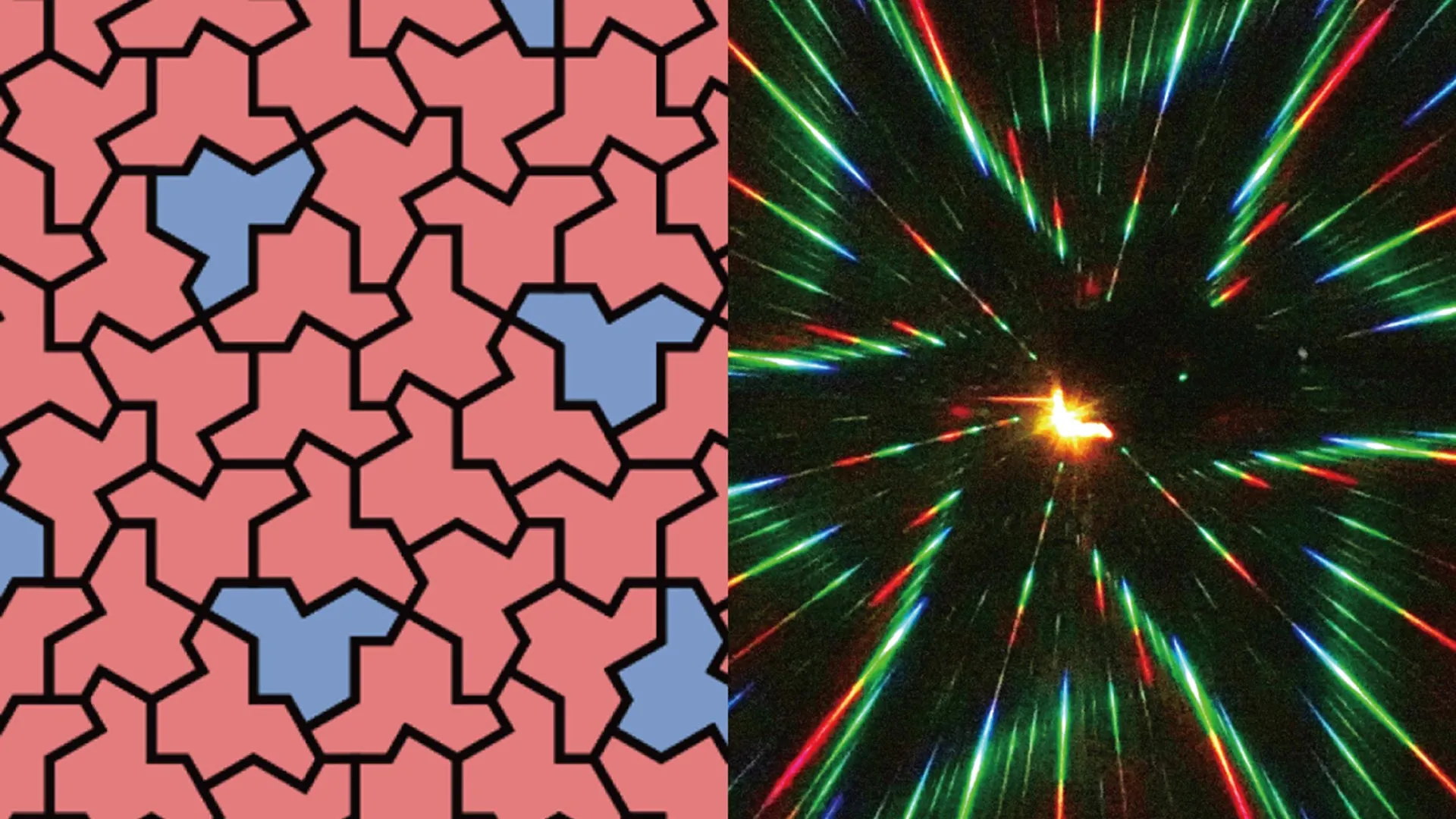
In a remarkable convergence of abstract mathematics and applied physics, a shape that recently captivated the global scientific community for solving a long-standing "monotile" puzzle is now serving as the foundation for a new frontier in optics. Researchers from the Institute of Industrial Science at the University of Tokyo, in collaboration with international partners, have demonstrated that the "Smith hat"—an aperiodic monotile—can manipulate light in ways previously unseen in conventional materials.
The findings, recently published in Nature Communications, suggest that the complex, non-repeating geometry of this tile acts as a powerful tool for controlling light diffraction, polarization, and chirality. This discovery marks a significant leap in our understanding of how geometry dictates the behavior of electromagnetic waves, potentially paving the way for the next generation of nanophotonic devices.
The Einstein Problem: A Mathematical Milestone
To understand the significance of this research, one must first look at the mathematical history of the "Einstein problem." For decades, mathematicians sought a single shape—a "monotile"—that could tile an infinite two-dimensional plane without ever creating a repeating pattern. While periodic tilings, like those found on a checkerboard or a honeycomb, are easily understood through translation and rotation, aperiodic tilings—where the pattern never repeats—are infinitely more complex.
The "Einstein" moniker is a playful linguistic pun on the German ein stein, meaning "one stone." In 2023, the mathematical community erupted in excitement when a team of researchers identified the "Smith hat," a thirteen-sided polygon that successfully satisfies the criteria for an aperiodic monotile. Unlike previous solutions, which required multiple different shapes to tile a plane aperiodically, the Smith hat proved that a single tile could accomplish this feat, ending a search that had spanned half a century.
However, the team led by Yuto Moritake at the University of Tokyo saw beyond the abstract beauty of the shape. They posited that if the geometry could disrupt periodic tiling, it might also disrupt the traditional way light interacts with solid-state surfaces.
Chronology of a Scientific Leap
The transition from a theoretical tiling solution to a physical optical device required a precise, multi-stage experimental process:
- Conceptualization (Mid-2023): Following the mathematical discovery of the Smith hat, the research team began analyzing the structure’s underlying symmetry. They noted that despite its irregular appearance, the hat tile is geometrically derived from a honeycomb lattice—a crucial insight that hinted at its potential for light manipulation.
- Nanoscale Fabrication (Late 2023): Using advanced electron beam lithography, the team translated the mathematical coordinates of the Smith hat into physical structures on silicon nitride films. This required extreme precision to ensure that the aperiodic arrangement remained consistent at the nanoscale.
- Optical Characterization (Early 2024): The researchers directed laser light onto the silicon nitride films. By observing the resulting diffraction patterns, they sought to determine if the aperiodic nature of the "hat" tiling would influence the path of the photons.
- Verification and Peer Review (Mid-2024): After identifying distinctive pinwheel-like diffraction patterns—a signature of chiral symmetry—the team subjected their findings to rigorous testing, leading to the publication of their results in Nature Communications.
The Physics of Chirality and Light
At the heart of the team’s findings is the concept of chirality. In chemistry and physics, a structure is considered chiral if it cannot be superimposed onto its mirror image—much like a human left hand cannot be perfectly placed over a right hand.
In conventional quasicrystals, diffraction patterns typically reflect the underlying symmetry of the material. However, the Smith hat structures exhibited an unusual property: the diffraction patterns themselves were chiral, despite the underlying structure being built from a honeycomb lattice.
"We found that the diffraction patterns themselves become chiral because the structure lacks mirror symmetry," explains senior author Masaya Notomi. "This kind of optical response is fundamentally different from that observed in conventional quasicrystalline materials."
The researchers discovered that the light did not merely pass through the structure; it responded to the "handedness" of the pattern. When the team mirrored the physical structure, the resulting optical behavior reversed in tandem, proving that the light’s interaction was not a random anomaly but a direct consequence of the Smith hat’s geometric arrangement.
Supporting Data: Symmetry-Controlled Response
The experimental data suggests that the Smith hat acts as a sophisticated "geometric filter." By modulating the direction and the polarization of the incoming laser light, the researchers could tune the intensity and the orientation of the resulting diffraction.
The Role of Polarization
The study demonstrated that the Smith hat structure is highly sensitive to the polarization of incident light. When the orientation of the light’s electric field was rotated, the diffraction patterns shifted, revealing that the aperiodic tiling acts as an anisotropic medium. This means the structure possesses different optical properties depending on the direction and orientation of the incoming wave.
Symmetry Breaking
Conventional diffraction theory often relies on Bragg’s Law, which assumes a repeating lattice structure. The Smith hat, by breaking the rules of periodicity while maintaining a highly ordered, aperiodic framework, forces light to undergo a more complex scattering process. The "pinwheel" diffraction observed is a visual manifestation of "broken symmetry," providing researchers with a new way to map how geometry influences the behavior of photons.
Official Perspectives
The implications of this study are being discussed widely within the physics community. Dr. Yuto Moritake, lead author of the study, emphasized the novelty of the approach during a press briefing: "What is especially fascinating about the hat tile is that, although the resulting pattern appears irregular at first glance, it is actually constructed from the honeycomb lattice. We wanted to see whether this unique shape could also produce any unexpected physical phenomena."
Senior author Masaya Notomi added that this research represents a fundamental shift in how we approach the design of optical metamaterials. "These results open a new direction of research on the fusion of quasiperiodic order and chirality," Notomi remarked. "Monotile patterns provide a platform for exploring optical phenomena that emerge from the interplay of symmetry, chirality, and aperiodicity."
Future Implications: From Mathematics to Metamaterials
While the research remains in the fundamental stage, the practical applications are significant. By mastering the ability to manipulate light through aperiodic geometry, scientists are laying the groundwork for several emerging technologies:
1. Advanced Polarization Control
Current optical devices often rely on bulkier components to filter or rotate light polarization. Aperiodic surfaces modeled on the Smith hat could lead to ultra-thin, flat optical elements capable of performing these tasks with higher efficiency and precision.
2. Next-Generation Optical Computing
The ability to encode information into the polarization and diffraction patterns of light is a cornerstone of photonic computing. The Smith hat’s unique geometric properties could be utilized to create new logic gates or memory storage devices that operate at the speed of light with minimal energy dissipation.
3. Sensing and Security
Because the diffraction patterns generated by these structures are highly dependent on the geometry of the "hats," they could serve as the basis for unique security features or high-sensitivity sensors. Any slight variation in the pattern would be immediately detectable through the resulting change in the diffraction pinwheel, making them ideal for tamper-evident technology.
4. A New Class of Metamaterials
Most metamaterials—engineered structures with properties not found in nature—rely on periodic repeats. The Smith hat introduces the field to a new class of "aperiodic metamaterials." This opens up an entirely new design space where researchers can tune the physical properties of a material by altering the tiling arrangement rather than the chemical composition of the substance itself.
Conclusion: A Geometry-First Future
The journey of the Smith hat from an obscure mathematical answer to a catalyst for optical innovation highlights the inherent unity of the sciences. It serves as a reminder that the most abstract mathematical discoveries often hold the keys to practical, transformative technologies.
As researchers continue to explore the Smith hat’s interaction with light, the boundaries between geometry, topology, and photonics will likely continue to blur. The ability to create "symmetry-controlled" optical behaviors suggests that we are only just beginning to scratch the surface of what is possible when we stop viewing geometry as a static background and start treating it as a dynamic, tunable component of physical systems.
The Smith hat, once sought for its ability to tile a floor, may soon be found covering the lenses, sensors, and processors of the future—a testament to the power of a single, well-conceived shape.
 Reynand Wu
 Ammar Sabilarrohman
 rifanmuazin
