
 By Nana Muazin
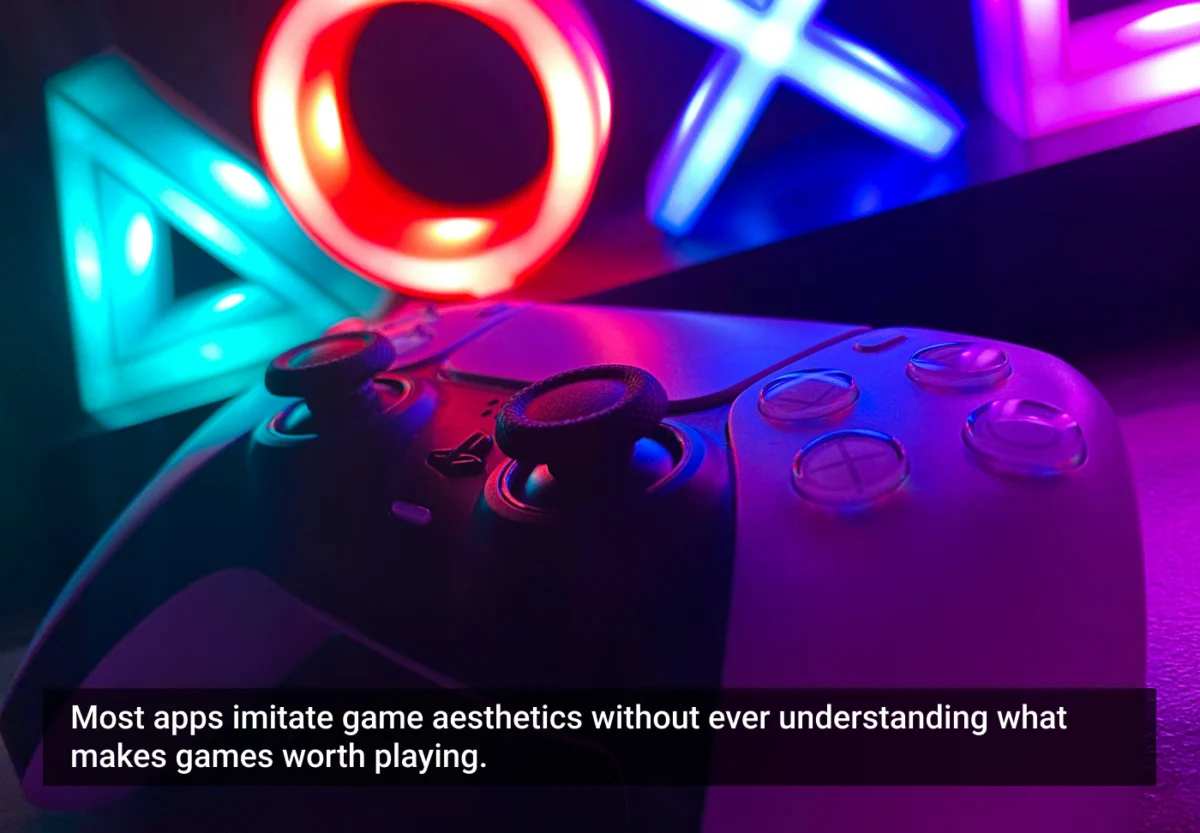
For decades, the digital landscape has been haunted by a superficial design philosophy. Open almost any productivity app, fitness tracker, or educational platform today, and you will likely be greeted by the familiar, tired tropes of modern product design: a barrage of meaningless digital badges, an arbitrary point score, a generic progress bar, and a leaderboard populated by anonymous strangers.
According to industry veterans who have spent decades analyzing player behavior, this is not true gamification. It is psychological window dressing.
Drawing from four decades of watching millions of people voluntarily immerse themselves in complex virtual worlds, game designers are now calling for a sweeping industry overhaul known as Gamification 2.0. The core thesis is stark: software developers have spent years borrowing the most superficial elements of video games—like scoring systems and streaks—while entirely ignoring the foundational principles that actually make games engaging, addictive, and deeply satisfying.
To understand why traditional gamification fails and how Gamification 2.0 aims to revolutionize digital experiences, we must examine the history of digital engagement, the stark contrast between fake and real game mechanics, and the profound implications this shift holds for the future of software development.
The Evolution of Engagement: A Chronological Retrospective
To grasp the necessity of Gamification 2.0, it is vital to trace how the concept of digital motivation evolved from immersive entertainment into a corporate checklist.
Phase 1: The Golden Age of Intrinsic Design (1980s–2000s)
Long before the term "gamification" entered the tech lexicon, classic game developers understood player psychology intuitively. From Super Mario Bros. to sprawling role-playing games, titles were built around mastery, spatial discovery, and authentic challenge. Players spent thousands of hours not because they were promised a digital badge, but because the design respected their intelligence, offered meaningful choices, and rewarded genuine skill acquisition.
Phase 2: The "Points, Badges, and Leaderboards" (PBL) Boom (2010–2018)
As smartphones saturated the market, businesses across finance, education, and health care rushed to capture user attention. Lacking deep design expertise, the tech industry latched onto a reductionist formula popularized by early consultants: take boring tasks, slap points and badges on them, and watch user engagement skyrocket. This era gave birth to the ubiquitous "streak tracker" and the superficial level-up notification, treating human psychology like a simple feedback loop of Pavlovian rewards.
Phase 3: User Fatigue and Disillusionment (2019–2023)
Consumers quickly developed tolerance—and outright cynicism—toward fake mechanics. A notification telling a user they are "Level 4" for reading an email or maintaining a three-day login streak started eliciting eye rolls rather than excitement. Users realized that these systems offered no real-world utility or skill development; they were simply manipulative friction designed to boost short-term retention metrics for corporate dashboards.
Phase 4: The Birth of Gamification 2.0 (Present Day)
Today, forward-thinking product designers are returning to the drawing board. By studying what makes timeless video games truly compelling, the industry is transitioning away from metric-driven decoration and moving toward behavioral architecture that fosters genuine human agency, flow, and mastery.
Core Principles of Real Game Engagement: Breaking Down Gamification 2.0
To build effective systems, developers must abandon corporate metrics and embrace the foundational pillars that drive actual game design. Industry experts break down these core principles through lessons learned from legendary titles.
1. Mastery and Progression (Real vs. Fake)
In rhythm-based titles like Guitar Hero, players are never awarded points simply for pressing buttons. Instead, the game provides a visible, undeniable metric of personal competence. In week one, a novice player struggles through Easy mode. By week four, they are successfully executing complex solos on Hard. That is not an arbitrary level-up; that is measurable, tangible skill development.
In contrast, typical productivity apps rely on hollow milestones: "You completed 5 tasks! You’re now Level 3!"
The user is left asking a critical question: What skill did I develop? What can I do now that I couldn’t do before?
If progression is nothing more than a number incrementing upward, it is merely a progress bar, not growth. Authentic progression means users can tangibly execute tasks they were previously incapable of handling. While language apps like Duolingo excel when a user suddenly realizes they can read a foreign restaurant menu, they stumble when celebrating a "7-day streak" for a user who still cannot hold a basic conversation.
2. Agency and Meaningful Choice
Strategy games like Civilization treat every decision with profound weight. Players agonize over whether to research sailing or mathematics first, or whether to build a military unit or a food storage granary, because these choices dictate the trajectory of their entire civilization.
Most gamified enterprise apps offer the illusion of agency: "Pick your avatar color!" or "Choose your notification sound!" These are not choices with consequences; they are decorative options. Real agency means that a user’s decisions create genuinely divergent outcomes. When Spotify offers a choice between "Discover Weekly" and "Release Radar," it provides real agency—distinct selections lead to fundamentally different auditory experiences.
3. Challenge and Flow
Renowned psychologist Mihaly Csikszentmihalyi defined "flow" as a state of complete mental absorption in an optimally challenging activity. If an experience is too easy, users experience debilitating boredom. If it is too difficult, they abandon it in frustration.
Action RPGs like Dark Souls mastered this balance with clinical precision. The game is notoriously difficult, but it is never unfair. When a player dies—an inevitability they face repeatedly—they recognize the failure as their own. They learn, adapt, and refine their strategy. The difficulty scales organically as player competence improves.
Conversely, traditional gamification rarely fosters flow because it fails to introduce genuine challenge. Instead, it introduces administrative friction, forcing users to click through multiple redundant screens—an outcome that represents poor user experience disguised under a progress bar.
4. Curiosity and Discovery
Open-world masterpieces like The Legend of Zelda: Breath of the Wild drop players into a vast, uncharted environment with a simple directive: go explore. Almost every visible horizon is reachable, and nearly every creative physical experiment is supported by the game’s underlying physics engine. The act of exploration itself is the primary reward.
Compare this philosophy to standard software onboarding, which often subjects users to a ten-minute tutorial front-loading every feature—leading users to rapidly click "Skip" just to get started. By explaining everything upfront, designers eliminate curiosity entirely. Gamification 2.0 advocates for gradual depth, allowing users to stumble upon advanced features naturally and rewarding authentic exploration.
5. Identity and Self-Expression
In narrative-driven epics like Mass Effect, players do not merely control a pre-packaged protagonist; they actively shape who Commander Shepard becomes through moral dilemmas, relationship choices, and ideological stances. Players develop deep emotional ownership over their specific iteration of the character.
Generic gamification counters this by shouting, "You’re Level 12!"—a status shared identically by thousands of other users. That is not identity; it is a participation metric. Real identity emerges when software enables users to reflect their own internal processing and creativity. Knowledge management platforms like Notion and Obsidian succeed because they act as blank canvases where users construct personalized knowledge graphs, taking immense pride in systems that mirror their unique cognitive styles.
6. Social Dynamics and Interdependence
Guilds in massively multiplayer online games like World of Warcraft retained player dedication for years through a powerful sociological force: interdependence. A 40-person raid required specialized tanks, healers, and damage dealers working in synchronized harmony. Participants logged in not for automated daily login bribes, but because dozens of other human beings depended on their presence and reliability.
Most modern app-based "social features," by contrast, are nothing more than isolated leaderboards. Users compete against anonymous strangers for meaningless stakes. True social design fosters genuine human accountability, whether through mutual workout partners who check in during recovery, or collaborative study groups solving shared intellectual hurdles.
Industry Perspectives and Official Responses
As the software development community grapples with the limitations of legacy design models, industry leaders are increasingly speaking out about the urgent need for structural reform.
Dr. Aris Thorne, a cognitive UX researcher specializing in digital habit formation, notes that user tolerance has reached a breaking point.
"For over a decade, product teams treated human attention like a slot machine," Dr. Thorne explains. "We pumped software full of variable-ratio rewards—loot boxes, point multipliers, and flashing badges—hoping to artificially inflate retention charts. But consumers have matured. They can instantly smell hollow engagement tactics. Gamification 2.0 is an acknowledgment that long-term retention cannot be farmed through cheap psychological tricks; it must be earned through substantive utility and deep engagement architecture."
Product executives at leading enterprise and consumer tech firms are beginning to restructure their engineering roadmaps accordingly. Internal memos leaked from several major software houses indicate a growing pivot away from "engagement-at-all-costs" metrics toward qualitative indicators of user mastery and task completion efficiency.
"We used to measure success by how many times a user opened our app per day," shares Elena Rostova, VP of Product at a major EdTech enterprise. "Now, we measure success by how quickly the user can close our app because they’ve successfully mastered a concept and applied it in the real world. That is the fundamental paradigm shift of Gamification 2.0."
Implications for the Future of Software Development
The transition toward Gamification 2.0 carries profound implications for multiple sectors, ranging from corporate training to mental health applications and digital education.
- Higher Development Standards: Designing for genuine agency, flow, and mastery requires significantly more sophisticated multidisciplinary collaboration. Product teams can no longer rely on simple UI overlays; they must integrate behavioral psychologists, expert system designers, and qualitative researchers early in the development lifecycle.
- Erosion of Dark Patterns: As regulatory bodies and consumer protection advocates scrutinize manipulative software practices, the reliance on addictive, superficial loops (such as artificial streak anxiety) is likely to face mounting legal and cultural pushback. Designing transparent systems centered on genuine skill development offers a sustainable alternative.
- Redefining Key Performance Indicators (KPIs): Executive boards will need to redefine how they evaluate software health. Moving away from vanity metrics—such as daily active users (DAUs) manipulated by push notification spam—toward depth of engagement and actual competency acquisition will become the new gold standard for corporate valuation.
Conclusion
The core message for the next generation of designers is unequivocal: points, badges, and progress bars are not optional shortcuts that magically inject fun into an uninspired product. They are the superficial byproducts of deep, well-structured systems—not the source of the magic itself.
People do not commit thousands of hours to games because they are rewarded with digital stickers; they commit because those games honor their intelligence, offer meaningful choices, respect their autonomy, and challenge them to grow.
As the tech industry steps into the era of Gamification 2.0, the guiding question for every product manager and designer is clear: Are you willing to design your software like an actual, immersive game—or are you simply going to keep pasting badges on a broken system?
Up next in the "Gamification" series: Gamification 2.0. Beyond Points and Badges: Designing for Players, Not Metrics. Chapter 3: The Framework.
Featured image courtesy of Cash Macanaya.
 Raul Delapena Setiawan
 Suro Senen
