
 By Nila Kartika Wati
Introduction: The Myth of the Call Center
There is a room in California that, for years, everyone simply called "the call center."
When the COVID-19 pandemic struck, California’s unemployment insurance system buckled instantly under a volume of claims it was never architected to handle. Citizens were losing their livelihoods, their housing, and their basic stability. Desperate for answers, the governor’s office deployed Marina Nitze and her colleagues at Layer Aleph, a specialized crisis engineering and technology consultancy, to find out where the system was failing and how to fix it.
At every hierarchical tier of the organization—from frontline processing workers to mid-level managers and executive leadership—the response to every anxious inquiry was identical: "Don’t worry. We have the call center. People who need help can call."
Trusting but wanting to verify, Nitze and her team decided to visit the facility.
They walked into a vast room filled with rows of empty cubicles. In a far corner sat a single man. He was friendly, intelligent, and deeply bewildered as to why anyone was asking him about a call center. He did not run a call center. He managed a small team of unemployment claims specialists who happened to have desk phones, but whose primary, daily function was processing individual paper claims.
What the entire executive apparatus referred to as "the call center" was, in practice, a single public phone number that randomly routed inbound calls to employee desks. When the pandemic forced those employees to work from home, those calls were routed directly to empty desks in an abandoned office.
There was no call center. There never had been a call center. Yet no one—not the workers, not the managers, nor the executives reciting the phrase like a comforting talisman—had ever questioned the narrative.
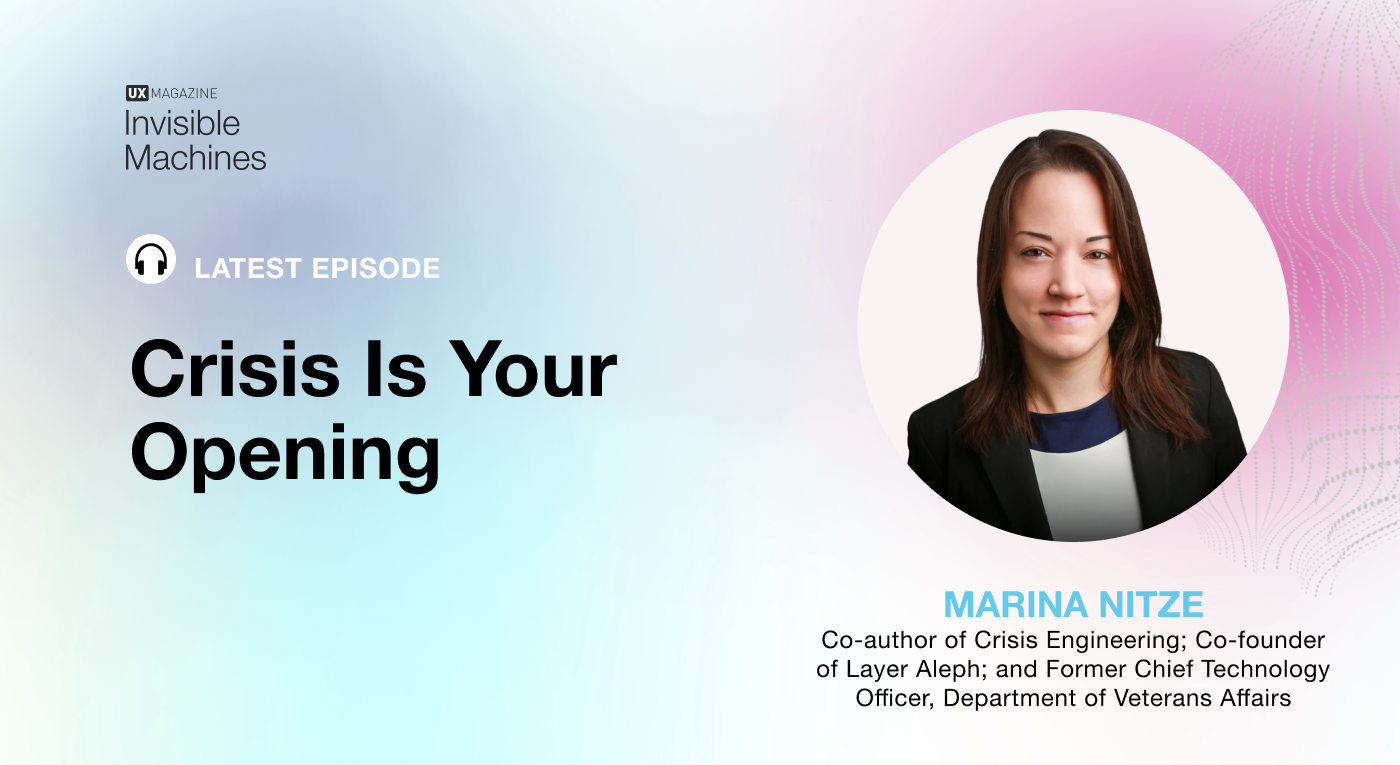
According to Marina Nitze, former Chief Technology Officer of the Department of Veterans Affairs and co-author of Crisis Engineering and Hack Your Bureaucracy, this is what institutional sensemaking looks like when it breaks down. It is also, invariably, what you discover whenever you follow any bureaucratic process from beginning to end.
Main Facts: The Psychology of Sensemaking and Organizational Blind Spots
To understand how a massive government agency can hallucinate the existence of a call center, one must look to organizational psychology. The concept of "sensemaking," introduced by renowned organizational psychologist Karl Weick, describes the continuous, automatic process by which human brains construct narratives to explain how the world works.
These mental models are rarely neutral summaries of objective evidence. Instead, they are constructed from convenient, digestible subsets of facts. Once assembled, they become remarkably resistant to revision.
This phenomenon is not isolated to corporate boardrooms or government agencies; it is embedded in human cognition. Nitze points to psychological research surrounding jury deliberations to illustrate this dynamic. The foundational assumption of the American legal system is that jurors enter a deliberation room with open minds, meticulously weigh the evidence, and arrive at a verdict through pure reason. In reality, empirical jury research demonstrates that jurors typically enter the room with a pre-existing narrative already firmly in place, and subsequently assemble and interpret the evidence to fit that personal story.
When applied to institutions, this explains why the California unemployment executives who insisted "we have the call center" were neither lying nor criminally negligent. They were operating within a coherent, internally consistent narrative born from years of institutional experience that had never been rigorously stress-tested. The story made sense from their vantage point. It mapped neatly onto everything they could see from the executive suite. The catastrophic friction of a global pandemic was required to reveal that their mental map bore no resemblance to the actual territory.
Chronology & Case Studies: Following the Process from End to End
Nitze and her colleagues have spent years developing a framework to exploit these precise moments of systemic failure. Their methodology relies on a radical, yet remarkably simple, intervention: following a process from its literal beginning to its absolute end—an exercise that, in most large organizations, is explicitly nobody’s job.
The Foster Care Licensing Odyssey
During her public service consulting work, Nitze tackled the Byzantine six-month licensing timeline for foster grandparents. For half a year, a grandmother taking in her own grandchild would house the child completely unlicensed, denied the crucial financial stipends and support systems that formal certification provided.
Tracing the workflow from start to finish, Nitze observed a caseworker fill out a carbon-copy paper form to request a grandmother’s driving record from the Department of Motor Vehicles (DMV). The caseworker sighed heavily, lamenting the archaic, 19th-century operations of the DMV and cursing the form as the bane of her existence.
Acting outside traditional jurisdictional boundaries, Nitze walked over to the DMV to investigate.
The DMV clerk was equally baffled by the friction. Explaining her side of the process, the clerk noted: "It’s no problem. I just open my email, click on this folder, and send the records back within about an hour. Those carbon-copy forms are baffling. I assumed it was just some bizarre child welfare policy."
Neither woman was incompetent. Each had constructed a perfectly rational narrative based on the local evidence available to them, and each narrative cast blame for the dysfunction onto the other agency. The dysfunction existed entirely in the invisible gap between them. By simply introducing the two parties, Nitze instantly shaved 30 days off the licensing timeline. The bureaucratic step was eventually eliminated entirely when subsequent analysis revealed that a grandmother’s historical parking tickets had zero bearing on her ability to safely care for a child.
Supporting Data & The Framework of "Crisis Engineering"
Out of these harrowing operational audits, Nitze formalized a discipline outlined in her work: Crisis Engineering. Rather than debating the emotional weight of what constitutes an emergency, Crisis Engineering focuses strictly on operational utility, defining a "useful crisis" through five distinct indicators:
- A Fundamental Surprise: An unexpected event that completely blindsides the organization.
- Disruption in Core Function: Critical systems fail—websites crash, claims cannot be processed, or supply chains halt.
- A Rigid Timeline: External, immovable deadlines dictate the pace (e.g., a massive live event or a hard regulatory cutoff).
- High Visibility: Intense public scrutiny, media attention, or executive fixation.
- A Failure of Sensemaking: The reality of what is happening flatly contradicts the organization’s foundational beliefs about how it operates.
This fifth indicator serves as the engine of institutional transformation. Human beings—and by extension, the organizations they comprise—exhibit a visceral aversion to cognitive dissonance. They will expend immense energy to resolve it as rapidly as possible.
If an interventionist can step into that narrow temporal window—the crucial hours or days when an organization’s mental model has shattered and a new one is actively being constructed—and offer a coherent narrative aligned with absolute reality, decades of stagnant bureaucracy can be undone in a single afternoon. As economist Milton Friedman famously observed, only a crisis produces real change; when a crisis occurs, the actions taken depend entirely on the ideas that are lying around. Nitze’s core directive for organizations is simple: What ideas, prototypes, and truths do you have lying around before the emergency hits?
Organizations that fail to leverage these windows typically fall into a paralyzing loop of avoidance. They study, commission reports, convene special committees, and produce endless status updates. While this performative bureaucracy is rewarded within corporate culture because it mimics seriousness, it merely consumes time until the window of opportunity slams shut.
The alternative, Nitze argues, is executing a novel action: formulating a working theory, testing it rapidly, and discovering precisely where the institutional map is wrong. In a technological outage, teams shouldn’t spend six days staring at static network diagrams. Someone must hypothesize ("I think it’s a DNS issue") and immediately test a fix. If right, the problem is solved; if wrong, the team has instantly acquired an empirical truth about their system’s actual behavior.
Official Responses & The Looming AI Threat
The urgency of Nitze’s framework has escalated dramatically with the rapid deployment of artificial intelligence. Co-hosts Josh Tyson and Robb Wilson of the Invisible Machines podcast have increasingly sounded the alarm on a brewing systemic clash: consumer adoption of AI has vastly outpaced corporate adoption.
Today, everyday individuals—patients, veterans, consumers, and citizens armed with technical curiosity—possess autonomous AI agentic tools capable of probing, testing, and stress-testing enterprise systems at an unprecedented consumer scale.
The outbound AI-driven call center attack is no longer a theoretical science-fiction scenario; it is a baseline reality. Automated agents can effortlessly navigate complex Interactive Voice Response (IVR) phone trees, hunt down human operators, and extract concessions. Multiply this capability across an entire consumer base, and an organization’s comforting belief in its customer service infrastructure becomes as fictional as California’s phantom call center.
During the pandemic, Nitze’s team witnessed a primitive preview of this vulnerability. A dedicated TTY (text telephone) line designed for deaf and hard-of-hearing unemployment claimants—which was actually staffed and highly responsive—was discovered on Reddit forums. Claim volume surged instantly from forty calls a day to a volume that completely crashed the infrastructure.
Advanced AI systems will discover these systemic gaps at orders-of-magnitude faster speeds, routing through them to expose the fatal mismatch between corporate maps and operational territories.
Implications: Preparing for the Inevitable Window
To survive the incoming wave of AI-driven disruptions, organizations must transition from passive defense to active crisis readiness. According to Nitze, preparation requires concrete, tactical infrastructure built well in advance of an emergency:
- Dedicated Crisis Infrastructure: Establish a pre-configured crisis engineering command center, maintain status communication pages entirely separate from primary corporate networks, and establish redundant communication channels that remain functional when core systems fail.
- Pre-Designated Leadership: Clearly define who leads crisis engineering operations before an incident occurs.
- Simulated Stress Tests: Treat "known spicy days"—product launches, high-traffic deadlines, and heavy regulatory cycles—as live-fire drills to practice utilizing crisis infrastructure.
- Prepared Interventions: Keep pre-vetted operational pivots ready in your back pocket. The frantic window of a crisis lasts only hours; there is no time to draft committee proposals when systems are collapsing.
Reflecting on the broader implications of AI adoption, Robb Wilson notes a recurring hurdle: companies eagerly rush to deploy surface-level automation while refusing to invest in foundational knowledge management—the underlying data layer that gives AI agents true institutional context.
Organizations that automate broken workflows without first walking their processes end-to-end—feeling the friction with their own feet and keyboards, much like Nitze following the foster care paper trail—are merely encoding flawed maps into digital code. They are building hyper-efficient mechanisms to generate paperwork nobody needs.
Ultimately, Crisis Engineering is not merely a tech-sector playbook; it is a vital discipline for uncovering implicit knowledge that lives in the silent gaps between institutional fantasy and operational reality. The next systemic crisis is an absolute certainty. The operational window will open, shatter old narratives, and demand a new reality.
The defining question Marina Nitze poses to modern leadership is direct: When that window opens for your organization, what story will you have ready, and will it be close enough to the truth to survive?
 Nana Muazin
 Raul Delapena Setiawan
 Suro Senen
