
 By Muslim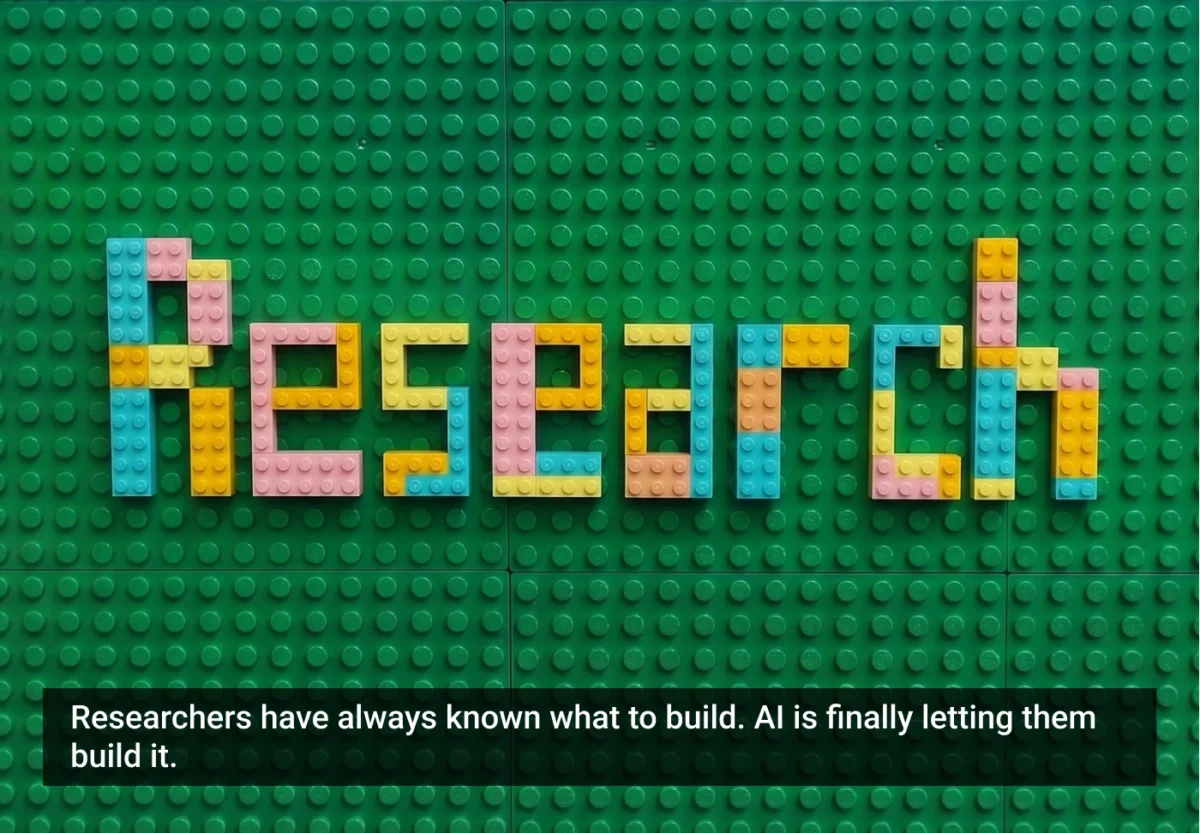
GLOBAL — From freeze-dried backpacking food and anthropological personal finance applications to portable photo booths, community refugee dinners, and AI-teaching tools for children, a quiet revolution is taking place across the innovation landscape. These products and services are not being minted solely by traditional software engineers, venture-backed startup founders, or corporate product managers. Instead, they are being conceptualized, built, and shipped by researchers.
For decades, user experience (UX) researchers, consumer insights specialists, and academic analysts occupied a distinct operational tier: they were one step removed from direct delivery. Their mandate was to study human behavior, generate insights, unearth friction points, and hand those recommendations over to product teams to execute.
Today, that paradigm is collapsing. Driven by the democratization of advanced artificial intelligence tools, shifting macroeconomic conditions, and mounting employer expectations, a growing cohort of professionals are adopting a hyphenated identity: the researcher-maker.
Main Facts: The Convergence of Research and Creation
The traditional boundaries separating research from execution are dissolving.
- The Democratization of Building: Generative AI tools—ranging from vibe-coding environments to automated operations platforms—have drastically lowered the technical barrier to entry. Researchers can now prototype software, draft functional code bases, and establish operational workflows without relying on engineering teams.
- From "Could" to "Must": What began as an experimental exploration of AI’s potential ("we could build this") has hardened into corporate mandates ("we must build this"). Organizations increasingly expect product teams, including researchers, to deliver functional prototypes and production-ready outputs.
- A Shift in Theory of Change: Traditionally, researchers created impact through influence—transmitting knowledge so others could solve problems. The modern researcher-maker owns the complete solution, accepting direct accountability for business outcomes, cash flow, and market viability.
- The Values-Driven Founder: Unlike the stereotypical "move fast and break things" tech-bro ethos, researchers who launch businesses are typically motivated by empathy, community impact, and creative expression rather than aggressive blitzscaling or rapid venture capital exits.
Chronology: From Corporate Observers to Independent Founders
The evolution of the researcher-maker did not happen overnight; it is the result of a multi-year shift accelerated by economic pressure and technological leaps.
Phase 1: The Quiet Precursors
Long before generative AI became mainstream, individual researchers quietly built tools, communities, and side projects out of personal curiosity. However, these efforts were largely siloed, unacknowledged by official job descriptions, and viewed as hobbies rather than professional trajectories.
Phase 2: The Horizon of Potential (2023–2024)
When discussions around the future of UX research took center stage, evolutionary paths seemed wide open. AI tools introduced a sense of boundless potential. Researchers began experimenting with lightweight prototyping, recognizing that technology could bridge the gap between their insights and tangible market solutions.
Phase 3: The Macroeconomic Collapse and the Push to Pivot
As the corporate job market contracted and traditional employment security wavered, the safety net supporting standard career paths disintegrated. Innovators like Neha, working in corporate innovation labs, experienced a fundamental realization: “Research should be in the C-suite. Why is a researcher not a CEO? Well, I’m a researcher. Why am I not CEO?” Prompted by necessity, these professionals began founding their own ventures, leveraging anthropological frameworks to build values-driven companies like the personal finance app Incluya.
Phase 4: Mainstream Integration and the Era of the Hyphen
Today, the transition is moving from forced adaptation to professional identity evolution. Practitioners are actively claiming hyphenated titles—researcher-founder, researcher-developer, and researcher-artist. They are learning to reconcile analytical rigor with the brutal realities of commercial shipping, sales discovery, and time-boxed decision-making.
Supporting Data and Case Studies: The Lived Experience
To understand the realities of this transition, one must examine the operational hurdles faced by practitioners who have successfully crossed the divide. Their journeys reveal that technical tools are rarely the primary bottleneck; rather, identity, financial runway, and professional isolation pose the greatest challenges.
Neha’s Story: Balancing Rigor with Momentum
When Neha founded Incluya, her deep-seated researcher instincts initially slowed product development down as she weighed every conceivable angle and user edge case. To survive the fast-paced startup ecosystem, she implemented a strict operational rule: decisions must be time-boxed as well as evidence-based. While this preserved momentum, it introduced a new emotional burden—carrying the profound weight of real user impact without the insulation of a corporate buffer.
Jen’s Story: Unearthing the Business Model
Jen’s venture into the portable photo booth industry began with a frustrating personal consumer experience. Rather than writing a critique report, she purchased fifteen iPads, hired developers, and built a custom application. Her initial assumption—that customers preferred self-service setups—was quickly corrected through active listening and iterative deployment, mirroring the classic user testing loop applied to her own enterprise.
Matthieu’s Story: The AI Reality Check
Matthieu utilized AI models like Claude to build a comprehensive personal financial planning application for individuals outside the traditional fintech demographic (such as artists and gig workers). However, his journey exposed the limits of automated development. When a design manager reviewed his code and pointed out structural flaws that AI-generated tests missed, Matthieu realized a vital truth: AI is an amplifier of capability, not a replacement for peer review, design systems, and external validation.
Sarah’s Story: Navigating Two Flowers on One Stem
Splitting her time between freelance user research and building Bowl & Kettle, a freeze-dried backpacking food company, Sarah utilized a structured career energy audit to map her professional path. By relying on a supportive partner, bootstrapping initially, and selectively taking small investment rounds only after proving market traction, she avoided the trap of premature capitalization.
Official Responses and Industry Perspectives
The academic and professional communities remain deeply divided on whether transitioning into makers is an appropriate or sustainable evolution for all researchers.
- The Evangelist Perspective: Advocates like Brian Greene, founder of the AI Kids Club, argue that user researchers possess the exact durable skills required to identify human problems and craft meaningful solutions. He contends that this moment represents an unprecedented window of opportunity for researchers to step up as builders.
- The Skeptical Counterweight: Conversely, many seasoned practitioners note that building products requires a distinct psychological profile. As Brian observes, “There is a certain population within user research that… they’re not interested in that side of things. The building and the making… Some people just don’t like those toys.”
- Identity Transition Frameworks: Organizational psychologists point to Herminia Ibarra’s Provisional Selves (1999) model to explain the friction researchers face. Transitioning from an advisor to an owner requires testing provisional identities, enduring periods of corporate grief, and shedding the safety blanket of the traditional "critic" role. Cris, a corporate researcher turned studio potter, notes the psychological toll of leaving behind an established network: “You lose your community… half of your identity was just gone.”
Implications: Navigating the Hazards of the Maker Economy
While the allure of independence and creative control is powerful, the transition to becoming a researcher-maker carries distinct, systemic hazards that must be navigated with caution.
1. Material Reality and Risk Distribution
The narrative of "following your dreams" and bootstrapping a startup can ring hollow for individuals facing financial precarity, debt, lack of generational wealth, or dependent care responsibilities. Without a dual-income household or a reliable financial runway, the pressure of cash flow management can quickly lead to burnout. As Astrid, a researcher-founder, bluntly warns: “I learned that you don’t have a business if you don’t have money. You need to always have a balance between the user and the business.”
2. The Danger of Isolation
Researchers are fundamentally social, empathetic professionals who thrive on collaborative dialogue. In an era where AI agents can draft code, populate databases, and manage operations, solo founders face unprecedented levels of professional isolation. The loss of "productive friction"—the healthy debate found within multidisciplinary teams—heightens the risk of insular thinking and psychological exhaustion.
3. Reconciling Resistance to Commercial Skills
To succeed as makers, researchers must actively engage with disciplines they have historically viewed with skepticism, such as direct sales and cash flow optimization. However, as practitioners like Brian have discovered, good salesmanship is fundamentally an exercise in empathy and discovery—aligning an offering with a genuine human need.
Conclusion: Claiming the Hyphen
The question facing modern researchers is no longer whether they can make things, but how they will choose to make them without sacrificing the core values that defined their professional origins.
Adding a hyphen—becoming a researcher-maker, researcher-founder, or researcher-developer—does not dilute one’s analytical capabilities. Instead, it unlocks a practical application of those skills, offering a tangible mechanism to drive change rather than simply documenting it. As professionals like Jen, Matthieu, Sarah, and Cris demonstrate, the path forward requires embracing imperfection, setting healthy boundaries with automation, and redefining success on values-driven terms.
In a shifting technological landscape, the researcher’s way of making offers a blueprint for a more thoughtful, empathetic, and human-centered approach to building the future.
 Ammar Sabilarrohman
  Neng Nana
  Sagoh
Sagoh 