
 By Suro Senen

In an era where traditional corporate advertising faces growing consumer skepticism, modern organizations are discovering that their most powerful marketing channel sits right at their desks. Employee advocacy programs—structured initiatives that empower workers to share company-approved content on personal social networks—have evolved from experimental social media side-projects into critical drivers of brand reach, talent acquisition, and revenue generation.
Backed by industry data showing that 88% of consumers view brand trust as a critical purchase criterion (on par with product quality and value, according to Edelman), companies are increasingly turning to internal human networks to humanize their operations. This comprehensive deep-dive explores the core mechanics of employee advocacy, real-world case studies from global enterprises, and the strategic blueprint required to build a scalable program.

What is an Employee Advocacy Program?
At its core, an employee advocacy program is a strategic initiative encouraging staff to amplify company milestones, cultural insights, and industry expertise across platforms like LinkedIn, X, and other professional or consumer networks.
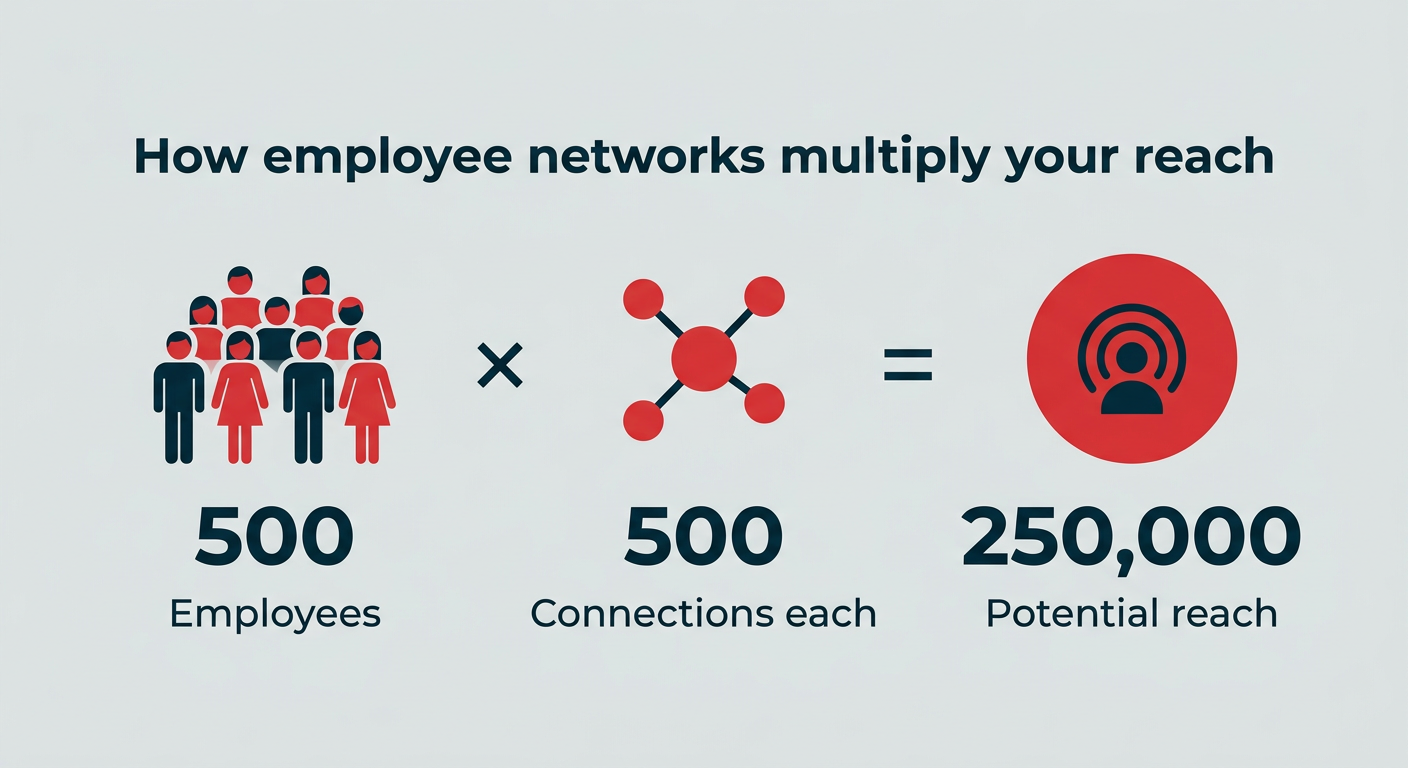
While informal advocacy happens spontaneously—such as when an excited worker shares a personal milestone or a new product drop—a formal, structured program introduces intention, safety, and scale. Instead of relying solely on corporate handles, organizations leverage the combined networks of their workforce. For example, a mid-sized company of 500 employees, where each worker maintains an average of 500 connections on LinkedIn alone, unlocks a potential organic reach of 250,000 individuals—many of whom will never follow the corporate brand page.

Informal vs. Structured Advocacy
| Feature | Informal Advocacy | Structured Program |
|---|---|---|
| Nature | Spontaneous, organic, and personal. | Intentional, strategic, and organized. |
| Content | Unfiltered moments shared at will. | Curated, brand-safe libraries updated regularly. |
| Measurement | Practically impossible to track accurately. | Fully measurable via UTM codes, analytics dashboards, and attribution software. |
| Governance | Prone to compliance risks or outdated messaging. | Protected by clear guidelines, approval workflows, and legal guardrails. |
Modern structured frameworks rely on dedicated tools—such as Parliament, the employee advocacy application integrated within the Hootsuite Social OS—to deliver pre-approved content feeds directly to mobile devices. This allows employees to share content with just a few taps while giving administrators the ability to track performance, gamify participation through leaderboards, and safeguard brand compliance.
Why Companies Are Investing Heavily in Employee Advocacy
Organizations are allocating corporate budget to employee advocacy because it yields concrete business outcomes at a fraction of the cost of paid digital advertising. According to industry leaders, the benefits span multiple departments:
- Expanded Brand Reach & Awareness: By tapping into employee networks, brands gain access to secondary audiences that paid media campaigns struggle to penetrate, achieving higher visibility organically.
- Superior Talent Attraction: Career pages can promise a vibrant culture, but authentic posts from current staff detailing their daily challenges and wins provide prospective hires with an unvarnished, trustworthy look at company life. This strategy has driven triple-digit surges in applicant volume for major healthcare and tech firms.
- Enhanced Reputation and Trust: Employers remain among the most trusted institutions globally (scoring 78% in the 2026 Edelman Trust Barometer). When happy workers endorse their employers, that institutional trust translates directly into external credibility.
- Higher Organic Engagement: Social algorithms routinely prioritize personal profiles over corporate handles. Metricool’s analysis of over 673,000 posts revealed that personal profiles achieve a 63% higher engagement rate than brand pages.
- Accelerated Sales Pipelines: Social selling shortens sales cycles. Hinge Marketing research indicates that nearly 64% of formal advocates attribute new business development to their advocacy efforts, generating significant revenue streams.
- Career Growth for Employees: Successful programs are reciprocal. When workers share thoughtful industry insights alongside company updates, they build personal professional brands, with 86% of formal advocates reporting a positive career impact from social media participation.
A Six-Step Framework for Building a Program
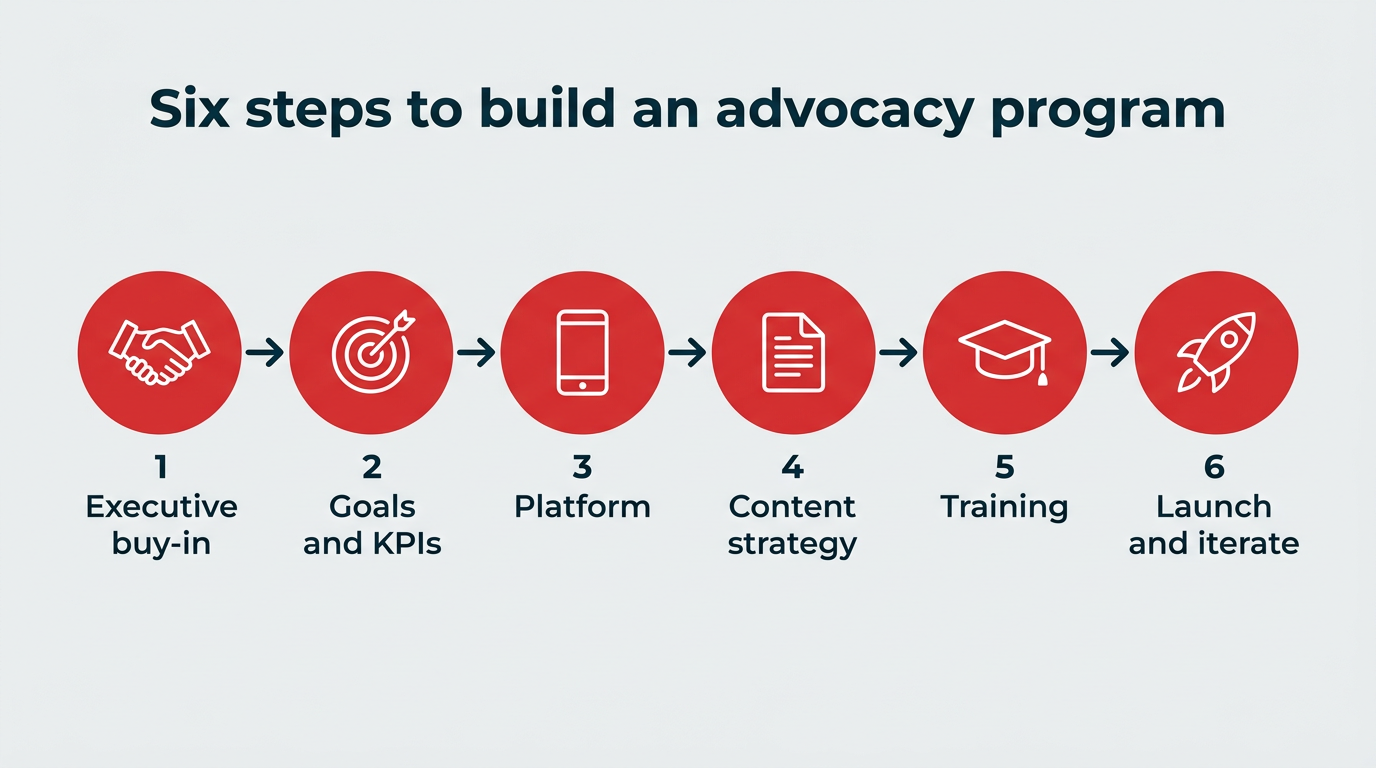
Launching a successful employee advocacy initiative requires a methodical, step-by-step approach. Skipping foundational stages—such as executive alignment or comprehensive training—frequently results in low adoption rates and stalled momentum.
1. Secure Executive Buy-In
Leadership sets the organizational tone. When executives actively post, company-wide participation follows naturally. Frame advocacy as an investment rather than a social media experiment, proposing a focused 60-to-90-day departmental pilot to demonstrate initial ROI before expanding enterprise-wide.
2. Define Clear Goals and KPIs
Avoid the trap of trying to achieve brand awareness, recruitment, lead generation, and community engagement all at once. Select one or two primary objectives and map them directly to measurable metrics, such as career site referrals, UTM-tracked pipeline revenue, or earned media value.
3. Deploy the Right Technology
Spreadsheets and Slack channels fail as programs scale past a couple of dozen participants. Implement a dedicated platform that offers content curation, compliance controls, automated analytics, and a seamless mobile interface to minimize friction for end-users.
4. Curate an Engaging Content Mix
An advocacy strategy must answer a fundamental question: Would an employee be genuinely proud to feature this on their personal feed?
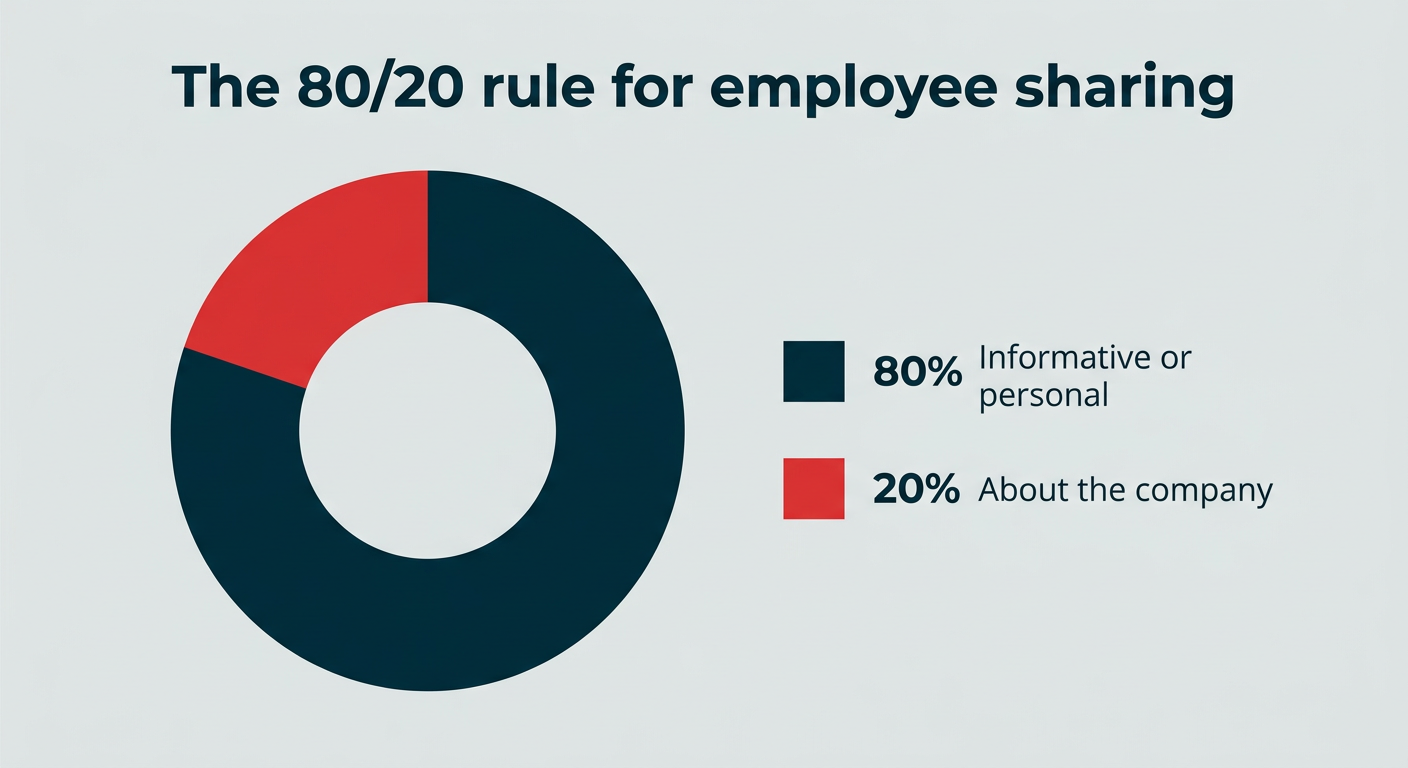
- The 80/20 Rule: Popularized by enterprises like Dell, this guideline suggests that 80% of shared content should be informative, educational, or culturally interesting, while only 20% should feature direct corporate promotion. Always encourage workers to add their personal commentary to boost authenticity.
5. Train and Onboard Thoroughly
Hesitation often stems from uncertainty regarding corporate communication policies rather than unwillingness. Arm teams with social media guidelines, brand voice training, and profile optimization workshops to give them the confidence to post in their own authentic voice.

6. Launch, Incentivize, and Iterate
Kick off with a small group of enthusiastic early adopters whose organic word-of-mouth will pull others in. Maintain engagement through gamification, leaderboards, and recognition prizes, while continuously refreshing your content library based on monthly performance reviews.
Measuring Success: Key Performance Indicators
Proving the return on investment of an employee advocacy program requires pairing internal participation metrics with external business outcomes. Without attribution tools like UTM parameters embedded in your content library from day one, proving revenue impact becomes guesswork.
- Adoption Rate: Measures program stickiness and active weekly participation (e.g., Athletico achieved a 95% adoption rate in week one).
- Engagement Lift: Evaluates how employee-shared content performs compared to brand-owned posts.
- Earned Media Value (EMV): Calculates the financial equivalent of organic advocate reach compared to paid ad placements.
- Referral Traffic & Pipeline Attribution: Tracks clicks driven to owned properties and closed-won revenue influenced by social shares (e.g., Major Tom generated over $100K in attributable pipeline).
- Recruiting Impact: Measures applicant volume increases driven by social channels.
Industry Case Studies: 11 Enterprise Programs in Action
From global software giants to healthcare providers, diverse organizations are leveraging employee advocacy to transform their digital footprints:
- Hootsuite: Running its own advocacy initiative via Parliament, Hootsuite utilizes a cross-departmental Content Council and recognition incentives, achieving a 250% year-over-year revenue growth directly linked to advocacy.
- Armanino: This accounting and consulting firm equipped 595 active advocates through brand bootcamps, scaling their social reach to 19.2 million (a 638% year-over-year increase).
- Dell Technologies: Operating one of the world’s largest programs, Dell mandates its Social Media and Communities University training, generating over 150,000 shares in a single year while strictly adhering to the 80/20 content rule.
- Athletico: The healthcare provider hit a 95% adoption rate in its first week by identifying social-savvy employees and supplying them with structured, ready-to-share content hubs.
- Antalis: Focused on packaging and visual communication, Antalis achieved a 300% increase in web traffic share originating from social channels by pairing a central content library with regional governance.
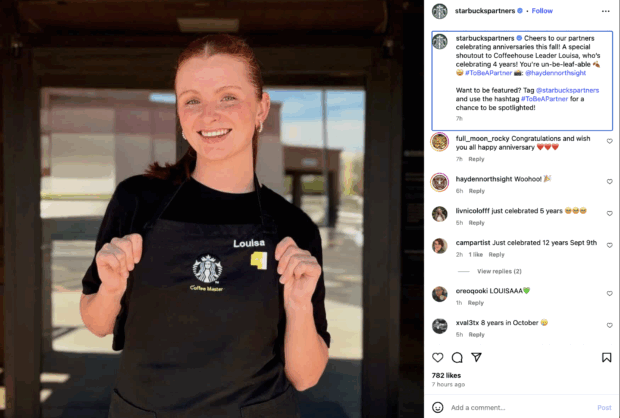
- Starbucks: Through the "Starbucks Partner" program, employees share cultural and community stories, cultivating a powerful employer-of-choice reputation.
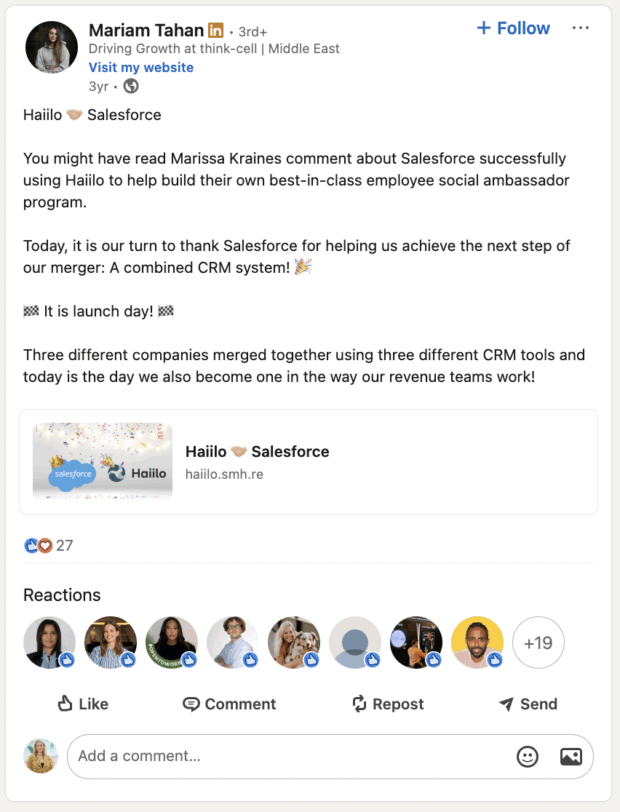
- Salesforce: Utilizing the Haiilo platform, Salesforce automated channel subscriptions based on role and location, netting a remarkable 2,033% program ROI.
- Morgan Philips Group: Empowered recruiters and consultants to share domain expertise using Sociabble, generating 8,000 high-quality leads.
- DaVita: By empowering over 200 healthcare ambassadors, DaVita drove a 136% increase in LinkedIn job applicants and secured more than $1.5 million in earned media value.
- Croda: Centralized 36 brand channels and integrated advocacy to drive over 5,000 web conversions and reinforce sustainability messaging in the chemical sciences sector.
- Adobe: Utilizes EveryoneSocial to distribute role-calibrated content libraries, expanding social reach by over 3 million.
Implications and Future Outlook
As algorithms continue to favor personal authenticity over corporate broadcasting, the strategic imperative for employee advocacy will only intensify. Organizations that fail to cultivate internal brand ambassadors risk shouting into an increasingly crowded digital void.
Conversely, companies that invest in proper technological infrastructure, transparent training, and empowering content strategies will convert their workforces into trusted industry voices. By aligning internal culture with external trust, modern enterprises can build resilient marketing channels that weather shifting digital landscapes while driving measurable, long-term business growth.
 Ammar Sabilarrohman
 Jia Lissa
 Muslim
